Counter Human Trafficking in Southeast Asia (SEA) (GCHumanRights)

Counter Human Trafficking in Southeast Asia (SEA) (GCHumanRights)

Human trafficking is often described as the new form of slavery for the 21st century. Despite difficulties in collecting data, recent analyses confirm that it is a serious and ongoing problem in many areas and much still needs to be done to prevent it, protect victims and ultimately eradicate it. In recent years, work has been carried out on the impact of counter trafficking, but more is needed on counter trafficking itself. This online course is going to examine the programmes, practices and activities of counter trafficking by analysing aspects such as raids and rescues, litigation, organising, education. In particular, it will do so by looking at the specific case of South-East Asia (SEA).

The course is going to speak to experts in this area from trade unions, NGOs, international organisations and ask them how counter trafficking is done, what kind of organisations are involved, what the successes, challenges and failures are and what the role of research is, with the aim to equip participants with valuable insights, knowledge and skills.

This online course will study the programmes, practices and activities of counter trafficking. It will do so by speaking to experts from Trade Unions, NGOs and International Organisations who will examine case studies from their work and will debate the efficacy of actions in this area.
The course is structured in five Classes:
Class 1: Overview: laws, definitions, status
Class 2: Advocacy around law and policy
Class 3: The Role of Research in Counter Trafficking
Class 4: The role of Trade Unions
Class 5: Countering child trafficking
The course is self-paced and consists of interviews, case-studies and quizzes.
The course is open to ‘leaders of the future’ who envision a world free from human trafficking: upper year undergraduates and postgraduates; NGO activists and practitioners; young lawyers and social scientists; active and motivated citizens from around the world and all those interested in interdisciplinary human rights, migration, children’s rights, advocacy, workers’ empowerment.

Learning Objectives
Upon completion of the course, participants will be able to:

  • identify key regional/national stakeholders in business, government, and civil society sectors and map relationships between them;
  • know legal standards and mechanisms at the international/regional/national level, and their inter-relationship;
  • think critically about challenges to enforcement and ability to explain gaps between standards and compliance;
  • identify violations and groups most vulnerable to trafficking;
  • debate the effectiveness of protection measures such as raids and shelters, identifying key priorities and challenges in research on trafficking;
  • understand and assess programming and actions in counter trafficking;
  • identify key points of advocacy around law and policy.

Go to Class
MOOC List is learner-supported. When you buy through links on our site, we may earn an affiliate commission.

Related Courses

Children’s Mental Health: Rights and Perspectives (GCHumanRights) Global Campus of Human Rights
Global Campus of Human Rights

Children’s Mental Health: Rights and Perspectives (GCHumanRights)

According to recent reports by UNICEF and WHO, the decline in children’s mental health has become a significant global issue. A longstanding source of concern, it has emerged more strongly in the context of the COVID-19 pandemic. Children have been further exposed to threats - including anxiety and depression attacks, heightened exposure to domestic and sexual violence and more subtle abuses such as unhealthy competition - which are taking an enormous toll on them and may ultimately lead to social exclusion and inability to realize their full potential. Our MOOC on this theme facilitates such understanding and knowledge by providing not only information and materials to understand children and young people’s mental health as a human right, but also guidance and examples on what can be done at the practical level.

Oct 16th 2023
5-12 Weeks
History of Slavery in the British Caribbean (FutureLearn) FutureLearn
University of Glasgow,University of the West Indies - UWI

History of Slavery in the British Caribbean (FutureLearn)

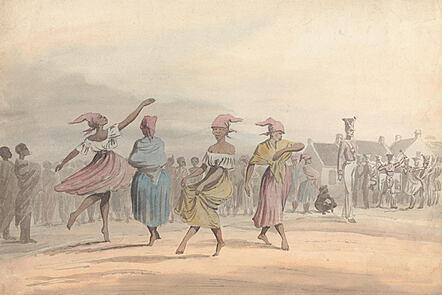
Explore the history and legacy of British colonial slavery and oppression in the Caribbean through historical slave accounts. Learn about Britain’s involvement in the transatlantic slave trade. On this course, you’ll be introduced to the history of slavery and the lived experiences of enslaved people in the British Caribbean.

Self Paced
4 Weeks
Children's Human Rights - An Interdisciplinary Introduction (Coursera) Coursera
University of Geneva

Children's Human Rights - An Interdisciplinary Introduction (Coursera)

Drawing on the contributions of several academic disciplines including law, psychology, sociology, history, educational and health sciences, economy and anthropology, an interdisciplinary approach guides the student into a selection of critical issues concerning children’s rights. Participants will gain insight relative to the development of this specific human rights category, as well as to the evolution of the challenges faced by children over time and society’s efforts to respond.

Oct 5th 2026
5-12 Weeks
Transitology – Pathways to and from Democracy (GCHumanRights) Global Campus of Human Rights
Global Campus of Human Rights

Transitology – Pathways to and from Democracy (GCHumanRights)

In this MOOC, academic lecturers in the field of Regime/System Transformation, Quality of Democracy, Elections, and Comparative Politics have been invited to teach, as well as practitioners, data analysts, and policymakers from countries that are currently struggling with the backsliding of democratic institutions and/or are in demanding political regime change in their countries. **Registration deadline: 12 March 2023**

Feb 20th 2023
5-12 Weeks
International Human Rights Law (edX) EdX
LouvainX,Université Catholique de Louvain - UCL

International Human Rights Law (edX)

Learn how an individual’s human rights are protected from both public and private power by international laws. Human rights are developed through the constant dialogue between international human rights bodies and domestic courts, in a search that crosses geographical, cultural and legal boundaries. The result is a unique human rights grammar, which this course shall discuss and question, examining the sources of human rights, the rights of individuals, the duties of States, and the mechanisms of protection.

Self Paced
Self-Paced
The European Union: Crisis and Recovery (FutureLearn) FutureLearn
Dublin City University

The European Union: Crisis and Recovery (FutureLearn)

This course will develop your understanding of the recent history of the European Union and its prospects for the future. Learn about the recent challenges faced by the European Union. The fascinating course is designed to inform the public about the principal challenges that have faced the European Union over recent years including Brexit, the Euro Crisis, Migration, the Rule of Law Crisis, and COVID-19, and to communicate how the EU has responded to these challenges.

Self Paced
4 Weeks
La protección del menor (edX) EdX
Universidad Autonoma de Madrid,UAMx

La protección del menor (edX)

Aproximación a la protección jurídica del menor, tomando como eje central la Convención Internacional de los Derechos del Niño de 1989. Afortunadamente, cada vez hay más personas sensibles a las especiales privaciones y sufrimientos que afectan a los menores de edad. La explotación sexual de las niñas, la utilización de los niños como soldados, el trabajo infantil, el tráfico internacional de menores… y todo esto sin contar con el hambre, la guerra y las epidemias.

Self Paced
Self-Paced
Public Health in Humanitarian Crises 1 (Coursera) Coursera
Johns Hopkins University

Public Health in Humanitarian Crises 1 (Coursera)

This course, Public Health in Humanitarian Crises 1, introduces discussions about the public health approach to problems experienced by people affected by disasters, both natural and related to conflict. The course discusses the many changes which occur in people’s lives when they are uprooted by a disaster, ranging from changes in disease patterns, access to health care, livelihoods, shelter, sanitary conditions, nutritional status, etceteras. We will explore what humanitarian interventions could look like if we want to mitigate the effects of disasters. The course content is a mix of theoretical knowledge and many practical examples from recent disasters. We think this course is unique because it contains so many practical ‘real-life’ examples and is taught by instructors and guest lecturers who together have over 200 years of experience in this field.

Sep 28th 2026
5-12 Weeks
Privacy in the Western World (Coursera) Coursera
EIT Digital

Privacy in the Western World (Coursera)

Welcome to this course about privacy. We are thrilled to see that you are interested and will provide you with a comprehensive study of this intriguiging subject. We hope this course will enthuse you to look further into privacy and personal data regulation. Especially in the light of recent events it becomes more important to know about your (alleged!?) rights and freedoms.

Sep 14th 2026
5-12 Weeks
Privacy in Europe (Coursera) Coursera
EIT Digital

Privacy in Europe (Coursera)

After having followed Privacy in the Western world you have become acquainted with the overall global legal system and the origins of privacy as a concept as well as privacy as a (human) right. This course deals with the European legal system to protect privacy. European privacy protection is based upon human rights treaties, both on a European level as well global level such as, e.g. the UN Declaration on Human Rights. This course outlines and deals with these human rights treaties as well as with the specific rules and regulations that govern day to day privacy protection in Europe.

Sep 21st 2026
5-12 Weeks
Migrations internationales : un enjeu mondial (Coursera) Coursera
Sciences Po

Migrations internationales : un enjeu mondial (Coursera)

Le monde bouge, mais les opinions et les gouvernements ne sont pas tous prêts à accepter cette réalité mal connue. La question affecte à la fois les Etats, mais aussi la planète, dans un processus de mondialisation et de régionalisation des migrations, et pose de nouvelles questions aux relations internationales, en y incluant le sud. Ce cours cherche à la fois à parfaire la connaissance sur le sujet, à traiter les thèmes essentiels induits par les migrations internationales et à dresser les tendances de demain.

Sep 21st 2026
5-12 Weeks