Control automático: La tecnología invisible (Coursera)

Control automático: La tecnología invisible (Coursera)

A lo largo de la historia, el ser humano se ha empeñado en construir dispositivos que le hagan más cómodo su día a día. Además, siempre ha estado interesado en que éstos lleven a cabo la tarea por sí mismos, sin necesidad de una supervisión continua. En nuestros días, muchos dispositivos llevan a cabo tareas como por arte de magia; pareciera que piensan o que adivinan nuestros deseos, que nunca se pueden equivocar o que su precisión y velocidad no puede ser superada. Los sistemas de control son una parte crucial de este funcionamiento.

Class Deals by MOOC List - Click here and see Coursera's Active Discounts, Deals, and Promo Codes.

Con este curso, los participantes conocerán la aplicación de los sistemas de control y algunos ejemplos de ellos. Además, revisarán a grandes rasgos sus características básicas y sus diferentes representaciones, con especial énfasis en el modelado matemático.
Al término del curso:
Identificarás la utilidad y las características principales de los sistemas de control.
Distinguirás entre un sistema de control en lazo abierto y un sistema de control en lazo cerrado.

Syllabus

WEEK 1
Introducción
El participante, mediante la visualización de numerosos ejemplos y actividades descriptivas, conocerá las principales propiedades de los sistemas de control y su aplicación en la vida cotidiana.
Control ¿Dónde estás?
Existen muchos sistemas a nuestro alrededor que hacen tareas por sí mismos: regular la cantidad de agua presente en los tinacos de nuestra casa, la temperatura de la misma en un calentador, los modernos sistemas de conducción autónoma de los más recientes modelos de vehículos, etc. ¿Te has preguntado cómo funcionan? En este módulo, veremos una sencilla aproximación al control automático, la medición y realimentación de señales y aprenderemos a identificarlos como parte de sistemas de nuestra vida diaria, incluso, en tecnologías de vanguardia.

WEEK 2
¿Cómo llegamos a esto?
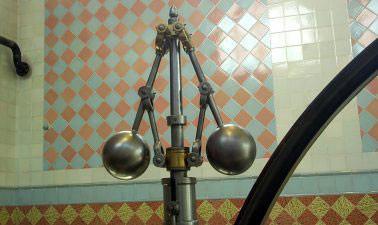
En este módulo, viajaremos en un recorrido histórico por diversas partes del mundo, entre ellas, la antigua China, Grecia, Egipto y la Europa del Renacimiento, en el cual observaremos artefactos o herramientas donde se aplicaron principios de control automático de manera intuitiva. Después se mostrarán algunos ejemplos donde estos principios son usados y desarrollados de manera formal. Esto ha sido parte de una historia que quizás para ti ha permanecido invisible.

WEEK 3
¡A moverse! La dinámica de las cosas
Las señales asociadas a los sistemas a controlar varían con el tiempo, y ese mismo cambio se considera y aprovecha en el diseño de los sistemas de control. Ahora, veremos cómo podemos conocer y predecir el comportamiento de un sistema mediante modelos, de forma que no sea necesario construirlos o desarmarlos para saber cómo funcionan.
Go to Class
MOOC List is learner-supported. When you buy through links on our site, we may earn an affiliate commission.

Related Courses

Creativity, Innovation, and Change (Coursera) Coursera
Pennsylvania State University

Creativity, Innovation, and Change (Coursera)

Our lives are being disrupted by pandemics, global warming, wars, political chaos, and technological innovations. We must prepare for an unpredictable and unknown future - and this is the goal of the course on Creativity, Innovation and Transformation (CIT)! CIT is an upgrade of the former Creativity, Innovation and Change (CIC) course, which is now streamlined and updated with a new module on Transformation.

Jun 22nd 2026
4 Weeks
Introdução ao Controle de Sistemas (Coursera) Coursera
Instituto Tecnológico de Aeronáutica

Introdução ao Controle de Sistemas (Coursera)

Este curso apresenta os principais conceitos do controle de sistemas e mostra suas vantagens e importância para a sociedade moderna. Você vai entender o que é o controle de sistemas e como o controle com realimentação funciona, e passará a perceber a sua presença em diversas situações em seu dia-a-dia, na natureza, no corpo humano e em diversos dispositivos, desde os mais simples até os mais complexos.

Jun 8th 2026
4 Weeks
Organizational Design: Creating Competitive Advantage (edX) EdX
Indian Institute of Management, Bangalore,IIMBx

Organizational Design: Creating Competitive Advantage (edX)

Learn how to design control systems, decision-making processes and a culture that enables value creation and the development of sustainable competitive advantage. In order to sustain themselves, organizations need to compete for scarce resources both in input and output markets. Because of this organizations need to create some kind of competitive advantage.

This course is archived
5-12 Weeks
Dynamics and Control (edX) EdX
Universitat Politècnica de València,UPValenciaX

Dynamics and Control (edX)

This is an interactive course about the basic concepts of Systems, Control and their impact in all the human activities. First, the basic concepts of systems, dynamics, structure and control are introduced. Then, looking at many examples in Nature and human made devices, we will realize that the dynamic behavior of most systems can be modified by adding a control system. Later we will see how knowing how to evaluate the dynamic behavior of a system and measure its performance will provide the tools to design new controlled systems fulfilling some requirements.

Self Paced
Self-Paced
Dynamic Systems & Controls (saylor.org) Saylor Academy
Saylor.org

Dynamic Systems & Controls (saylor.org)

The study of dynamic systems focuses on the behavior of physical systems as well as the physics of individual components and the interactions between them. Control systems are designed to enable dynamic systems to respond in a specific manner. In this course, we will learn about the mathematical modeling, analysis, and control of physical systems that are in rest, in motion, or acted upon by a force.

Legacy Course
Self-Paced
Mechanics of Materials I: Fundamentals of Stress & Strain and Axial Loading (Coursera) Coursera
Georgia Institute of Technology

Mechanics of Materials I: Fundamentals of Stress & Strain and Axial Loading (Coursera)

This course explores the topic of solid objects subjected to stress and strain. The methods taught in the course are used to predict the response of engineering structures to various types of loading, and to analyze the vulnerability of these structures to various failure modes. Axial loading with be the focus in this course.

Jun 22nd 2026
5-12 Weeks
Quantitative Methods (Coursera) Coursera
University of Amsterdam

Quantitative Methods (Coursera)

Discover the principles of solid scientific methods in the behavioral and social sciences. Join us and learn to separate sloppy science from solid research! This course will cover the fundamental principles of science, some history and philosophy of science, research designs, measurement, sampling and ethics. The course is comparable to a university level introductory course on quantitative research methods in the social sciences, but has a strong focus on research integrity. We will use examples from sociology, political sciences, educational sciences, communication sciences and psychology.

Jun 22nd 2026
5-12 Weeks
Converter Control (Coursera) Coursera
University of Colorado Boulder

Converter Control (Coursera)

This course teaches how to design a feedback system to control a switching converter. The equivalent circuit models derived in the previous courses are extended to model small-signal ac variations. These models are then solved, to find the important transfer functions of the converter and its regulator system. Finally, the feedback loop is modeled, analyzed, and designed to meet requirements such as output regulation, bandwidth and transient response, and rejection of disturbances.

Jun 22nd 2026
4 Weeks
Interfacing with the Raspberry Pi (Coursera) Coursera
University of California, Irvine

Interfacing with the Raspberry Pi (Coursera)

The Raspberry Pi uses a variety of input/output devices based on protocols such as HDMI, USB, and Ethernet to communicate with the outside world. In this class you will learn how to use these protocols with other external devices (sensors, motors, GPS, orientation, LCD screens etc.) to get your IoT device to interact with the real world.

Jun 22nd 2026
4 Weeks