Computer Assisted Inquiry (EMMA)

Offered by Tallinn University,
Computer Assisted Inquiry (EMMA)

The course is addressed for secondary school students and teachers, who would like to fresh their research skills and for I and II year university students. During the 9 weeks long course, participants will learn how to collect and analyze data with the computer and to draw conclusions.

Learning Objectives:
Plans and creates research with ICT; uses ICT activelyfor searching information and conducting inquiry; knows data collection methods for inquiry; Analyzes data with appropriate methods; analyzes research findings; knows how to study in distant mode.

Outcomes:
Course activities last nine weeks:
Week 1. Introduction to course, learning environment and getting familiar with each other;
week 2. Preparation of data collection and analysis;
week 3. Structuring, cleaning and encoding of data;
week 4. Getting overview of the data: frequency table, histogram and graphics
week 5. Processing data: means and dispersion
week 6: Investigating groups' differences
week 7: Investigating trends and relationships
week 8: Presenting results with infographics
week 9: Ending of the course, self-reflection


Go to Class
MOOC List is learner-supported. When you buy through links on our site, we may earn an affiliate commission.

Related Courses

Excel 2010 (EMMA) EMMA
Universitat Politècnica de València

Excel 2010 (EMMA)

Excel is the program from the Microsoft Office suite that allows you to work with spreadsheets. This program allows you to perform all kinds of operations, classifying and managing data on a large scale. It incorporates a large number of functions and has great features for representing the results graphically.

No sessions available
5-12 Weeks
Population Health: Predictive Analytics (Coursera) Coursera
Leiden University

Population Health: Predictive Analytics (Coursera)

Predictive analytics has a longstanding tradition in medicine. Developing better prediction models is a critical step in the pursuit of improved health care: we need these tools to guide our decision-making on preventive measures, and individualized treatments. In order to effectively use and develop these models, we must understand them better. In this course, you will learn how to make accurate prediction tools, and how to assess their validity. First, we will discuss the role of predictive analytics for prevention, diagnosis, and effectiveness. Then, we look at key concepts such as study design, sample size and overfitting.

Oct 26th 2026
4 Weeks
Job Success: Get Hired or Promoted in 3 Steps (Coursera) Coursera
The State University of New York

Job Success: Get Hired or Promoted in 3 Steps (Coursera)

This course, Job Success: Get Hired or Promoted in Three Steps, will prepare you to stand out in a crowded applicant pool so that you can get hired or promoted. In three steps you will leave this course with : an upgraded social media presence (one that you can be proud of); a visual, infographic resume that will get you noticed; a professional pitch that highlights your strengths and skills.

Oct 26th 2026
3 Weeks
Il disegno della luce (EMMA) EMMA
University of Naples Federico II

Il disegno della luce (EMMA)

La produzione di questo MOOC fa capo al Corso di Disegno edile, afferente alla facoltà di Ingegneria edile dell'Università Federico II di Napoli. Durante le lezioni, particolarmente indicate per coloro che abbiano conoscenze dei fondamenti della geometria proiettiva e del metodo delle proiezioni ortogonali, si affronterà la questione della rappresentazione delle ombre. Saranno affrontati e risolti alcuni problemi grafici legati a questo tipo di rappresentazione, attraverso l'utilizzo di numerosi esempi interattivi che, in maniera evidente, illustreranno le soluzioni risultanti dall'applicazione delle regole.

Self-Paced
Self-Paced
HI-FIVE: Health Informatics For Innovation, Value & Enrichment (Administrative/IT Perspective) (Coursera) Coursera
Columbia University

HI-FIVE: Health Informatics For Innovation, Value & Enrichment (Administrative/IT Perspective) (Coursera)

HI-FIVE (Health Informatics For Innovation, Value & Enrichment) Training is an approximately 10-hour online course designed by Columbia University in 2016, with sponsorship from the Office of the National Coordinator for Health Information Technology (ONC). The training is role-based and uses case scenarios. No additional hardware or software are required for this course. Our nation’s healthcare system is changing at a rapid pace.

Oct 26th 2026
4 Weeks
Data Processing Using Python (Coursera) Coursera
Nanjing University

Data Processing Using Python (Coursera)

This course is mainly for non-computer majors. It starts with the basic syntax of Python, to how to acquire data in Python locally and from network, to how to present data, then to how to conduct basic and advanced statistic analysis and visualization of data, and finally to how to design a simple GUI to present and process data, advancing level by level.

Oct 19th 2026
5-12 Weeks
Data Science Ethics (Coursera) Coursera
University of Michigan

Data Science Ethics (Coursera)

What are the ethical considerations regarding the privacy and control of consumer information and big data, especially in the aftermath of recent large-scale data breaches? This course provides a framework to analyze these concerns as you examine the ethical and privacy implications of collecting and managing big data. Explore the broader impact of the data science field on modern society and the principles of fairness, accountability and transparency as you gain a deeper understanding of the importance of a shared set of ethical values.

Oct 19th 2026
4 Weeks
Empathy, Data, and Risk (Coursera) Coursera
University of Illinois at Urbana-Champaign

Empathy, Data, and Risk (Coursera)

Risk Management and Innovation develops your ability to conduct empathy-driven and data-driven analysis in the domain of risk management. This course introduces empathy as a professional competency. It explains the psychological processes that inhibit empathy-building and the processes that determine how organizational stakeholders respond to risk.

Oct 26th 2026
4 Weeks
Principles of fMRI 2 (Coursera) Coursera
Johns Hopkins University,University of Colorado Boulder

Principles of fMRI 2 (Coursera)

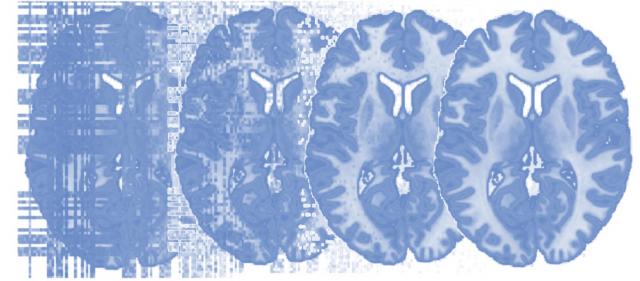
Functional Magnetic Resonance Imaging (fMRI) is the most widely used technique for investigating the living, functioning human brain as people perform tasks and experience mental states. It is a convergence point for multidisciplinary work from many disciplines. Psychologists, statisticians, physicists, computer scientists, neuroscientists, medical researchers, behavioral scientists, engineers, public health researchers, biologists, and others are coming together to advance our understanding of the human mind and brain. This course covers the analysis of Functional Magnetic Resonance Imaging (fMRI) data.

Oct 19th 2026
4 Weeks
Research for Impact (Coursera) Coursera
University of Cape Town,Oxfam International

Research for Impact (Coursera)

In this course, you will learn more about the Research for Impact approach - a set of principles and practices that will help you to make your research more impactful. Traditionally, the goals and outcomes of research projects were to contribute knowledge and communicate this knowledge through academic publications and journal articles. But If we truly want our research to have an impact, we need to do research differently. Research that influences change in policy, practice, behaviour and attitudes.

Nov 2nd 2026
5-12 Weeks
Statistics and Data Analysis with Excel, Part 1 (Coursera) Coursera
University of Colorado Boulder

Statistics and Data Analysis with Excel, Part 1 (Coursera)

Designed for students with no prior statistics knowledge, this course will provide a foundation for further study in data science, data analytics, or machine learning. Topics include descriptive statistics, probability, and discrete and continuous probability distributions. Assignments are conducted in Microsoft Excel (Windows or Mac versions). Designed to be taken with the follow-up course, “Statistics and Data Analysis with Excel, Part 2.”

Oct 26th 2026
5-12 Weeks
Population Health: Study Design (Coursera) Coursera
Leiden University

Population Health: Study Design (Coursera)

Health care professionals increasingly have to make clinical decisions in aging and diverse populations. Also, they have to deal with rising health care costs, fragmented health care supply and advancing medical technologies and IT systems. These developments go beyond every day practice and will require new skills. In this course we will walk you through key steps in designing a research study, from formulating the research question to common pitfalls you might encounter when interpreting your results.

Oct 26th 2026
4 Weeks