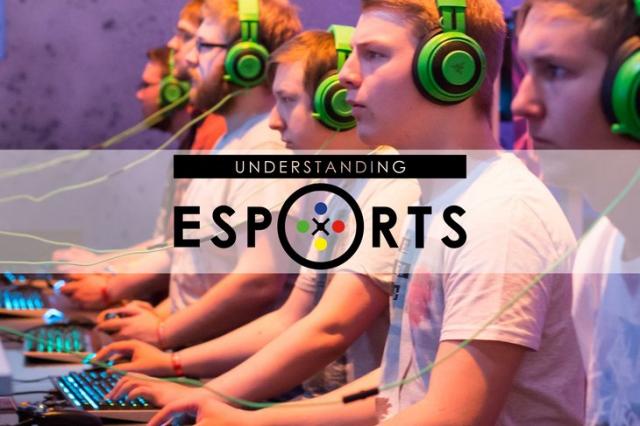
L’esport correspond à la pratique compétitive d’un jeu vidéo. Cette pratique interroge et soulève de nombreuses questions : est-ce possible de la qualifier de sport ? Comment protéger les joueuses et joueurs ? Comment reconnaître leurs compétences et les développer ? L’esport est-il un levier d’inclusion ou d’exclusion ? Le modèle économique de l’esport est-il durable ? Quel est son ancrage territorial ou son lien avec les collectivités ? Et enfin, question renforcée par la crise sanitaire de 2020, l’esport va-t-il renouveler notre rapport à la pratique sportive ou à la consommation de spectacle sportif ?
Le MOOC « comprendre l’esport et ses enjeux » vise à présenter l’état de la recherche universitaire sur toutes ces questions. Nous proposons un parcours de formation au cours duquel vous bénéficierez de regards d’expertes et d’experts ou de témoignages d’acteurs du secteur, mais également d’activités qui vous permettront de tester vos connaissances et d’essayer par vous-même l’esport.
Le MOOC « comprendre l’esport et ses enjeux » offre un enseignement complet sur l’esport par l’expertise de quatre universités européennes et de leurs réseaux respectifs. L’Université de Caen Normandie apportera un regard pluridisciplinaire sur l’esport, en rendant compte des nombreuses expérimentations menées sur son territoire. L’université de Murcia par son département des sciences du sport contribuera à établir le lien entre la pratique sportive et les pratiques vidéoludiques. L’université finlandaise de Kajaani est l’un des rares établissements européens à offrir un diplôme universitaire centré sur l’économie de l’esport et, ce partenaire pourra tout naturellement éclairer sur ces questions. Enfin, l’université Glyndŵr à Wrexham au Pays de Galles amènera au projet une expertise précieuse dans les champs du design d’espace et de l’ergonomie.
À qui s'adresse ce parcours ?
Le MOOC est ouvert à toute personne désireuse de découvrir l’esport et de confronter ses représentations sur le sujet. Il s’adresse partiellement aux joueuses et joueurs ou aux hommes et femmes professionnelles du secteur, mais, d’abord et avant tout, à leurs familles qui peuvent se poser des questions, au monde éducatif et associatif qui s’interroge de l’opportunité de l’esport, aux décideurs politiques qui souhaitent connaître davantage cette pratique avant de lancer ou financer un projet sur leur territoire, ou encore aux acteurs économiques qui veulent comprendre cet écosystème émergent.
Ce MOOC a la particularité d’être international et multilingue avec des contenus disponibles en français, en anglais et en espagnol, ce qui vous offrira la chance d’échanger avec toute la communauté d’apprenants du MOOC que cela soit au cours de live ou sur forum.
Ce MOOC ne nécessite aucun pré-requis.
Il faut noter enfin que ce cours opéré par la plateforme FUN-MOOC est complètement gratuit. Les données personnelles des apprenants restent confidentielles et ne sont diffusées en aucune manière.
Plan du cours
Semaine 1 : Définir l'esport
- Découvrir l’esport, son histoire et son écosystème
- Distinguer l’esport du sport
- Déconstruire les stéréotypes et présenter la variété des enjeux de l’esport
- A votre tour de jouer ! Initiation à la pratique esportive.
Semaine 2 : esport et inclusion
- Découvrir les aspects sociaux et humains qui entourent l’esport
- Appréhender la variété des pratiques
- Comprendre les enjeux liés au genre, au handicap ou encore à l’âge
- Proposer des solutions et des outils pour que l’esport évolue vers une “safe place”, une industrie inclusive et éthique.
Semaine 3 : environnement physique et numérique de la pratique
- Découvrir la diversité des plateformes numériques de jeu, d’apprentissage et d'échanges sociaux
- Créer ou adapter un espace physique spécialisé ou dédié à la pratique esportive
- Optimiser la performance des joueuses et des joueurs
- Cadrer une activité par une démarche éthique
- Connaître et reconnaître les compétences physiques et cognitives esportives
Semaine 4 : esport et business
- Comprendre le fonctionnement de l’économie de l’esport (acteurs directs et indirects)
- Saisir les relations entre acteurs (coopétition, co-destinée, convergence)
- Panorama des questions d’actualité et des recherches récentes
Semaine 5 : Débriefing et évaluation
- Partager ensemble sur l’évolution de vos perceptions sur l’esport
- Identifier les risques et les opportunités pour le milieu esportif
- Evaluation finale
Esports is the competitive practice of video games. This practice raises many questions: is it possible to qualify it as sport? How to protect the players? How to recognize their skills and develop them? Is this a factor of inclusion or exclusion? Is the business model of esports sustainable? What is its territorial anchoring or its link with the communities? And finally, within the context of the health crisis of 2020, will esport renew our relationship to sports practice or to the consumption of sports shows?
The "understanding esports" MOOC aims at presenting the state of academic research on all these questions. We offer a full training course thanks to which you will benefit from experts’ views or testimonials given by stakeholders from the industry, but you will also engage into activities that will allow you to test your knowledge and try esports for yourself.
The "understanding esports" MOOC offers comprehensive training on esports through the expertise of four European universities and their respective networks. The University of Caen Normandie will bring a multidisciplinary perspective on esport, reporting on the many experiments carried out in its. Through its Department of Sports Sciences, the University of Murcia will help to establish the link between sports practice and video games. The Finnish University of Kajaani is one of the few European institutions to offer a full academic degree focusing on esports business. This partner will thus naturally be able to shed light on these questions. Finally, Wrexham Glyndŵr University (Wales) will bring valuable expertise in the fields of space design and ergonomics to the project.
Targeted audience
The MOOC is open to anyone wishing to discover esports and challenge their representations on the subject. It partially aims at players or professionals in the sector, but, first and foremost, their families who may have questions, the educational world and associations who wonder about the desirability of esports, political decision-makers who wish to know more about this practice before launching or financing a project in their territory, or to economic actors who want to understand this emerging ecosystem.
This MOOC has the particularity of being international and multilingual with content available in French, English and Spanish. It will offer you the chance to interact with the entire community of MOOC learners, whether live or on a forum.
This MOOC does not necessitate any prerequisites.
Finally, it should be noted that this course, operated by the FUN-MOOC platform, is completely free. All the personal data of the learners remains confidential and is not disseminated in any way.
Course syllabus
week 1 : what is esports?
- Discover esports, its history and its ecosystem
- Distinguish esports and sports
- Deconstruct stereotypes and present the variety of esports issues
- Your turn to play! Initiation to esports practice.
week 2 : esports & inclusion
- Discover the social and human aspects that surround esports
- Understand the variety of practices
- Understand the issues related to gender, disability, ethnicity or age
- Offer solutions and tools so that esports evolves towards a "safe place", i.e. an inclusive and ethical industry.
week 3 : physical and digital environment
- Discover the diversity of digital gaming, learning and social exchange platforms
- Create or regenerate a physical space dedicated to esports practice
- Optimize the performance of players
- Promote an ethical approach
- Know and recognize physical and cognitive esports skills
week 4 : esports & business
- Understand how the esports industry works (primary and secondary stakeholders)
- Understand the relationships between actors (coopetition, co-destiny, convergence)
- Panorama of current issues and recent research
week 5 : Debriefing & evaluation
- Share the evolution of your perceptions of esports
- Identify the risks and opportunities for the esports community
- Final assessment