Compreendendo o Zika e doenças emergentes (Coursera)

Compreendendo o Zika e doenças emergentes (Coursera)

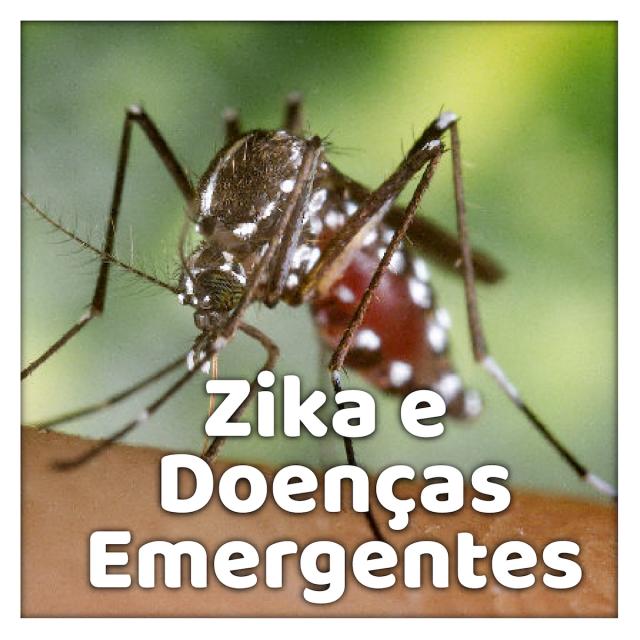
Através deste curso você vai saber porque tantas doenças que surgiram atualmente (doenças emergentes) são causadas por vírus, como elas surgem e se espalham. Veremos como vírus causadores de doenças entram em contato com o ser humano e como se espalham, principalmente aqueles transmitidos por mosquitos, como os vírus da Dengue e Zika.

Class Deals by MOOC List - Click here and see Coursera's Active Discounts, Deals, and Promo Codes.

Você será capaz de identificar como e onde o Zika vírus começou a causar a atual pandemia, entenderá como ele circula e quais os sintomas que causa nas pessoas em geral e em gestantes e particular, com ênfase na microcefalia.
Se você é um profissional da saúde ou só um curioso, ofereceremos aulas relevantes para todos estes públicos. Você também aprenderá como combatemos o Zika vírus, tanto através do controle dos mosquitos quanto pelo desenvolvimento de vacinas. E como boatos sobre essa doença surgiram e circularam na internet. Ao final do curso você terá a informação atualizada sobre o que sabemos e não sabemos sobre o Zika, bem como os próximos passos da ciência para conter esse vírus.
Se você é professora ou professor e está interessado em tratar o Zika em sala de aula, também teremos aulas e material que vão lhe preparar para tratar sobre Zika em aula.

Syllabus

WEEK 1
O que são os vírus? Uma visão geral sobre doenças emergentes
No módulo 1, você vai aprender como surgem novas doenças infecciosas, as doenças emergentes. Você verá como avaliar e identificar os estágios de entrada de novas infecções e como elas se estabelecem em humanos. E também aprenderá a identificar os fatores que explicam o surgimento de novas doenças em tempos recentes.

WEEK 2
Porque vírus são causadores de doenças
No módulo 2, você verá princípios gerais de como os vírus funcionam, para compreender e relacionar como o funcionamento deles dita os tratamentos que temos disponíveis para combater vírus. Este módulo integra como vírus funcionam com o desenvolvimento de antivirais e vacinas.

WEEK 3
Flavivírus: Febre Amarela e Dengue
No módulo 3, você verá desde quando flavivírus convivem conosco no Brasil. Você vai aprender a identificar os fatores ambientais e sociais que viabilizaram esta entrada, muitos dos quais ainda estão presentes.

WEEK 4
O Zika
Neste módulo, você vai aprender como se desenrolou o surto de zika no Brasil. Você verá como identificar os fatores que explicam a entrada e a circulação do vírus em 2014 e nos anos seguintes.

WEEK 5
Chikungunya e outros vírus
No módulo 5, você verá outros vírus importantes que podem circular enquanto tivermos mosquitos. Você vai aprender a identificar os fatores viabilizaram de outros vírus como o chikungunya, muitos dos quais ainda podem permitir outros vírus.

WEEK 6
O mosquito vetor.
Neste módulo, você verá de onde vieram os mosquitos que transmitem as arboviroses, como se tornaram tão comuns. Você aprenderá a identificar o que torna o controle destes mosquitos tão desafiador. Este módulo integra como os mosquitos circulam com estratégias de combate presentes e futuras.

WEEK 7
O que é a microcefalia e sua relação com doenças infecciosas
No módulo 7, você vai aprender o que descobrimos sobre como o zika causa microcefalia. Você aprenderá e identificará o dano que o zika causa e o que torna a síndrome congênita do zika tão única. E também aprenderá o que podemos fazer para prevenir novos casos.

WEEK 8
A recepção pública da epidemia de Zika e sua comunicação na mídia
No último módulo vamos usar os boatos que circularam no começo da epidemia de zika para integrar os fatores. Você aprenderá a identificar os motivos que geram boatos durante epidemias e como eles desenrolaram no Brasil.

Go to Class
MOOC List is learner-supported. When you buy through links on our site, we may earn an affiliate commission.

Related Courses

How Music Can Change Your Life (Coursera) Coursera
University of Melbourne

How Music Can Change Your Life (Coursera)

Did you ever wonder how music works? This course provides free video, audio and journal resources that explain six basic principles about how music can influence individual and community health and wellbeing. From biology and neuroscience, to psychotherapy and politics, the ways we engage with music can make all the difference. Music has always played an integral role in the lives of individuals and communities all around the globe.

Sep 14th 2026
5-12 Weeks
The Brain and Space (Coursera) Coursera
Duke University

The Brain and Space (Coursera)

This course is about how the brain creates our sense of spatial location from a variety of sensory and motor sources, and how this spatial sense in turn shapes our cognitive abilities. Knowing where things are is effortless. But “under the hood,” your brain must figure out even the simplest of details about the world around you and your position in it.

Sep 14th 2026
5-12 Weeks
Epidemiology: The Basic Science of Public Health (Coursera) Coursera
University of North Carolina

Epidemiology: The Basic Science of Public Health (Coursera)

Often called “the cornerstone” of public health, epidemiology is the study of the distribution and determinants of diseases, health conditions, or events among populations and the application of that study to control health problems. By applying the concepts learned in this course to current public health problems and issues, students will understand the practice of epidemiology as it relates to real life and makes for a better appreciation of public health programs and policies. This course explores public health issues like cardiovascular and infectious diseases – both locally and globally – through the lens of epidemiology.

Sep 14th 2026
5-12 Weeks
Training and Learning Programs for Volunteer Community Health Workers (Coursera) Coursera
Johns Hopkins University

Training and Learning Programs for Volunteer Community Health Workers (Coursera)

Volunteer community health workers (CHWs) are a major strategy for increasing access to and coverage of basic health interventions. Our village health worker training course reviews the process of training and continuing education of CHWs as an important component of involving communities in their own health service delivery. Participants will be guided through the steps of planning training and continuing education activities for village volunteers. The course draws on real-life examples from community-directed onchocerciasis control, village health worker programs, community case management efforts, peer educators programs and patent medicine vendor training programs, to name a few.

Sep 14th 2026
5-12 Weeks
Stories of Infection (Coursera) Coursera
Stanford University

Stories of Infection (Coursera)

This course introduces learners to a variety of infectious diseases using a patient-centered, story-based approach. Through illustrated, short videos, learners will follow the course of each patient’s illness, from initial presentation to resolution. Integrating the relevant microbiology, pathophysiology and immunology, this course aims to engage and entice the learner towards future studies in microbiology, immunology and infectious diseases.

Sep 14th 2026
5-12 Weeks
Diabetes - a Global Challenge (Coursera) Coursera
University of Copenhagen

Diabetes - a Global Challenge (Coursera)

Diabetes and obesity are growing health problems in rich and poor countries alike. With this course you will get updated on cutting-edge diabetes and obesity research including biological, genetic and clinical aspects as well as prevention and epidemiology of diabetes and obesity. All lectures are provided by high-profile scientists from one the world's leading universities in diabetes research.

Sep 14th 2026
5-12 Weeks
Schizophrenia (Coursera) Coursera
Wesleyan University

Schizophrenia (Coursera)

The main goal of this class are to gain an introductory exposure to the nature of the psychiatric disorder known as schizophrenia as revealed by the scientific method. We will discuss a broad range of findings from the scientific investigation of biological and psychological factors related to schizophrenia and its treatment.

Sep 14th 2026
5-12 Weeks
Everyday Chinese Medicine (Coursera) Coursera
The Chinese University of Hong Kong

Everyday Chinese Medicine (Coursera)

This course aims to serve as an education platform on Chinese medicine (CM) for the general public. Our primary goal is to empower healthcare choices by promoting awareness and practical application on CM diagnostic and therapeutic approaches, as well as regulation on CM services and herbal products using international examples.

Sep 14th 2026
5-12 Weeks
Traditional herbal medicine in supportive cancer care: From alternative to integrative (Coursera) Coursera
Technion - Israel Institute of Technology

Traditional herbal medicine in supportive cancer care: From alternative to integrative (Coursera)

Please join us for an exciting and innovative journey, examining one of the most important and often overlooked aspects of the oncology setting: Traditional Herbal Medicine in Supportive Cancer Care. This course is presented with short lectures offering a wide range of issues related to the principles and practice of herbal medicine in cancer care.

Sep 14th 2026
13-24 Weeks
Clinical Kidney, Pancreas and Islet Transplantation (Coursera) Coursera
Leiden University,Leiden University Medical Center

Clinical Kidney, Pancreas and Islet Transplantation (Coursera)

Kidney transplantation is a major advance of modern medicine which provides high-quality of life for patients with end-stage renal disease. What used to be an experimental, risky, and very limited treatment option more than 50 years ago is now routinely performed in many countries worldwide. The number of renal transplants is expected to rise sharply in the next decade since the proportion of patients with end stage renal disease is increasing.

Sep 14th 2026
4 Weeks
Impacting the Opioid Crisis: Prevention, Education, and Practice for Non-Prescribing Providers (Coursera) Coursera
University of Michigan

Impacting the Opioid Crisis: Prevention, Education, and Practice for Non-Prescribing Providers (Coursera)

This course will empower non-prescribing providers to directly impact the ongoing opioid crisis in the United States through increased knowledge and tools that will transform practice and policies. The course will inform you about the opioid epidemic and provide information and research about evidence-based strategies that are focused on prevention, intervention, education, or policy.

Sep 14th 2026
5-12 Weeks
HPV-Associated Oral and Throat Cancer: What You Need to Know (Coursera) Coursera
Icahn School of Medicine at Mount Sinai

HPV-Associated Oral and Throat Cancer: What You Need to Know (Coursera)

This course, offered by the Department of Otolaryngology – Head and Neck Surgery at the Icahn School of Medicine at Mount Sinai, is designed to inform primary care physicians and otolaryngologists (general and head and neck surgeons), as well as medical students, residents, nurses, physician assistants, medical assistants, about HPV-associated oral and throat cancers. It is also applicable to individuals who wish to broaden their knowledge and vernacular about this disease process, especially those who may have been diagnosed with HPV and/or HPV-associated oropharyngeal cancers.

Sep 14th 2026
5-12 Weeks