Cloud FinOps (Coursera)

Offered by Board Infinity,
Cloud FinOps (Coursera)

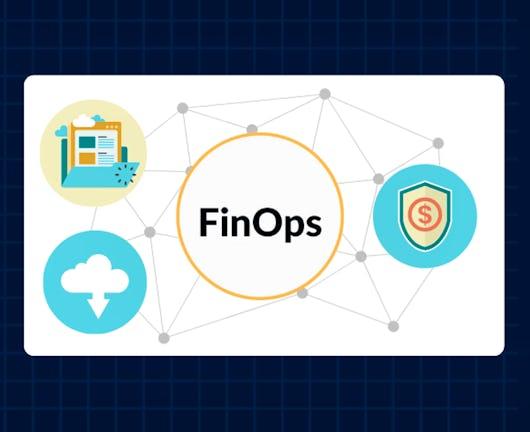
Placeholder for empty Reading"Fundamentals of Cloud FinOps" is a short course designed to navigate the complexities of cloud computing economics, focusing on optimizing costs while leveraging the full power of the cloud. It comprises four modules that sequentially build knowledge from cloud computing basics and pricing strategies to the specialized field of Cloud Financial Operations (FinOps) and practical tools for cost billing and governance.

Class Deals by MOOC List - Click here and see Coursera's Active Discounts, Deals, and Promo Codes.

Each module is crafted to address different facets of cloud cost management, including understanding cloud service models, deploying cost-effective cloud strategies, applying FinOps principles, and utilizing cost management tools. Through this course, participants will gain a holistic view of how to efficiently manage and optimize cloud expenditures in any organization, ensuring that cloud investments align with business objectives while fostering a culture of financial accountability and cross-functional collaboration.
Module 1 delves into the specialized field of Cloud Financial Operations (FinOps), a practice designed to maximize the financial efficiency of cloud spending in a scalable and predictable manner. It introduces the fundamentals of FinOps, its significance in cloud management, and the foundational elements that underpin this discipline. The module further explores the operational domain and capabilities of FinOps, providing insights into its practical application within businesses to ensure cost-effective cloud service usage. Through understanding personas involved in FinOps, key principles, phases, and the maturity cycle, learners will grasp how FinOps integrates with modern business strategies to optimize cloud investments.
Module 2 equips with a comprehensive understanding of cloud billing and cost management, essential for overseeing cloud expenditures and governance. It starts by explaining the hierarchy of cloud accounts and the structure of cloud billing, offering foundational knowledge on how cloud costs are organized and reported. The module progresses to explore various tools designed for managing these costs, including both cloud-native and third-party solutions, and demonstrates their application in real-world scenarios. Through this module, participants will gain insights into effective strategies for monitoring, analyzing, and optimizing cloud spending, ensuring financial accountability and governance in cloud environments.
This course is most suitable for individuals involved in cloud computing operations, finance, procurement, or management roles within organizations that utilize cloud services. It would benefit cloud architects, IT managers, finance professionals, and anyone responsible for optimizing cloud spending and ensuring cost-effective cloud service usage. Additionally, individuals interested in cloud economics and seeking to enhance their understanding of cloud financial operations (FinOps) would find this course valuable.

What you'll learn

  • Remember and understand the foundational concepts of cloud computing and its pricing mechanisms.
  • Apply principles of Cloud FinOps to integrate cost management into cloud deployment strategies.
  • Analyze and evaluate different cost management and billing tools for effective cloud governance.
  • Create strategies for fostering collaboration among teams to optimize cloud expenditures and drive financial efficiency.

Syllabus

Introduction to Cloud FinOps
Module 1 delves into the specialized field of Cloud Financial Operations (FinOps), a practice designed to maximize the financial efficiency of cloud spending in a scalable and predictable manner. It introduces the fundamentals of FinOps, its significance in cloud management, and the foundational elements that underpin this discipline. The module further explores the operational domain and capabilities of FinOps, providing insights into its practical application within businesses to ensure cost-effective cloud service usage. Through understanding personas involved in FinOps, key principles, phases, and the maturity cycle, learners will grasp how FinOps integrates with modern business strategies to optimize cloud investments.

Introduction to Cost Billing and Governance Tools
Module 2 equips with a comprehensive understanding of cloud billing and cost management, essential for overseeing cloud expenditures and governance. It starts by explaining the hierarchy of cloud accounts and the structure of cloud billing, offering foundational knowledge on how cloud costs are organized and reported. The module progresses to explore various tools designed for managing these costs, including both cloud-native and third-party solutions, and demonstrates their application in real-world scenarios. Through this module, participants will gain insights into effective strategies for monitoring, analyzing, and optimizing cloud spending, ensuring financial accountability and governance in cloud environments.

Go to Class
MOOC List is learner-supported. When you buy through links on our site, we may earn an affiliate commission.

Related Courses

Securing the IoT Landscape: From Inception to Architecture (Coursera) Coursera
LearnQuest

Securing the IoT Landscape: From Inception to Architecture (Coursera)

This comprehensive course is designed for professionals and students seeking a deep understanding of the IoT security landscape. Learners should have a comprehensive understanding of IoT foundations. Participants will cover the Device Identity lifecycle, learn the steps in the Device Bootstrap Process, and explore preventive security measures at the device, network, and cloud levels using real-world examples. The course guides learners through the IoT incident response lifecycle, including the setup of a Security Incident Response Team.

Oct 19th 2026
3 Weeks
Introduction to Containers w/ Docker, Kubernetes & OpenShift (Coursera) Coursera
IBM

Introduction to Containers w/ Docker, Kubernetes & OpenShift (Coursera)

Throughout the course you will apply what you learn with hands-on labs. From getting started with Docker, to orchestration and scaling with Kubernetes, and simplifying deployments with OpenShift. The labs are performed using your web browser on IBM Cloud and Skills Network Labs environments, that are made available to you at no charge. in the project at the end of the course you will build a container image and deploy and scale it on Cloud using OpenShift. This course is of interest to anyone who wants to be a cloud practitioner - cloud developers, cloud architects, cloud system engineers, devops engineers, cloud networking specialists and many other roles.

Oct 26th 2026
5-12 Weeks
Cloud Systems Software (Coursera) Coursera
Georgia Institute of Technology

Cloud Systems Software (Coursera)

This course provides an introduction to programming frameworks and their implementation issues in the Cloud. It explains multiple topics, including: scalable distributed data stores, resource management (for supporting multi-tenancy and elasticity) and virtualization techniques. Optionally, the student will also be guided in the implementation of a basic version of the distributed runtime system for the Map-Reduce programming framework

Oct 19th 2026
5-12 Weeks
Agile with Atlassian Jira (Coursera) Coursera
Atlassian

Agile with Atlassian Jira (Coursera)

Agile teams use “just enough” planning and an incremental approach to accomplishing the work of the team. Every project and every team uses a custom agile methodology. This course discusses common foundational principles and practices used by agile methodologies, providing the student a flexible set of tools to use in any role (e.g. product owner, scrum master, project manager, team member) on any agile team.

Oct 26th 2026
4 Weeks
M2M & IoT Interface Design & Protocols for Embedded Systems (Coursera) Coursera
University of Colorado Boulder

M2M & IoT Interface Design & Protocols for Embedded Systems (Coursera)

This course can also be taken for academic credit as ECEA 5348, part of CU Boulder’s Master of Science in Electrical Engineering degree. M2M and IoT Interface Design and Protocols is the third of three classes in the Embedded Interface Design (EID) specialization, an online version of the on-campus EID class taught in graduate embedded systems design. This course is focused on connecting devices to each other and to the cloud to create prototypes and actual systems that flow data from devices to consumers. The class includes an introduction to M2M (Machine-to-Machine) and IoT (Internet of Things) concepts, using the cloud to develop IoT systems (specifically AWS (Amazon Web Services) and its IoT framework), a review of common communications protocols at every level of connected devices, and other IoT design concerns such as security, message queuing approaches, and the use and design of APIs and microservices .

Oct 12th 2026
4 Weeks
Managing Change when Moving to Google Cloud em Português (Coursera) Coursera
Google Cloud

Managing Change when Moving to Google Cloud em Português (Coursera)

A migração para a nuvem traz várias oportunidades de trabalhar de novas maneiras e permite que a equipe inove e colabore melhor. Mas essa também é uma grande mudança. Às vezes o sucesso não depende da mudança em si, mas da maneira como ela é gerenciada. Este curso ajuda os gerentes de recursos humanos a entender alguns dos principais desafios associados à adoção da nuvem e oferece um framework verificado no local para auxiliar as equipes na jornada de mudança. Ao lidar com o fator humano da migração para a nuvem, as organizações aumentam as chances de alcançar os objetivos de negócios e investir em talentos futuros.

Oct 26th 2026
1 Week
Administración de sistemas y servicios de infraestructura de TI (Coursera) Coursera
Google

Administración de sistemas y servicios de infraestructura de TI (Coursera)

Este curso te hará pasar de trabajar en una sola computadora a una flota completa. La administración de sistemas es el campo de TI que es responsable de mantener sistemas informáticos confiables en un entorno multiusuario. En este curso, aprenderás sobre los servicios de infraestructura que mantienen en funcionamiento a todas las organizaciones, grandes y pequeñas. Nos sumergiremos en la nube para que puedas comprender todo, desde las configuraciones típicas de infraestructura de la nube hasta cómo administrar los recursos en ella. También aprenderás cómo administrar y configurar servidores, y cómo usar herramientas de la industria para administrar computadoras, información de usuarios y productividad de usuarios. Finalmente, aprenderás cómo recuperar la infraestructura de TI de tu organización en caso de un desastre.

Oct 19th 2026
5-12 Weeks
Cloud: Platform as a Service - Master's (Coursera) Coursera
Illinois Tech

Cloud: Platform as a Service - Master's (Coursera)

This course is aimed at preparing individuals to gain knowledge, skills, and abilities to demonstrate the knowledge for managing Platform as a Service (PaaS) in the Cloud. Students will learn to deploy, operate, and maintain cloud platforms for storing, processing, and transferring information with architecture design principles and a structured approach. Students will also learn the shared responsibility model and cloud security best practices to secure PaaS platforms for the application-hosting environments.

Oct 26th 2026
5-12 Weeks
Cloud Top Ten Risks (Coursera) Coursera
University of Minnesota

Cloud Top Ten Risks (Coursera)

After completing the course, the student should be able to do the following: Associate lists of OWASP Top Ten Risks with major cloud cybersecurity risks. Apply appropriate cryptographic techniques to secure authentication mechanisms and cloud data. Identify the most effective strategies for resisting injection attacks, cross-site scripting attacks, and object deserialization attacks. Assess strategies to address risks posed by administrative failures, including misconfiguration, broken access control, vulnerable software components, and security monitoring.

Oct 12th 2026
3 Weeks
Managing Change when Moving to Google Cloud (Coursera) Coursera
Google Cloud

Managing Change when Moving to Google Cloud (Coursera)

Moving to the cloud creates numerous opportunities to start working in a new way and it empowers the workforce to better collaborate and innovate. But it’s also a big change. Sometimes the success of the change hinges not on the change itself, but on how it’s managed. This course will help people managers to understand some of the key challenges associated with cloud adoption, and provide them with a verified in-the-field framework that will assist them in supporting their teams on the change journey.

Oct 19th 2026
1 Week