Agile with Atlassian Jira (Coursera)

Offered by Atlassian,
Agile with Atlassian Jira (Coursera)

Agile teams use “just enough” planning and an incremental approach to accomplishing the work of the team. Every project and every team uses a custom agile methodology. This course discusses common foundational principles and practices used by agile methodologies, providing the student a flexible set of tools to use in any role (e.g. product owner, scrum master, project manager, team member) on any agile team.

Class Deals by MOOC List - Click here and see Coursera's Active Discounts, Deals, and Promo Codes.

This course mainly discusses agile and lean principles, the kanban and scrum agile methodologies, and uses Atlassian Jira Software Cloud as the main software tool to apply hands-on learning of the topics. The course includes instruction on "classic" Jira projects as well as the new "next-gen" Jira projects.
Students can use the free plan of Atlassian Jira Software Cloud to complete the hands-on labs associated with this course. By the time you have completed this course, you will have a strong foundational understanding of agile principles and practices, and strong hands-on experience with Atlassian Jira Software Cloud. You will be the site administrator for your Jira account, so you will be able to perform basic administration tasks on your site. You should be able to continuously configure your Jira project(s) to match your team's custom agile methodology.
You can watch the videos and take the quizzes from your phone if you want, but the hands-on labs using Atlassian Jira Software Cloud require you to have a Windows, Mac or Linux computer.
This course tries to be as concise as possible. It will probably take you about 6-12 hours to go through, but your mileage may vary. It is highly encouraged that you apply what you learn to managing personal agile projects after the course is complete.

Syllabus

WEEK 1
Agile Overview I
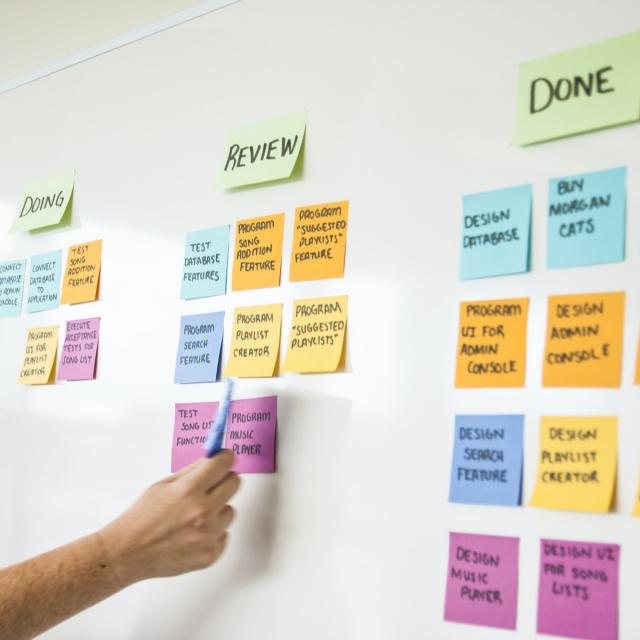
This module provides an overview of the agile mindset. It introduces Atlassian Jira as a tool used to implement agile principles for team project work. Students will be provided a free Jira Software Cloud license in order to go through the hands-on exercises in this course. We cover the importance of visualizing work, and provide an overview of the kanban agile method. Students will create a custom kanban board.

WEEK 2
Agile Overview II
This module start with an overview of scrum, including scrum concepts such as increments, sprints, sprint goals, backlogs, estimation, velocity, common scrum reports, roles and events. You will then execute a sprint using Jira. The rest of the module focuses more on the "why" of agile, and provided a foundational understanding of lean and agile principles. The Toyota Production System is discussed, as this could be considered as the foundation of lean thinking. The Agile Manifesto is also discussed in quite some detail.

WEEK 3
Configure Jira I
This module focuses on configuring Jira to match your agile process. This is a more hands-on module than the previous module. Every team has a unique, continuously evolving agile process. Their tools need to be able to adapt to these changes. We will start by discussing searching, then discuss Jira Query Language (JQL). A solid understanding of JQL helps with the rest of the course and in your continuing use of Jira after the course. We will discuss creating filter, custom issue types and configuring issues to show the information that your team cares about.

WEEK 4
Configure Jira II
In this module, we continue configuring Jira in order to be able to match the tool to our team's custom agile process. We will discuss and create epics, which are large issues that may contain other issues. We will discuss and create versions, which are a set of issues that usually make up a product update. We discuss users and permissions. Since you are the administrator of the free Jira Software Cloud that you use for this course, you should know how to invite users to your site and configure permissions so that the right access is granted to users. We end the course with a final project. You will be asked to configure Jira to keep up with your team's continuous changes to their agile process.

Go to Class
MOOC List is learner-supported. When you buy through links on our site, we may earn an affiliate commission.

Related Courses

Technical Support Fundamentals (Coursera) Coursera
Google

Technical Support Fundamentals (Coursera)

This course is the first of a series that aims to prepare you for a role as an entry-level IT Support Specialist. In this course, you’ll be introduced to the world of Information Technology, or IT. You’ll learn about the different facets of Information Technology, like computer hardware, the Internet, computer software, troubleshooting, and customer service. This course covers a wide variety of topics in IT that are designed to give you an overview of what’s to come in this certificate program.

Jun 22nd 2026
5-12 Weeks
Software Development Processes and Methodologies (Coursera) Coursera
University of Minnesota

Software Development Processes and Methodologies (Coursera)

Software is quickly becoming integral part of human life as we see more and more automation and technical advancements. Just like we expect car to work all the time and can't afford to break or reboot unexpectedly, software industry needs to continue to learn better way to build software if it were to become integral part of human life.

Jun 22nd 2026
4 Weeks
Lean Software Development (Coursera) Coursera
University of Minnesota

Lean Software Development (Coursera)

While scrum and XP were transforming the software development industry, there were another set of ideas (derived from lean manufacturing and Six Sigma) that started to influence software development methods. These ideas around Lean Software Development forms the foundation of number of agile methods. In this course, we will explore lean concepts and cover some of the common Lean methods and techniques like Kanban, Value Stream Mapping, etc.

Jun 22nd 2026
4 Weeks
Cloud Computing Applications, Part 2: Big Data and Applications in the Cloud (Coursera) Coursera
University of Illinois at Urbana-Champaign

Cloud Computing Applications, Part 2: Big Data and Applications in the Cloud (Coursera)

Welcome to the Cloud Computing Applications course, the second part of a two-course series designed to give you a comprehensive view on the world of Cloud Computing and Big Data! In this second course we continue Cloud Computing Applications by exploring how the Cloud opens up data analytics of huge volumes of data that are static or streamed at high velocity and represent an enormous variety of information. Cloud applications and data analytics represent a disruptive change in the ways that society is informed by, and uses information.

Jun 22nd 2026
4 Weeks
TDD - Desenvolvimento de Software Guiado por Testes (Coursera) Coursera
Instituto Tecnológico de Aeronáutica

TDD - Desenvolvimento de Software Guiado por Testes (Coursera)

Neste curso, assumimos que você já sabe projetar e desenvolver programas mais complexos em Java, com método e organização graças às boas práticas e princípios exercitados no curso anterior; mas você talvez não se sinta ainda confortável em projetar programas usando técnicas ágeis, como o desenvolvimento guiado por testes (TDD).

Jun 22nd 2026
4 Weeks
AWS Cloud Technical Essentials (Coursera) Coursera
AWS

AWS Cloud Technical Essentials (Coursera)

Are you in a technical role and want to learn the fundamentals of AWS? Do you aspire to have a job or career as a cloud developer, architect, or in an operations role? If so, AWS Cloud Technical Essentials is an ideal way to start. This course was designed for those at the beginning of their cloud-learning journey - no prior knowledge of cloud computing or AWS products and services required!

Jun 23rd 2026
5-12 Weeks
System Administration and IT Infrastructure Services (Coursera) Coursera
Google

System Administration and IT Infrastructure Services (Coursera)

This course will transition you from working on a single computer to an entire fleet. Systems administration is the field of IT that’s responsible for maintaining reliable computers systems in a multi-user environment. In this course, you’ll learn about the infrastructure services that keep all organizations, big and small, up and running. We’ll deep dive on cloud so that you’ll understand everything from typical cloud infrastructure setups to how to manage cloud resources. You'll also learn how to manage and configure servers and how to use industry tools to manage computers, user information, and user productivity. Finally, you’ll learn how to recover your organization’s IT infrastructure in the event of a disaster.

Jun 22nd 2026
5-12 Weeks
Cloud Networking (Coursera) Coursera
University of Illinois at Urbana-Champaign

Cloud Networking (Coursera)

In the cloud networking course, we will see what the network needs to do to enable cloud computing. We will explore current practice by talking to leading industry experts, as well as looking into interesting new research that might shape the cloud network’s future. This course will allow us to explore in-depth the challenges for cloud networking—how do we build a network infrastructure that provides the agility to deploy virtual networks on a shared infrastructure, that enables both efficient transfer of big data and low latency communication, and that enables applications to be federated across countries and continents? Examining how these objectives are met will set the stage for the rest of the course.

Jun 22nd 2026
5-12 Weeks
Advanced Modeling for Discrete Optimization (Coursera) Coursera
University of Melbourne,The Chinese University of Hong Kong

Advanced Modeling for Discrete Optimization (Coursera)

Optimization is a common form of decision making, and is ubiquitous in our society. Its applications range from solving Sudoku puzzles to arranging seating in a wedding banquet. The same technology can schedule planes and their crews, coordinate the production of steel, and organize the transportation of iron ore from the mines to the ports. Good decisions in manpower and material resources management also allow corporations to improve profit by millions of dollars.

Jun 22nd 2026
5-12 Weeks
Software Design Threats and Mitigations (Coursera) Coursera
University of Colorado System

Software Design Threats and Mitigations (Coursera)

The design step in developing software has some unique characteristics. First of all, it’s the only step where drawing pictures of things is the norm. Why is that? What do pictures do that other representations cannot do? Pictures have varying levels of detail; pictures have context. Pictures…paint a picture. Why are these things important? In this course, too, we begin looking at other disciplines (building architecture is a favorite one) for lessons on design.

Jun 22nd 2026
5-12 Weeks
System Validation (2): Model process behaviour (Coursera) Coursera
EIT Digital

System Validation (2): Model process behaviour (Coursera)

System Validation is the field that studies the fundamentals of system communication and information processing. It is the next logical step in computer science and improving software development in general. It allows automated analysis based on behavioural models of a system to see if a system works correctly. We want to guarantee that the systems does exactly what it is supposed to do.

Jun 22nd 2026
3 Weeks