EdX

Cellular Mechanisms of Brain Function (edX)

Cellular Mechanisms of Brain Function (edX)

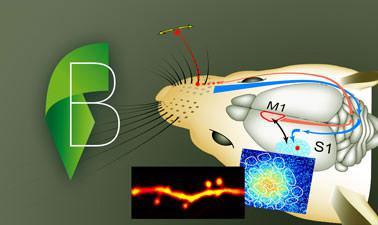
This course aims for a mechanistic description of mammalian brain function at the level of individual nerve cells and their synaptic interactions. Brain and behavior are inextricably linked in neuroscience. The function of the brain is to govern behavior, and the aim of this course is to causally link biophysical mechanisms with simple behaviors studied in mice.

Class Deals by MOOC List - Click here and see EdX's Active Discounts, Deals, and Promo Codes.

The brain processes information through the concerted activity of many neurons, which communicate with each other through synapses organised in highly dynamic networks. The first goal of the course is to gain a detailed understanding of the structure and function of the fundamental building blocks of the mammalian brain, its synapses and neurons.

The second goal is to understand neuronal networks, with specific emphasis on the interactions of excitatory glutamatergic and inhibitory GABAergic neurons. The third goal is to place neuronal network function in the context of sensory processing ultimately leading to behavioral decisions and motor output.
What you'll learn:

  • Fundamental aspects of neuroscience related to mammalian brain function
  • Biophysical mechanisms of electrical signalling in neurons
  • Synaptic mechanisms underlying neuronal computations
  • Modern methods for studying mammalian brain function in vivo
  • Neuronal network function underlying sensory perception, sensorimotor integration and learning
Go to Class
MOOC List is learner-supported. When you buy through links on our site, we may earn an affiliate commission.

Related Courses

Computational Neuroscience (Coursera) Coursera
University of Washington

Computational Neuroscience (Coursera)

This course provides an introduction to basic computational methods for understanding what nervous systems do and for determining how they function. We will explore the computational principles governing various aspects of vision, sensory-motor control, learning, and memory. Specific topics that will be covered include representation of information by spiking neurons, processing of information in neural networks, and algorithms for adaptation and learning.

Jun 22nd 2026
5-12 Weeks
Synapses, Neurons and Brains (Coursera) Coursera
Hebrew University of Jerusalem

Synapses, Neurons and Brains (Coursera)

These are very unique times for brain research. The aperitif for the course will thus highlight the present “brain-excitements” worldwide. You will then become intimately acquainted with the operational principles of neuronal “life-ware” (synapses, neurons and the networks that they form) and consequently, on how neurons behave as computational microchips and how they plastically and constantly change - a process that underlies learning and memory.

Jun 1st 2026
5-12 Weeks
Fundamentals of Neuroscience, Part 3: The Brain (edX) EdX
HarvardX,Harvard University

Fundamentals of Neuroscience, Part 3: The Brain (edX)

Discover what makes your brain tick in this third part of a four-part introductory series in Neuroscience. The human brain is a fantastically complex system, capable of transforming a torrent of incoming information into thought and action. In this course, we will look at how the various subsystems of the brain work together to enable us to survive and thrive in a changing world.

Self Paced
Self-Paced
Medical Neuroscience (Coursera) Coursera
Duke University

Medical Neuroscience (Coursera)

Medical Neuroscience explores the functional organization and neurophysiology of the human central nervous system, while providing a neurobiological framework for understanding human behavior. In this course, you will discover the organization of the neural systems in the brain and spinal cord that mediate sensation, motivate bodily action, and integrate sensorimotor signals with memory, emotion and related faculties of cognition. The overall goal of this course is to provide the foundation for understanding the impairments of sensation, action and cognition that accompany injury, disease or dysfunction in the central nervous system. The course will build upon knowledge acquired through prior studies of cell and molecular biology, general physiology and human anatomy, as we focus primarily on the central nervous system.

Jun 22nd 2026
13-24 Weeks
Understanding the Brain: The Neurobiology of Everyday Life (Coursera) Coursera
University of Chicago

Understanding the Brain: The Neurobiology of Everyday Life (Coursera)

Learn how the nervous system produces behavior, how we use our brain every day, and how neuroscience can explain the common problems afflicting people today. We will study functional human neuroanatomy and neuronal communication, and then use this information to understand how we perceive the outside world, move our bodies voluntarily, stay alive, and play well with others.

Jun 1st 2026
5-12 Weeks
Your Body Inside and Out: Using Exercise Physiology to Slow Aging (edX) EdX
Stanford University,StanfordOnline

Your Body Inside and Out: Using Exercise Physiology to Slow Aging (edX)

This online class will present the latest scientific information on the interaction between aging and physical activity. In an approachable style, you will learn how your physiology changes with age and how different types of movement can impact that trajectory of aging. Physical activity is a powerful medicine and you will learn how to harness its benefits to improve your health and wellness throughout the lifespan. Whether you are new to exercise or a life-long athlete, this class will open your eyes to the amazing systems within your body and help you strategize on activities that fit your goals for a healthy life.

No sessions available
5-12 Weeks
Fundamentals of Neuroscience, Part 1: The Electrical Properties of the Neuron (edX) EdX
HarvardX,Harvard University

Fundamentals of Neuroscience, Part 1: The Electrical Properties of the Neuron (edX)

Learn how electricity makes the neurons in your brain tick. Fundamentals of Neuroscience is a three-courseseries that explores the structure and function of the nervous system—from the inner workings of a single nerve cell to the staggering complexity of the brain and the social interactions they enable.

Self Paced
Self-Paced
Fundamentals of Neuroscience, Part 2: Neurons and Networks (edX) EdX
HarvardX,Harvard University

Fundamentals of Neuroscience, Part 2: Neurons and Networks (edX)

Discover what makes your brain tick in this second part of a four-part introductory series in Neuroscience. Neurons in isolation are fascinating and complicated, but the real magic of neuroscience happens in the interaction between neurons. In this course, we examine how neurons pass signals to one another and how complex dynamics can result from just a few neurons arranged in relatively simple circuits.

Self Paced
Self-Paced
Simulating a Hippocampus Microcircuit (edX) EdX
École Polytechnique Fédérale de Lausanne,EPFLx

Simulating a Hippocampus Microcircuit (edX)

In this course, you will learn to simulate, analyze and visualize hippocampal microcircuits. You will reproduce experimental protocols “in silico” to validate simulated microcircuit behaviors, and leverage the brain simulation platform to gain insights towards parsimonious theories on brain function. Simulation Neuroscience is an emerging approach to integrate the knowledge dispersed throughout the field of neuroscience.

Self Paced
Self-Paced
Aprendendo a aprender: ferramentas mentais poderosas para ajudá-lo a dominar assuntos difíceis (em Português) [Learning How to Learn] (Coursera) Coursera
Deep Teaching Solutions

Aprendendo a aprender: ferramentas mentais poderosas para ajudá-lo a dominar assuntos difíceis (em Português) [Learning How to Learn] (Coursera)

Este curso dá-lhe acesso fácil a técnicas de aprendizagem de valor inestimável, usadas por especialistas em Arte, Música, Literatura, Matemática, Ciência, Esportes e muitas outras disciplinas. Vamos aprender sobre a forma como o cérebro usa dois modos de aprendizagem muito diferentes e como ele encapsula (em "pedaços") informações. Também vamos falar sobre ilusões de aprendizagem, técnicas de memória, lidar com a procrastinação, e as melhores práticas apresentadas pela investigação a ser mais eficaz em o ajudar a dominar assuntos difíceis.

Jun 8th 2026
4 Weeks
Introduction to Philosophy (Coursera) Coursera
University of Edinburgh

Introduction to Philosophy (Coursera)

This course will introduce you to some of the main areas of research in contemporary philosophy. Each module a different philosopher will talk you through some of the most important questions and issues in their area of expertise. We’ll begin by trying to understand what philosophy is – what are its characteristic aims and methods, and how does it differ from other subjects? Then we’ll spend the rest of the course gaining an introductory overview of several different areas of philosophy.

Jun 15th 2026
5-12 Weeks