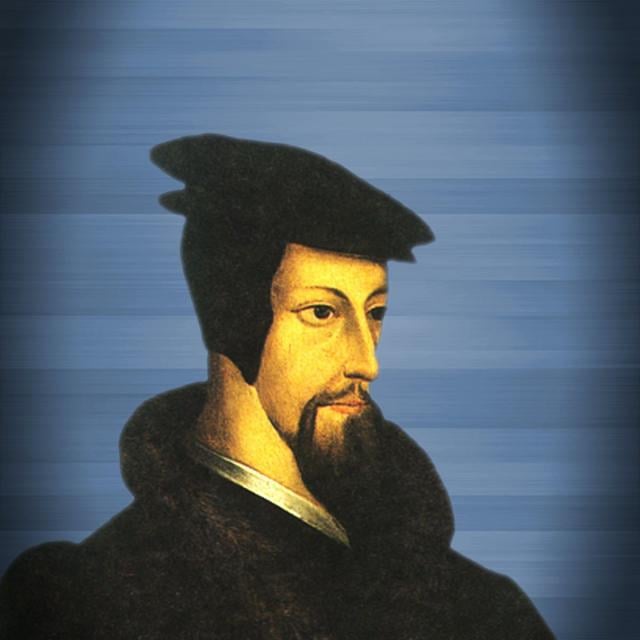
Ce cours introduit à la vie et à la pensée du réformateur Jean Calvin (1509-1564) ainsi qu’à son influence sur le monde moderne et contemporain. La démarche proposée se veut critique, il ne s’agit ni de canoniser ni de condamner Calvin, mais de comprendre sa pensée avec toute la distance requise et d’en analyser les enjeux.
Class Deals by MOOC List - Click here and see Coursera's Active Discounts, Deals, and Promo Codes.
Au cours de la première semaine, nous explorerons les principales étapes de la vie de Calvin. Les semaines 2 et 3 seront consacrées à l’étude de sa pensée théologique et de son éthique. Enfin, lors des semaines 4 et 5, nous nous interrogerons sur la diffusion du calvinisme dans le monde et la pertinence actuelle de la pensée de Calvin.
--
This course is an introduction to the life and thought of the reformer John Calvin (1509-1564) and to his influence on the modern and contemporary world. The approach we develop is critical: we intend neither to canonize nor to condemn Calvin or his thought. Our goal, rather, is to avoid any rash evaluation in order to understand his thought and analyze the issues at stake in it.
During five weeks, we will explore together the life and work of the Reformer. During the first week, we will study the main aspects of Calvin’s life. Weeks 2 and 3 will focus on his theology and his ethics. During the last two weeks (weeks 4 and 5), we will ponder how Calvinism became a worldwide phenomenon and ask ourselves what kind of relevance Calvin’s thought may still have today.
Syllabus
WEEK 1
La vie de Calvin - Calvin's life
Bienvenue dans cette première semaine de cours ! Après avoir défini le concept de réforme comme idéal de retour à un passé meilleur, et avoir situé d’une part les mouvements réformateurs en Europe (Luther, Zwingli, le réformisme français), d’autre part la Réforme à Genève, nous allons faire connaissance de Calvin: sa formation, son premier séjour à Genève (1536-1538), son étape strasbourgeoise (1538-1541), enfin l’établissement à Genève (de 1541 à sa mort en 1564). Nous verrons comment Calvin entend y construire la Réforme, grâce à des instruments institutionnels propres: le Consistoire, la Compagnie des pasteurs, l’Académie notamment. L’affaire Servet (du nom du médecin espagnol condamné à mort à Genève en 1553) fera l’objet d’une séquence entière, tout comme la période 1555-1564, la seule dont on puisse légitimement parler comme de la «Genève de Calvin». Cette première semaine devra permettre de faire le point sur le contexte historique et d’initier les étudiant-e-s à la biographie de Calvin. A la fin de cette semaine, les étudiant-e-s devraient connaître les grandes étapes de sa vie et être capables de situer Calvin au sein des mouvements de réforme du 16e siècle. Welcome in this first module of the course! After defining the concept of reform, looking at it as the ideal of a return to a (purer) past, we will attempt to provide a map of various reformatory movements in continental Europe (Luther, Zwingli, French reformatory movements). Only then will we begin focusing on the reformation in Geneva and the personality of John Calvin. We will consider his education, his first stay in Geneva (1536-1538), his years in Strasbourg (1538-1541) and his long activity, during the rest of his life, in Geneva (1541 until his death in 1564). We will see how Calvin sought to establish a reformation, through new institutional bodies, especially the Consistory (Consistoire), the Compagnie des pasteurs and the Academy. The Servetus case (Servetus was a Spanish doctor and intellectual who was executed as a heretic in Geneva in 1553) will be studied, as will be the final decade of Calvin's life, during which Geneva became "Calvin's Geneva". The goal of this first module is to introduce you to the historical context and to provide basic information about Calvin's biography. At the end of this module, you will have a good sens of the main stages of his life and you will be able to locate Calvin among other reformatory movements of the 16th century.
WEEK 2
La pensée théologique de Calvin - Calvin's theology
Calvin a été un réformateur non seulement de l’Église mais aussi de la théologie. Son œuvre fut avant tout une œuvre pastorale et théologique. Ce deuxième module présentera les principaux aspects de sa pensée théologique, en conversation avec la recherche récente. Après avoir examiné son rapport aux Écritures bibliques (Ancien et Nouveau Testament), nous passerons en revue plusieurs thèmes théologiques particulièrement importants pour lui : l’être humain, la connaissance de Dieu comme Père, l’œuvre réconciliatrice du Fils, le rôle de l’Esprit-Saint, l’élection divine, l’Église, les sacrements et la spiritualité.Lors de la deuxième semaine, nous nous pencherons sur ce qui constitua le cœur de l’action de Calvin : la réforme de la théologie et de l’Église à partir du message biblique. L’objectif de cette semaine est de présenter, d’analyser et d’évaluer des thèmes centraux de la pensée théologique de Calvin, en conversation avec la recherche récente. Au terme de cette semaine, les étudiant-e-s auront une idée plus précise de la manière dont Calvin réfléchissait sur des questions théologiques centrales.
Calvin was not only a reformer of the Church, but also of theology. His work was above all a pastoral and a theological work. Module 2 of the course focuses on some of the main aspects of his theology, on the basis of recent scholarship. After examining Calvin's view of the Bible (Old and New Testaments), we will consider several themes which were of great importance to him: the human being, the knowledge of God as Father, Christ's reconciling work, the role of the Holy Spirit, God's election, the Church, the sacraments and spirituality. All of these themes belong to the heart of what animated him and his work: the reforming of theology and of the Church in the light of the biblical message. The goal of this module is to present, analyze and evaluate some of the main themes of Calvin's theology, at times in conversation with contemporary scholarship. At the end of module 2, you should have a good grasp of the ways in which Calvin reinterpreted central theological questions.
WEEK 3
L'éthique de Calvin - Calvin's ethics
Ce troisième module présente l’éthique de Calvin. Nous aborderons le fondement théologique de son approche, à savoir le commandement de Dieu. Nous étudierons les trois usages de la Loi chez Calvin et la distinction entre les deux règnes, celui du royaume temporel et celui du royaume spirituel. L’éthique de Calvin sera caractérisée de trois manières, selon qu’elle se rapporte au Créateur, au Rédempteur ou au Sanctificateur. Nous discuterons enfin les conséquences politiques, économiques et sociales de l’éthique de Calvin. Ce module vise à mettre en lumière les spécificités d’une approche théologique de l’éthique et à comprendre la fécondité et les limites d’une telle approche.
Module 3 focuses on Calvin's ethics. We will study the theological foundation of his ethical thinking, namely God's command. We will consider the three uses of the Law according to Calvin and his way of distinguishing between the two kingdoms, i.e. between the secular and the spiritual realms. Calvin's ethics is threefold, depending on its link to the Creator, the Reconciler and the Sanctifier. We will examine the political, economic and social import of his ethics. This second module seeks to shed light on the specificities of a theological approach to ethics as well as on the advantages and potential problems which may arise with such an approach.
WEEK 4
La diffusion du calvinisme - The spread of calvinism
Le calvinisme a connu une diffusion internationale très rapide et très variée, d’abord en Europe puis, au fil des siècles, sur tous les continents. Il faut distinguer deux plans de cette diffusion et réception du calvinisme : l’impact des idées de Calvin sur les Églises, sur le christianisme, et l’influence, plus difficile à étudier car plus diffuse, des idées de Calvin ou des idées qui se réclament de Calvin, dans toutes sortes de champs de la réalité humaine (arts, philosophie, culture). L’objectif principal de ce troisième module est d’offrir une large vision de l’héritage calvinien et calviniste à partir de 1564, en Europe et au-delà.
Calvinism spread internationally very rapidly and in quite diverse ways, first in Europe and then, in the course of time, on all continents. It is important to distinguish two aspects of this spread: the impact of Calvin's ideas on the Churches, on Christianity, on the one hand, and on the other the more diffuse influence of Calvin's ideas (or of ideas which claim to come from him) in all kinds of areas of our world (the arts, philosophy, culture, and so forth). The main objective of module 3 is to present a broad spectrum of the Calvinist (or Calvinian) legacy, from 1564 onwards, in Europe and beyond.
WEEK 5
Dans ce cinquième et dernier module, diverses personnalités ont été invitées à s’exprimer. Elles ont été choisies en fonction de leur compétence et de leur provenance. Dans le cadre imparti, carte blanche leur est laissée d’exprimer un avis, parfois surprenant, sur l’héritage de Calvin aujourd’hui. Seront notamment proposées une séquence sur la légende noire de Calvin (n° 2), sur le programme du Monument international de la Réformation de Genève (n° 3), sur l’empreinte qui demeure, ou non, de Calvin à Genève (n° 4, par le prof. Selderhuis, l’un des plus grands connaisseurs de Calvin aujourd’hui), ou sur le calvinisme dans diverses aires culturelles (n° 5 à 8). Trois bilans personnels seront également proposés (n° 9 à 11), ainsi qu’une conclusion générale (n° 12).Notre dernière semaine a pour objectif à la fois de conclure le parcours proposé et d’ouvrir vers d’autres horizons culturels et géographiques. A la fin du cours, l’étudiant-e devrait mesurer la diversité de l’héritage calvinien.
In this fifth and last module, various personalities have been invited to speak. They were chosen in relation to their expertise and personal background. Each was invited to speak freely, to express an opinion on the relevance of Calvin's legacy today. Among the topics under discussion are the longstanding view of Calvin as a dictator, the Wall of the Reformation in Geneva, the impact of Calvin on today's city of Geneva (with special guest prof. Herman Selderhuis, a world-renowned expert on Calvin) and on various areas of culture. The main objective of this module, in conclusion of the entire course and as a way to open things up towards other cultural and geographical horizons, is to convey a sense of both the variety of opinions which may be expressed on Calvin and the breadth of Calvin's legacy.