Business intelligence and data analytics: Generate insights (Coursera)

Offered by Macquarie University,
Business intelligence and data analytics: Generate insights (Coursera)

‘Megatrends’ heavily influence today’s organisations, industries and societies, and your ability to generate insights in this area is crucial to your organisation’s success into the future. This course will introduce you to analytical tools and skills you can use to understand, analyse and evaluate the challenges and opportunities ‘megatrends’ will inevitably bring to your organisation.

Class Deals by MOOC List - Click here and see Coursera's Active Discounts, Deals, and Promo Codes.

Via structured learning activities you will explore how these trends can be addressed through sustainability-oriented innovation. You will be introduced to key data analytics concepts such as systems thinking, multi-level perspectives and multidisciplinary methods for envisioning futures, and apply them to specific real-world challenges you and your organisation may face. And there’ll be a focus on future-proofing skills such as teamwork, collaboration with diverse stakeholders and accounting for judgements made within ethical decision-making frameworks.

Course 3 of 4 in the Analysing: Numeric and digital literacies Specialization.

Syllabus

WEEK 1
Basics of insight generation
Organisations and governments everywhere want to exploit data to predict behaviors and extract valuable real-world insights. Billions of devices and social media conversations are fueling the rate at which humanity is producing data. Therefore, we need more skills to understand data and make our systems, policies and governance models more efficient. In this week, we will highlight the potential of generating insights with the help of data in allowing individuals, businesses, and governments to make effective decisions.

WEEK 2
Basic statistics: Foundations of quantitative insights
In week 2, we’ll focus on basic statistics. It’s one of the most important components of Data Analytics and it’s crucial to have a clear understanding of all the related concepts to be successful in the data industry. Statistics provide us with a set of tools that offer ways to convert quantitative data and qualitative data into information that we can use to generate insights.

WEEK 3
The normal distribution and histograms
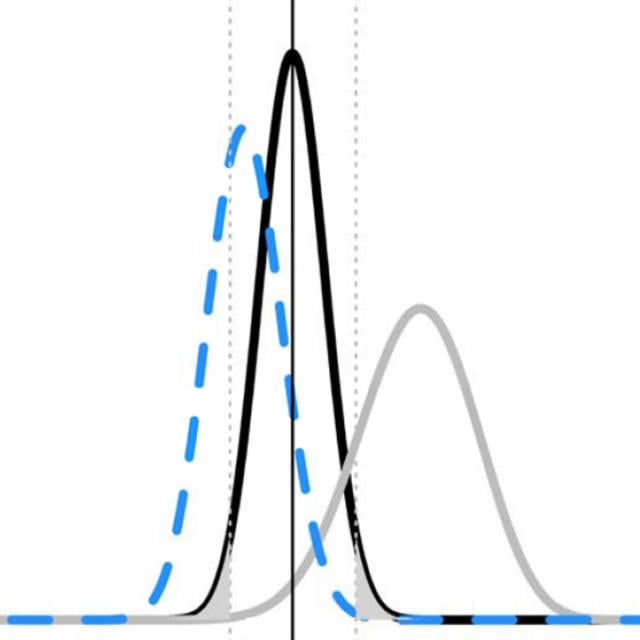
Businesses must constantly strive to offer “better” products and services than their competitors. One of the oldest and time-proven techniques by which we can visualise and think about quality in a methodological way is via normal distributions or bell curves. So in week 3, we’ll start by learning about histograms and the normal curve and then have a look at empirical rule which gives us a quick rough estimate about the spread of the given data. Finally, we’ll learn about the measures that quantify the interrelationships between two data variables. Correlation and covariance are two important measures that quantify the relationship between variables and we’ll study both.

WEEK 4
Data visualisation
Visualisation is a key technique which can provide answers hidden in data. In this week, you will explore various data visualisations available and how to use them for analysis. These techniques will empower you to create compelling stories and dashboards from your data that the non-analyst community can also understand easily. As a person working in the data industry, you don’t just need to deal with data and solve data-driven problems but the incumbent also needs to convince company executives and government officials of the right decisions to make. These executives/officials may not be well versed in data science, so the incumbent must but be able to present and visualise the data’s story in a way they will understand. And this module will help you achieve that.

WEEK 5
Advanced charts and dashboards
This week we learn how to create bar and bullet charts, and dashboards. Data visualization helps to tell stories by curating data into a form easier to understand. A good visualisation tells a story, by removing the noise from data and highlighting the useful information.

WEEK 6
Demand forecasting
This week we’ll look at how, by using predictive modelling, we can generate actionable insights that when implemented will provide businesses with a predictable future outcome. Predictive modeling is a group of methods and algorithms that you can employ to forecast an outcome. Utilising basic predictive modelling techniques, we will also explore consumer demand forecasting.

Go to Class
MOOC List is learner-supported. When you buy through links on our site, we may earn an affiliate commission.

Related Courses

Estadística aplicada a los negocios (Coursera) Coursera
Universidad Austral

Estadística aplicada a los negocios (Coursera)

La toma de decisiones está en la esencia de los negocios. Gerenciar es tomar decisiones, muchas veces bajo presión, con información desordenada y en un contexto de incertidumbre. Un aspecto básico es entender y analizar la información, organizar los datos de forma de facilitar su posterior uso y la toma de decisiones.

Jun 22nd 2026
4 Weeks
Exploring and Producing Data for Business Decision Making (Coursera) Coursera
University of Illinois at Urbana-Champaign

Exploring and Producing Data for Business Decision Making (Coursera)

This course provides an analytical framework to help you evaluate key problems in a structured fashion and will equip you with tools to better manage the uncertainties that pervade and complicate business processes. Specifically, you will be introduced to statistics and how to summarize data and learn concepts of frequency, normal distribution, statistical studies, sampling, and confidence intervals.

Jun 22nd 2026
4 Weeks
Applying Data Analytics in Marketing (Coursera) Coursera
University of Illinois at Urbana-Champaign

Applying Data Analytics in Marketing (Coursera)

This course introduces students to the science of business analytics while casting a keen eye toward the artful use of numbers found in the digital space. The goal is to provide businesses and managers with the foundation needed to apply data analytics to real-world challenges they confront daily in their professional lives.

Jun 27th 2026
4 Weeks
Statistical Inference (Coursera) Coursera
Johns Hopkins University

Statistical Inference (Coursera)

Statistical inference is the process of drawing conclusions about populations or scientific truths from data. There are many modes of performing inference including statistical modeling, data oriented strategies and explicit use of designs and randomization in analyses. Furthermore, there are broad theories (frequentists, Bayesian, likelihood, design based, …) and numerous complexities (missing data, observed and unobserved confounding, biases) for performing inference.

Jun 22nd 2026
4 Weeks
Exploratory Data Analysis (Coursera) Coursera
Johns Hopkins University

Exploratory Data Analysis (Coursera)

This course covers the essential exploratory techniques for summarizing data. These techniques are typically applied before formal modeling commences and can help inform the development of more complex statistical models. Exploratory techniques are also important for eliminating or sharpening potential hypotheses about the world that can be addressed by the data.

Jun 22nd 2026
4 Weeks
Introduction to Recommender Systems: Non-Personalized and Content-Based (Coursera) Coursera
University of Minnesota

Introduction to Recommender Systems: Non-Personalized and Content-Based (Coursera)

This course, which is designed to serve as the first course in the Recommender Systems specialization, introduces the concept of recommender systems, reviews several examples in detail, and leads you through non-personalized recommendation using summary statistics and product associations, basic stereotype-based or demographic recommendations, and content-based filtering recommendations.

Jun 22nd 2026
4 Weeks
Data Warehouse Concepts, Design, and Data Integration (Coursera) Coursera
University of Colorado System

Data Warehouse Concepts, Design, and Data Integration (Coursera)

This is the second course in the Data Warehousing for Business Intelligence specialization. Ideally, the courses should be taken in sequence. In this course, you will learn exciting concepts and skills for designing data warehouses and creating data integration workflows. These are fundamental skills for data warehouse developers and administrators. You will have hands-on experience for data warehouse design and use open source products for manipulating pivot tables and creating data integration workflows.

Jun 22nd 2026
5-12 Weeks
Design and Make Infographics (Project-Centered Course) (Coursera) Coursera
Michigan State University

Design and Make Infographics (Project-Centered Course) (Coursera)

In this project-centered course*, you will create a content-rich infographic on a topic of your choice using Adobe Illustrator (which you can download for a free, 30-day trial). You might choose to create a visual representation of data from the world of sports, entertainment, politics, or science, to explain a business trend or environmental issue, or even to present a theme or development from your personal life. Your finished infographic will engage your target audience and convey information clearly through effective use of design elements such as typography, color, and structure.

Jun 22nd 2026
4 Weeks
Interprofessional Healthcare Informatics (Coursera) Coursera
University of Minnesota

Interprofessional Healthcare Informatics (Coursera)

Interprofessional Healthcare Informatics is a graduate-level, hands-on interactive exploration of real informatics tools and techniques offered by the University of Minnesota and the University of Minnesota's National Center for Interprofessional Practice and Education. We will be incorporating technology-enabled educational innovations to bring the subject matter to life. Over the 10 modules, we will create a vital online learning community and a working healthcare informatics network.

Jun 22nd 2026
5-12 Weeks
Communicating Business Analytics Results (Coursera) Coursera
University of Colorado Boulder

Communicating Business Analytics Results (Coursera)

The analytical process does not end with models than can predict with accuracy or prescribe the best solution to business problems. Developing these models and gaining insights from data do not necessarily lead to successful implementations. This depends on the ability to communicate results to those who make decisions.

Jun 22nd 2026
4 Weeks
Experimentation for Improvement (Coursera) Coursera
McMaster University

Experimentation for Improvement (Coursera)

We are always using experiments to improve our lives, our community, and our work. Are you doing it efficiently? Or are you (incorrectly) changing one thing at a time and hoping for the best? In this course, you will learn how to plan efficient experiments - testing with many variables. Our goal is to find the best results using only a few experiments. A key part of the course is how to optimize a system.

Jun 22nd 2026
5-12 Weeks
Applying Data Analytics in Finance (Coursera) Coursera
University of Illinois at Urbana-Champaign

Applying Data Analytics in Finance (Coursera)

This course introduces an overview of financial analytics. You will learn why, when, and how to apply financial analytics in real-world situations. You will explore techniques to analyze time series data and how to evaluate the risk-reward trade off expounded in modern portfolio theory. While most of the focus will be on the prices, returns, and risk of corporate stocks, the analytical techniques can be leverages in other domains. Finally, a short introduction to algorithmic trading concludes the course.

Jun 28th 2026
4 Weeks