EdX

Bridging Differences (edX)

Bridging Differences (edX)

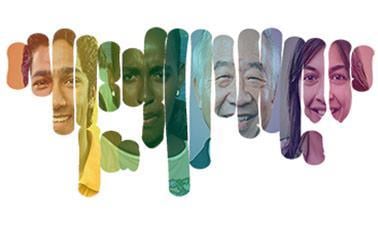
Learn research-based strategies for better relationships, dialogue, and understanding across divides. Relevant to anyone navigating conflicts and differences, especially geared toward college campuses.
We encounter differences every day—differences in race, politics, gender, faith, and more. How can we connect across these differences, especially at a time of deep social polarization?

Class Deals by MOOC List - Click here and see EdX's Active Discounts, Deals, and Promo Codes.

In this course, you will learn core research-based principles and strategies for fostering positive relationships, dialogue, and understanding across lines of difference. Created by UC Berkeley’s Greater Good Science Center (GGSC), the course offers best practices that draw on scientific findings and case studies from real-world programs. It will zero in on how these evidence-based strategies can be applied to the divisions and conflicts that show up in our everyday relationships and in various sectors, with a particular focus on university and college campuses. The course builds on the GGSC’s popular Bridging Differences Playbook, which has already been used widely by leaders in government, education, corporate, and other settings.
It is taught by Professors Allison Briscoe-Smith and Rodolfo Mendoza-Denton—gifted and engaging teachers who draw on a wealth of knowledge in the science and practice of bridging differences. Joining them are researchers and practitioners who have led efforts to bridge racial, religious, political, and other divides in higher education and other settings.
Learners who register for the Verified Track will receive additional guidance in developing their own programs for bridging differences, particularly on college campuses.
Join us to make real and resonant shifts in your life, community, or campus, finding new ways to connect across lines of difference.
The production of this course was supported by a generous grant from the Arthur Vining Davis Foundation, with additional support provided by the Einhorn Collaborative.

What you'll learn

  • What it means—and doesn’t mean—to “bridge differences,” and when it might be unwise or unhealthy to try to “bridge” with someone else
  • Why bridging differences is valuable to individuals and communities, and is especially important in higher education
  • How to identify, understand, and guard against some of your own biases and prejudices
  • How to communicate in ways that foster understanding and deeper connection rather than exacerbate divides
  • How to find commonalities and connection with people who might seem different from you
  • How to foster and support positive interactions between members of different groups who might be at odds with one another
Go to Class
MOOC List is learner-supported. When you buy through links on our site, we may earn an affiliate commission.

Related Courses

Decolonising Evaluation (edX) EdX
Wits University,WitsX

Decolonising Evaluation (edX)

Learn to identify the intersection between evaluation and decolonization debates by understanding how evaluation has evolved with the development sector. Evaluation plays an integral role in understanding how different visions of development are expressed and contested in programme design and management. Decolonization has been a central concern of the field, and there is a need to bring together a wide range of discussions concerned with decolonized evaluation.

No sessions available
Self-Paced
Cities are back in town : sociologie urbaine pour un monde globalisé (Coursera) Coursera
Sciences Po

Cities are back in town : sociologie urbaine pour un monde globalisé (Coursera)

La mondialisation et l'européanisation favorisent le développement rapide des villes à travers le monde. L'urbanisation atteint de nouveaux sommets aujourd’hui avec l'essor des mégacités (plus de 15 millions d'habitants) comme Calcutta, Los Angeles, Dhaka, Le Caire, Tokyo, New York, Shanghai, Mexico ou Séoul. Au-delà de la métropole moderne, les chercheurs tentent de donner un sens à ces grandes régions urbaines au moyen de concepts divers tels que « post-métropoles », « villes globales », et « régions métropolitaines globales ».

Sep 21st 2026
5-12 Weeks
Découvrir l'anthropologie (edX) EdX
LouvainX,Université Catholique de Louvain - UCL

Découvrir l'anthropologie (edX)

Expérimentez un autre regard sur les sociétés humaines avec des chercheurs en anthropologie prospective. Comment les humains s’organisent-ils en sociétés ? Qu’appelle-t-on « familles » et comment se constituent-elles ? Quel regard et quels types d’analyse l’anthropologie propose-t-elle sur les systèmes de parenté, symboliques, politiques, religieux ?

Self Paced
Self-Paced
Global Social Change (edX) EdX
Wellesley College,WellesleyX

Global Social Change (edX)

Learn how everyday people in China, Bangladesh, Mexico, and the U.S. transform the world around them and advocate for social change. What possibilities exist for a fairer world? Can one person truly make a difference? In this social sciences course, we sample the possibilities and limits of social change in an interconnected, inequitable global landscape.

No sessions available
4 Weeks
One Health: A Ten-Thousand-Year-Old View into the Future (edX) EdX
University of Alaska Fairbanks,AlaskaX

One Health: A Ten-Thousand-Year-Old View into the Future (edX)

Explore the connectedness of people, animals, and the environment through this unique approach to One Health that connects traditional ways of knowing with the natural and social sciences. Combine Western and Indigenous knowledge to form a holistic understanding of the future of life in the Circumpolar North.

Self Paced
Self-Paced
Social Science Approaches to the Study of Chinese Society Part 2 (Coursera) Coursera
The Hong Kong University of Science and Technology - HKUST

Social Science Approaches to the Study of Chinese Society Part 2 (Coursera)

This course is intended as a first step for learners who seek to become producers of social science research. It is organized as an introduction to the design and execution of a research study. It introduces the key elements of a proposal for a research study, and explains the role of each. It reviews the major types of qualitative and quantitative data used in social science research, and then introduces some of the most important sources of existing data available freely or by application, worldwide and for China.

Sep 21st 2026
5-12 Weeks
Foundations of Teaching for Learning: Introduction to Student Assessment (Coursera) Coursera
Commonwealth Education Trust

Foundations of Teaching for Learning: Introduction to Student Assessment (Coursera)

The Foundations of Teaching for Learning programme is for anyone who is teaching, or who would like to teach, in any subject and any context - be it at school, at home or in the workplace. With dynamic lessons taught by established and respected professionals from across the Commonwealth, this eight course programme will see you develop and strengthen your skills in teaching, professionalism, assessment, and more. As you carry on through the programme, you will find yourself strengthening not only your skills, but your connection with colleagues across the globe. A professional development opportunity not to be missed.

Sep 21st 2026
5-12 Weeks
Paradoxes of War (Coursera) Coursera
Princeton University

Paradoxes of War (Coursera)

The Paradoxes of War teaches us to understand that war is not only a normal part of human existence, but is arguably one of the most important factors in making us who we are. Through this course, I hope that you will come to appreciate that war is both a natural expression of common human emotions and interactions and a constitutive part of how we cohere as groups. That is, war is paradoxically an expression of our basest animal nature and the exemplar of our most vaunted and valued civilized virtues.

Sep 21st 2026
13-24 Weeks
Foundations of Teaching for Learning: Developing Relationships (Coursera) Coursera
Commonwealth Education Trust

Foundations of Teaching for Learning: Developing Relationships (Coursera)

The Foundations of Teaching for Learning programme is for anyone who is teaching, or who would like to teach, in any subject and any context - be it at school, at home or in the workplace. With dynamic lessons taught by established and respected professionals from across the Commonwealth, this eight course programme will see you develop and strengthen your skills in teaching, professionalism, assessment, and more. As you carry on through the programme, you will find yourself strengthening not only your skills, but your connection with colleagues across the globe. A professional development opportunity not to be missed.

Sep 21st 2026
5-12 Weeks
"Making" Progress Teach-Out (Coursera) Coursera
Emory University

"Making" Progress Teach-Out (Coursera)

What is “progress”? How do we decide when we’re moving forward and not taking steps backward? And how do we explore the idea of progress around public sites of memory? This Teach-Out is an invitation to think about what progress means, and how you can look for it wherever you are—in your city, community, or neighborhood—and reflect upon your own ideas about the place you live in.

Sep 21st 2026
2 Weeks