Beer Quality: Foam (Coursera)

Beer Quality: Foam (Coursera)

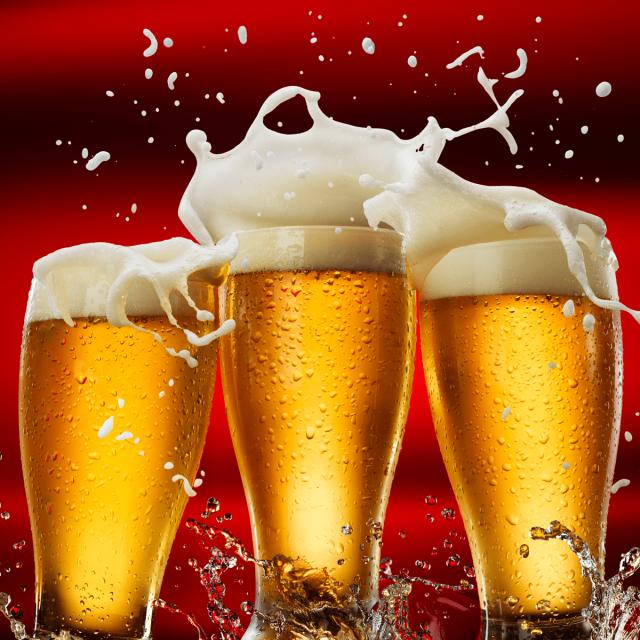
As it is one of the most distinctive qualities of beer, achieving the perfect foam is a precise art. In this course, you’ll learn how foam affects the quality of beer. Designed for brewers of all skill levels, this online course is part of a comprehensive series where "The Pope of Foam”, Charlie Bamforth, guides you through the key markers of beer quality: flavor, foam, color/clarity, freshness and quality systems.

Class Deals by MOOC List - Click here and see Coursera's Active Discounts, Deals, and Promo Codes.

Through a series of riveting lectures, you will discover the science behind foam, how to measure and assess foam and how to achieve the ideal foam. By the end of this course, you will be able to apply your new knowledge to ensure excellent foam performance on your beers.
Course 1 of 5 in the Beer Quality Specialization.

What You Will Learn
Discover the science behind foam, how to measure and assess foam and how to achieve the ideal foam.

Syllabus

WEEK 1
Getting Started & Perceptions and Physics of Foam
In this module, we’ll introduce you the overall idea of beer quality, focusing specifically on the foam of beer. We'll discuss how foam appearance impacts someone’s perception of a beer’s flavor and overall quality. We’ll also take a look at what the research tells us about beer foam preferences from various countries around the world. We'll discuss the physical parameters that impact foam and methods for producing more bubbles. We'll also discuss the physics of bubbles and factors that affect their size and stability.

WEEK 2
Chemistry and Measuring of Foam
In this module, we'll begin by talking about foam positive and foam negative materials, and the various chemical species that influence foam stability. We will discuss the affect that hydrophilic (water loving) and hydrophobic (water hating) chemicals have on the stability of foam. We also review some of the research that has been done in this area to give you a more nuanced view of this subject. We will also look at the results of various research projects that compare the foaming properties of albumins and hordeins. Also in this module, we'll review methods and tools available for measuring the stability of foam and for measuring foam lacing. Finally, Joseph Williams will walk you through a number of foam measuring techniques at the UC Davis brewing and food science laboratory.

WEEK 3
Process Impacts on Foam and Interpreting Foam Problems
In this module, we'll discuss how the raw materials chosen for brewing can affect foam. We will discuss various factors of beer production that affect foam including sweet wort production, boiling, and hops and hop products. We'll also discuss the impacts that yeast, filtration, stabilization, packaging, and dispensing have on foam. We'll discuss common foam problems that occur during the dispensing and serving of beer, including proper glass cleanliness. We also discuss ways of testing for foam positive and negative materials in the beer. We'll discuss common reasons foam positives are lacking in beer and reasons foam negative materials are present in beer.

WEEK 4
Gushing and Troubleshooting Foam Scenarios
In this module, we'll discuss the problem of gushing and it's causes. We'll also discuss methods of testing for gushing and preventing gushing. I will also provide some final thoughts on delighting your customers with beautiful foam. We'll finish the course with applying your knowledge through a scenario based quizzes.
Go to Class
MOOC List is learner-supported. When you buy through links on our site, we may earn an affiliate commission.

Related Courses

Nanotechnology and Nanosensors, Part 1 (Coursera) Coursera
Technion - Israel Institute of Technology

Nanotechnology and Nanosensors, Part 1 (Coursera)

Nanotechnology and nanosensors are broad, interdisciplinary areas that encompass (bio)chemistry, physics, biology, materials science, electrical engineering and more. The present course will provide a survey on some of the fundamental principles behind nanotechnology and nanomaterials and their vital role in novel sensing properties and applications. The course will discuss interesting interdisciplinary scientific and engineering knowledge at the nanoscale to understand fundamental physical differences at the nanosensors.

May 18th 2026
5-12 Weeks
Thermodynamique : fondements (Coursera) Coursera
École Polytechnique Fédérale de Lausanne

Thermodynamique : fondements (Coursera)

Ce cours vous apportera une compréhension des concepts fondamentaux de la thermodynamique du point de vue de la physique, de la chimie et de l’ingénierie. Il est scindé un deux MOOCs. Dans la première partie, le Professeur J.-Ph. Ansermet de l’EPFL et son collaborateur le Dr. Sylvain Bréchet ont rassemblé en quatre leçons tous les principes fondamentaux de la thermodynamique. La deuxième partie du MOOC illustre l’approche thermodynamique par une série d’applications présentées par des spécialistes provenant de diverses institutions partenaires du réseau RESCIF.

May 25th 2026
4 Weeks
Predictive Models for Toxic Chemical Releases (Coursera) Coursera
University of California, Davis

Predictive Models for Toxic Chemical Releases (Coursera)

Discover the core principles of process safety and risk analysis in chemical engineering through our dynamic course. Gain expertise in modeling liquid and gas leaks, accurately assessing potential material releases, and calculating downwind exposures to toxic chemicals using state-of-the-art dispersion models. This course equips chemical engineers with essential skills to evaluate and mitigate hazardous concentrations effectively, ensuring industrial process safety.

Jun 8th 2026
4 Weeks
Beer Quality: Freshness (Coursera) Coursera
University of California, Davis

Beer Quality: Freshness (Coursera)

In this third course of the Beer Quality Series on beer freshness, led by distinguished professor Charles Bamforth, Ph.D, you will learn about beer flavor preconceptions, expectations, and causes of flavor instability. You'll also learn about the science of flavor change and the study and process impacts of flavor stability. In addition, you will review light instability and how it can lead to skunking.

Jun 1st 2026
4 Weeks
Nanotechnology and Nanosensors, Part 2 (Coursera) Coursera
Technion - Israel Institute of Technology

Nanotechnology and Nanosensors, Part 2 (Coursera)

Learn about novel sensing tools that make use of nanotechnology to screen, detect and monitor various events in personal or professional life. Together, we will lay the groundwork for infinite innovative applications, starting from diagnosis and treatments of diseases, continuing with quality control of goods and environmental aspects, and ending with monitoring security issues.

May 18th 2026
5-12 Weeks
La Química de las Reacciones (Coursera) Coursera
Universidad Autónoma Metropolitana

La Química de las Reacciones (Coursera)

En este curso aprenderás los conocimientos básicos de reacciones químicas, lo cual te permitirá tener una mejor comprensión del estudio de la química, así como de la naturaleza. En general la mayoría de la gente le tiene miedo a la palabra química; sin embargo, debido a que la química es una ciencia central es necesario comprenderla y hacerla nuestra amiga.

May 18th 2026
4 Weeks
Beer Quality Systems (Coursera) Coursera
University of California, Davis

Beer Quality Systems (Coursera)

Ultimately, the difference between success and failure as a brewer is whether you consistently deliver a quality beer. Designed for brewers of all skill levels, this course is part of a comprehensive series where brewing legend Charlie Bamforth, Ph.D. guides you through the key markers of beer quality: flavor, foam, color/clarity, freshness and quality systems. In this last course of the Beer Quality Series, you will examine the systems necessary to produce quality beer.

Jun 1st 2026
4 Weeks
Ideal Gases (Coursera) Coursera
University of Colorado Boulder

Ideal Gases (Coursera)

Course 3 of Statistical Thermodynamics, Ideal Gases, explores the behavior of systems when intermolecular forces are not important. This done by evaluating the appropriate partition functions for translational, rotational, vibrational and/or electronic motion. We start with pure ideal gases including monatomic, diatomic and polyatomic species.

Jun 8th 2026
3 Weeks
Quantum Mechanics (Coursera) Coursera
University of Colorado Boulder

Quantum Mechanics (Coursera)

Course 2 of Statistical Thermodynamics presents an introduction to quantum mechanics at a level appropriate for those with mechanical or aerospace engineering backgrounds. Using a postulatory approach that describes the steps to follow, the Schrodinger wave equation is derived and simple solutions obtained that illustrate atomic and molecular structural behavior. More realistic behavior is also explored along with modern quantum chemistry numerical solution methods for solving the wave equation.

Jun 8th 2026
3 Weeks
Una aproximación a la química del carbono (Coursera) Coursera
Universidad Nacional Autónoma de México

Una aproximación a la química del carbono (Coursera)

En este curso, ofrecido por la UNAM, conocerás cómo se forman los compuestos orgánicos y sus propiedades físicas generales, desde la composición del petróleo hasta la obtención de hidrocarburos y los diferentes grupos funcionales. Comprenderás la estructura química de los diferentes hidrocarburos y grupos funcionales, así como las reacciones características que los distinguen. Reconocerás la importancia y el impacto ambiental del petróleo y los materiales poliméricos.

May 18th 2026
5-12 Weeks