Aléatoire : une introduction aux probabilités - Partie 2 (Coursera)

Offered by École Polytechnique,
Aléatoire : une introduction aux probabilités - Partie 2 (Coursera)

Ce cours d'introduction aux probabilités a la même contenu que le cours de tronc commun de première année de l'École polytechnique donné par Sylvie Méléard. Le cours introduit graduellement la notion de variable aléatoire et culmine avec la loi des grands nombres et le théorème de la limite centrale.

Class Deals by MOOC List - Click here and see Coursera's Active Discounts, Deals, and Promo Codes.

Les notions mathématiques nécessaires sont introduites au fil du cours et de nombreux exercices corrigés sont proposés.
Ce cours propose aussi une introduction aux méthodes de simulations des variables aléatoires comme la méthode de Monte Carlo. Des expériences numériques interactives sont également mises à votre disposition pour vous permettre de visualiser diverses notions.

Syllabus

WEEK 1
Vecteurs aléatoires (1/2)
Nous entamons cette semaine le Cours 4 dont le sujet est les vecteurs aléatoires, c'est-à-dire, une collection finie de variables aléatoires réelles, comme par exemple des couples de variables aléatoires. Ce cours s'étend sur deux semaines.

WEEK 2
Vecteurs aléatoires (2/2)
Il s'agit de la suite et de la fin du Cours 4. Nous allons en particulier généraliser le résultat qui nous permet de faire des calculs de lois.

WEEK 3
Convergences et loi des grands nombres (1/2)
Nous entamons le Cours 5 dont l'objet principal est le théorème communément appelé la « loi des grands nombres ». Nous introduirons aussi plusieurs notions de convergence d'une suite de variables aléatoires.

WEEK 4
Convergences et loi des grands nombres (2/2)
Nous terminons le Cours 5 en donnant des exemples d'applications de la loi des grands nombres. Nous introduisons également la méthode de Monte Carlo.

WEEK 5
Fonctions caractéristiques, convergence en loi et théorème de la limite centrale (1/2)
Nous commençons le Cours 6, le dernier de ce MOOC, à cheval sur deux semaines. Cette semaine, on introduit un nouvel outil très puissant : les fonction caractéristiques.

WEEK 6
Fonctions caractéristiques, convergence en loi et théorème de la limite centrale (2/2)
Cette dernière semaine est consacrée au second pilier de la théorie des probabilités : le théorème de la limite centrale. Ce résultat nécessite une nouvelle notion de convergence : la convergence en loi. Nous verrons notamment une application aux intervalles de confiance qui sont utilisés pour les sondages.

Go to Class
MOOC List is learner-supported. When you buy through links on our site, we may earn an affiliate commission.

Related Courses

Decision Making and Reinforcement Learning (Coursera) Coursera
Columbia University

Decision Making and Reinforcement Learning (Coursera)

This course is an introduction to sequential decision making and reinforcement learning. We start with a discussion of utility theory to learn how preferences can be represented and modeled for decision making. We first model simple decision problems as multi-armed bandit problems in and discuss several approaches to evaluate feedback. We will then model decision problems as finite Markov decision processes (MDPs), and discuss their solutions via dynamic programming algorithms. We touch on the notion of partial observability in real problems, modeled by POMDPs and then solved by online planning methods.

Aug 31st 2026
5-12 Weeks
Calculus: Single Variable Part 4 - Applications (Coursera) Coursera
University of Pennsylvania

Calculus: Single Variable Part 4 - Applications (Coursera)

Calculus is one of the grandest achievements of human thought, explaining everything from planetary orbits to the optimal size of a city to the periodicity of a heartbeat. This brisk course covers the core ideas of single-variable Calculus with emphases on conceptual understanding and applications. The course is ideal for students beginning in the engineering, physical, and social sciences.

Aug 31st 2026
5-12 Weeks
Risk Models for Project Managers: Monte Carlo and Beyond (edX) EdX
University of Maryland, College Park,University System of Maryland - USM,USMx,UMD

Risk Models for Project Managers: Monte Carlo and Beyond (edX)

Learn the risk manage tools that provide powerful insights into evaluating a project at each stage of its lifecycle to find strategies that work best for the stakeholders. Simulating budget and schedule risk across potential scenarios provides a clear decision space for project managers and maximizing value.

Self Paced
Self-Paced
Applied Bayesian for Analytics (edX) EdX
Indian Institute of Management, Bangalore,IIMBx

Applied Bayesian for Analytics (edX)

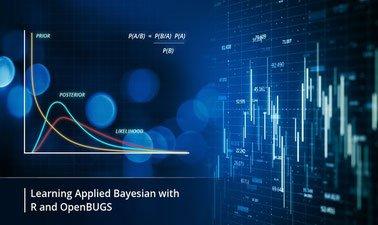
Learn how to construct, fit, estimate and compute Bayesian statistical models with the help of OpenBUGS (freely available software). Bayesian Statistics is a captivating field and is used most prominently in data sciences. In this course we will learn about the foundation of Bayesian concepts, how it differs from Classical Statistics including among others Parametrizations, Priors, Likelihood, Monte Carlo methods and computing Bayesian models with the exploration of Multilevel modelling.

Self Paced
Self-Paced
Single Variable Calculus (Coursera) Coursera
University of Pennsylvania

Single Variable Calculus (Coursera)

Calculus is one of the grandest achievements of human thought, explaining everything from planetary orbits to the optimal size of a city to the periodicity of a heartbeat. This brisk course covers the core ideas of single-variable Calculus with emphases on conceptual understanding and applications. The course is ideal for students beginning in the engineering, physical, and social sciences. Distinguishing features of the course include: 1) the introduction and use of Taylor series and approximations from the beginning; 2) a novel synthesis of discrete and continuous forms of Calculus; 3) an emphasis on the conceptual over the computational; and 4) a clear, dynamic, unified approach.

Aug 31st 2026
5-12 Weeks
Supply Chain Optimization (Coursera) Coursera
University of California, Irvine

Supply Chain Optimization (Coursera)

Optimization is an important piece of an agile supply chain. In this course, we will explore the components of optimization and how to set up an optimization problem in Excel. We will also practice capacity and resource optimization and explore examples of both in the supply chain. Building off of our optimization practice, we will next learn how to use a Monte Carlo simulation to make the least risky decision in uncertain supply chain situations.

Aug 24th 2026
4 Weeks
Differential Equations Part III Systems of Equations (Coursera) Coursera
Korea Advanced Institute of Science and Technology - KAIST

Differential Equations Part III Systems of Equations (Coursera)

This introductory courses on (Ordinary) Differential Equations are mainly for the people, who need differential equations mostly for the practical use in their own fields. So we try to provide basic terminologies, concepts, and methods of solving various types of differential equations as well as a rudimentary but indispensable knowledge of the underlying theory and some related applications.

Sep 7th 2026
5-12 Weeks
Mathematical Methods for Quantitative Finance (edX) EdX
MIT,MITx

Mathematical Methods for Quantitative Finance (edX)

Learn the mathematical foundations essential for financial engineering and quantitative finance: linear algebra, optimization, probability, stochastic processes, statistics, and applied computational techniques in R. Modern finance is the science of decision making in an uncertain world, and its language is mathematics. As part of the MicroMasters® Program in Finance, this course develops the tools needed to describe financial markets, make predictions in the face of uncertainty, and find optimal solutions to business and investment decisions.

Jun 26th 2024
5-12 Weeks
Image and video processing: From Mars to Hollywood with a stop at the hospital (Coursera) Coursera
Duke University

Image and video processing: From Mars to Hollywood with a stop at the hospital (Coursera)

In this course, you will learn the science behind how digital images and video are made, altered, stored, and used. We will look at the vast world of digital imaging, from how computers and digital cameras form images to how digital special effects are used in Hollywood movies to how the Mars Rover was able to send photographs across millions of miles of space.

Sep 7th 2026
5-12 Weeks