Accessibility to the Scenic Arts (Coursera)

Accessibility to the Scenic Arts (Coursera)

Is your show accessible? When we ask about accessibility to shows, most people think about access for wheel chairs: the sitting arrangements and where their WC is accessible. When we ask for more details, people usually think about producing a show where persons with disabilities are performing, for example producing a show where there is some dancing with people on wheel chairs.

Class Deals by MOOC List - Click here and see Coursera's Active Discounts, Deals, and Promo Codes.

Accessiblity for us is a comprehensive concept that goes from purchasing a ticket through an accessible website to catching the bus back home after the performance on accessible public transport. Accessible webs, accessible web content, accessible transport, subtitling, audio description... the possiblities are endless.
Why is this course useful?
To make the venue and the production accessible to all citizens, and specially to persons with disablities. The course will go through the many accessible services you can offer, and how to implement them in your venue or your production. The final aim is to mainstream accessibility so all people have equal access to culture.

Syllabus

WEEK 1
General introduction to inclusion
In this unit the participants learn about three essential concepts: First they will learn more about the different audiences at which accessibility may be aimed and the different types of access support they might need. Second, the concepts of ‘inclusion’ and ‘accessibility’ will be introduced and, more in particular, they will learn how these can be defined. Finally, this unit looks at legislation on inclusion and accessibility. More in particular, the participants will learn about the various types of international and European legislation on inclusion and accessibility.

WEEK 2
Venue accessibility
Unit 3 “Venue Accessibility” addresses barriers to access to cultural venues and how to remove them. Buildings such as theatres or opera houses or open-air venues used for festival purposes should be as accessible as possible. Based on a distinction between different venue types, this unit covers the accessibility chain, the FFZ principle, the accessibility of indoor and outdoor locations as well as temporary locations. Furthermore, it addresses forms of wayfinding, signs, maps and accessibility information as well as adaptations of the venue and assistance animals. Finally, it provides recommendations for assessing and improving venue accessibility.

WEEK 3
Accedd services - concepts

Week 4
Implementing access facilities at arts events to ensure inclusion for all
This unit is about putting the knowledge about the access facilities presented in Unit 3a into practice, and covers the general and specific practical steps involved in implementing the access facilities in advance of the event, on the day of the event and after the event.

WEEK 5
Communication and dissemination
In this unit you will learn about communicating and promoting accessibility, some may say “accessibility PR”. More in particular, you will learn to identify the relevant stakeholders and suggest strategies to involve them. You will learn what an accessibility policy for a cultural event or venue is and how to implement it. You will learn how to promote accessibility for a cultural event or venue, using both traditional and online media in an accessible way.

WEEK 6
Manegement
In this unit, the participants learn about managing accessibility in a cultural venue or on a cultural event. They learn to plan and coordinate, they learn to communicate about accessibility and gather user feedback to be able to look into some aftercare. While managing these things they also think about solving conflicts and managing a team of coworkers. In the different learning materials of which the unit is composed, the participant is presented with charts to help managing the accessibility and with tips and tricks to do so via reading materials and video lessons.

WEEK 7
Final Assessment & Debriefing
Go to Class
MOOC List is learner-supported. When you buy through links on our site, we may earn an affiliate commission.

Related Courses

Fundamentals of Diversity, Equity, Inclusion, and Belonging (Coursera) Coursera
Coursera Instructor Network

Fundamentals of Diversity, Equity, Inclusion, and Belonging (Coursera)

“Fundamentals of Diversity, Equity, Inclusion, and Belonging (DEIB)” is an insightful, short-form course designed for beginners interested in starting their DEIB journey in the workplace. As we navigate through increasingly diverse social and professional landscapes, understanding DEIB is no longer optional–it is imperative. This course aims to equip participants with the necessary tools and insights to effectively advocate for DEIB initiatives in professional settings. The course begins by asking participants to craft their own personal DEIB statements, then provides a comprehensive explanation of key DEIB concepts.

Oct 26th 2026
1 Week
Diversité et inclusion sur le lieu de travail (Coursera) Coursera
ESSEC Business School

Diversité et inclusion sur le lieu de travail (Coursera)

La diversité est une réalité indéniable dans le monde d'aujourd'hui. Les mouvements de femmes, le militantisme pour les droits civiques, Black Lives Matter, la mondialisation et bien d'autres encore ont tous contribué à attirer l'attention sur l'importance de la diversité et de l'inclusion. Les questions de diversité occupent systématiquement les deux faces d'une même pièce. D'une part, les mouvements sociaux ont historiquement mis en lumière les inégalités subies par les femmes et les groupes minoritaires. D'autre part, la diversité apporte des perspectives différentes et potentiellement nouvelles, qui peuvent être source d'innovation et de changement.

Oct 19th 2026
4 Weeks
Leading Innovation in Arts and Culture (Coursera) Coursera
Vanderbilt University,National Arts Strategies - NAS

Leading Innovation in Arts and Culture (Coursera)

Developed by David Owens at Vanderbilt University and customized for the cultural sector with National Arts Strategies, this course will help arts and culture leaders create an environment where new ideas are constantly created, shared, evaluated and the best ones are successfully put to work. One of the toughest challenges for any leader is getting traction for new ideas. Winning support can be a struggle. As a result, powerful new ideas often get stuck. This is especially true in the cultural sector. People involved in arts and culture often have little time and even less money for experimentation and risks. This course will help those in the performing arts, museums, zoos, libraries and other cultural organizations build environments where new management and program ideas flourish.

Oct 19th 2026
5-12 Weeks
Seeing Through Photographs (Coursera) Coursera
The Museum of Modern Art

Seeing Through Photographs (Coursera)

Although taking, sharing, and viewing photographs has become second nature for many of us, our regular engagement with images does not necessarily make us visually literate. This course aims to address the gap between seeing and truly understanding photographs by introducing a diversity of ideas, approaches, and technologies that inform their making. In this course you will look closely at 100 photographs from the collection of The Museum of Modern Art, going behind the scenes of the Museum and into artist studios through original films and audio interviews.

Oct 19th 2026
5-12 Weeks
Teaching the Violin and Viola: Creating a Healthy Foundation (Coursera) Coursera
Northwestern University

Teaching the Violin and Viola: Creating a Healthy Foundation (Coursera)

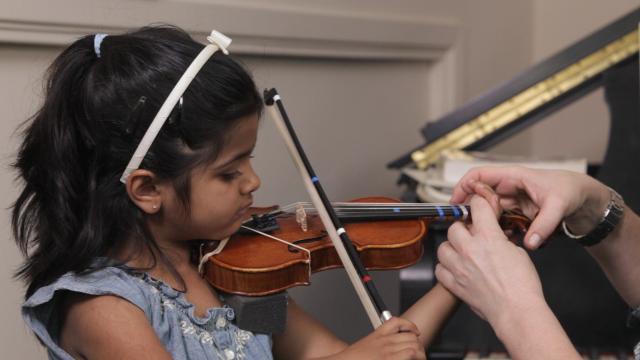
Join us as we explore the fundamental principles and early stages of teaching violin and viola through a series of engaging video lectures and lesson demonstrations, including: 1) Master classes with some of the world’s top string pedagogues, 2) Individual lesson demos of teaching violin/viola set up, left and right hand technique and pieces from the early violin/viola repertoire, 3) Group lesson demos of teaching music theory, ear training and fun activities that encourage good playing habits, and 4) A “field trip” to the violin shop, where we will outfit a new beginning student with a proper instrument and bow.

Oct 26th 2026
5-12 Weeks
Videojuegos: ¿de qué hablamos? (Coursera) Coursera
Universitat Autònoma de Barcelona

Videojuegos: ¿de qué hablamos? (Coursera)

Probablemente, todos hemos jugado a algún videojuego, pero ¿qué hay detrás de él? Podemos decir que - con independencia del videojuego - hay un árduo trabajo multidisciplinar que incluye desde aspectos de diseño hasta la programación como tal del videojuego. Este curso pretende ser un curso introductorio que muestre qué aspectos hay que considerar en el videojuego, y que permita con posterioridad abordar individualmente los temas que se consideran nucleares: diseño, arte, motor del videojuego y 'game play'.

Oct 19th 2026
5-12 Weeks
Sharpened Visions: A Poetry Workshop (Coursera) Coursera
California Institute of the Arts

Sharpened Visions: A Poetry Workshop (Coursera)

Why just write poems when you can write better ones? This course is built on the notion that the most exciting writing begins after the first draft. It is specifically for folks who believe that writing poems just to express oneself is like using the Internet just for email. After all, poetry can change the way you and your readers think of the world and its inhabitants; it can break new ground for language; turn a blank sheet of paper into a teeming concert of voices and music.

Oct 26th 2026
5-12 Weeks
Understanding the Music Business: What is Music Worth? (Coursera) Coursera
Vanderbilt University

Understanding the Music Business: What is Music Worth? (Coursera)

This course will examine the music industry in the United States, with the unique perspective gained by Vanderbilt University’s location in Nashville, TN. Nashville is a major center of music in the United States, and the music created here has a global reach, particularly in the country, rock, pop, singer-songwriter, and Americana genres. However, students will learn that the basic principles of recording, marketing, copyright, licensing, and live performance are the same, regardless of musical style or genre.

Oct 12th 2026
5-12 Weeks
Modern Art & Ideas (Coursera) Coursera
The Museum of Modern Art

Modern Art & Ideas (Coursera)

Welcome to Modern Art & Ideas! This course is designed for anyone interested in learning more about modern and contemporary art. Over the next five weeks, you will look at art through a variety of themes: Places & Spaces, Art & Identity, Transforming Everyday Objects, and Art & Society. Each week kicks off with a video that connects works of art from The Museum of Modern Art’s collection to the theme. You will hear audio interviews with artists, designers, and curators and learn more about selected works in the additional readings and resources.

Oct 19th 2026
5-12 Weeks
Promoting Accessible Workplaces with Assistive Technology (Coursera) Coursera
Knowledge Accelerators

Promoting Accessible Workplaces with Assistive Technology (Coursera)

Workplaces and educational institutions are becoming increasingly aware of the importance of inclusivity in their forces, and there are significant efforts being made to promote cultures of inclusivity. Despite that, the needs of disabled workers and students remain largely overlooked by a working society of abled persons even though great advances have been made in widely available Assistive Technology. In this course, learners will gain increased awareness of many types of disabilities represented in the workforce and educational institutions.

Oct 26th 2026
4 Weeks
ART of the MOOC: Public Art and Pedagogy (Coursera) Coursera
Duke University,Creative Time

ART of the MOOC: Public Art and Pedagogy (Coursera)

Students of this course may try their hand at their own public art interventions, or simply focus on learning from the theory of public practice and its recent history. Designed by artist and Duke professor, Pedro Lasch, and co-taught by Creative Time artistic director, Nato Thompson, this course presents public culture and art in their radically reinenvented contemporary forms. The lectures link major developments of recent decades to wider topics like spatial politics, everyday social structures, and experimental education.

Oct 12th 2026
5-12 Weeks