3D Reconstruction - Single Viewpoint (Coursera)

Offered by Columbia University,
3D Reconstruction - Single Viewpoint (Coursera)

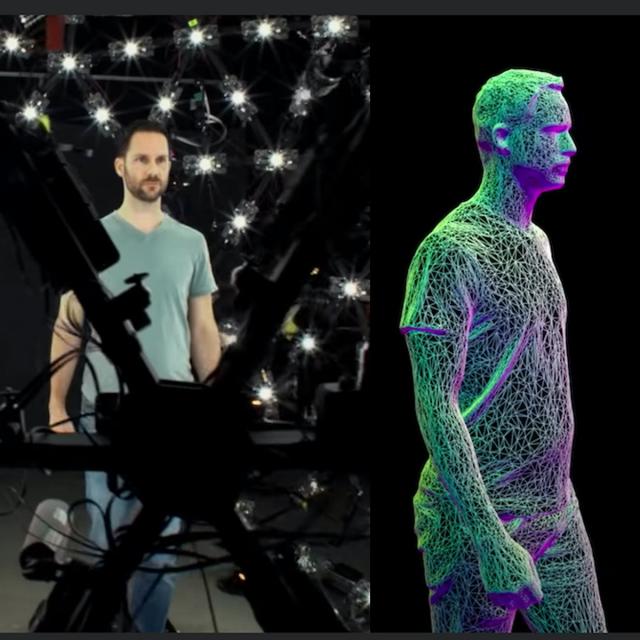
This course focuses on the recovery of the 3D structure of a scene from its 2D images. In particular, we are interested in the 3D reconstruction of a rigid scene from images taken by a stationary camera (same viewpoint). This problem is interesting as we want the multiple images of the scene to capture complementary information despite the fact that the scene is rigid and the camera is fixed. To this end, we explore several ways of capturing images where each image provides additional information about the scene.

Class Deals by MOOC List - Click here and see Coursera's Active Discounts, Deals, and Promo Codes.

In order to estimate scene properties (depth, surface orientation, material properties, etc.) we first define several important radiometric concepts, such as, light source intensity, surface illumination, surface brightness, image brightness and surface reflectance. Then, we tackle the challenging problem of shape from shading - recovering the shape of a surface from its shading in a single image. Next, we show that if multiple images of a scene of known reflectance are taken while changing the illumination direction, the surface normal at each scene point can be computed. This method, called photometric stereo, provides a dense surface normal map that can be integrated to obtain surface shape.
Next, we discuss depth from defocus, which uses the limited depth of field of the camera to estimate scene structure. From a small number of images taken by changing the focus setting of the lens, a dense depth of the scene is recovered. Finally, we present a suite of techniques that use active illumination (the projection of light patterns onto the scene) to get precise 3D reconstructions of the scene. These active illumination methods are the workhorse of factory automation. They are used on manufacturing lines to assemble products and inspect their visual quality. They are also extensively used in other domains such as driverless cars, robotics, surveillance, medical imaging and special effects in movies.

What You Will Learn

  • Learn radiometric concepts related to light and how it interacts with scenes.
  • Understand reflectance models and the different physical mechanisms that determine the appearance of a surface.
  • Develop a method for recovering the shape of a surface from its shading.
  • Understand the principle of photometric stereo where a dense surface normal map of the scene is obtained by varying the illumination direction.

Course 3 of 5 in the First Principles of Computer Vision Specialization

Syllabus

WEEK 1: Getting Started: 3D Reconstruction - Single Viewpoint
WEEK 2: Radiometry and Reflectance
WEEK 3: Photometric Stereo
WEEK 4: Shape from Shading
WEEK 5: Depth from Defocus
WEEK 6: Active Illumination Methods
Go to Class
MOOC List is learner-supported. When you buy through links on our site, we may earn an affiliate commission.

Related Courses

Statistical Inference and Hypothesis Testing in Data Science Applications (Coursera) Coursera
University of Colorado Boulder

Statistical Inference and Hypothesis Testing in Data Science Applications (Coursera)

This course will focus on theory and implementation of hypothesis testing, especially as it relates to applications in data science. Students will learn to use hypothesis tests to make informed decisions from data. Special attention will be given to the general logic of hypothesis testing, error and error rates, power, simulation, and the correct computation and interpretation of p-values. Attention will also be given to the misuse of testing concepts, especially p-values, and the ethical implications of such misuse.

Aug 10th 2026
5-12 Weeks
3D Reconstruction - Multiple Viewpoints (Coursera) Coursera
Columbia University

3D Reconstruction - Multiple Viewpoints (Coursera)

This course focuses on the recovery of the 3D structure of a scene from images taken from different viewpoints. We start by first building a comprehensive geometric model of a camera and then develop a method for finding (calibrating) the internal and external parameters of the camera model. Then, we show how two such calibrated cameras, whose relative positions and orientations are known, can be used to recover the 3D structure of the scene. This is what we refer to as simple binocular stereo.

Jul 27th 2026
5-12 Weeks
Voyage au cœur du vivant avec les rayons X : la cristallographie (FUN) FUN
Université Paris-Saclay

Voyage au cœur du vivant avec les rayons X : la cristallographie (FUN)

L’utilisation des structures tridimensionnelles de macromolécules biologiques fait partie du quotidien d’un grand nombre de biologistes. Ces structures permettent de comprendre leur fonctionnement, de dessiner des mutants pour étudier leur fonction, de dessiner des molécules pour les bloquer ou les activer. L’approche majeure pour résoudre la structure tridimensionnelle de macromolécules biologiques est la cristallographie aux rayons X. Ce MOOC est une initiation complète à la cristallographie biologique : depuis l'histoire de la méthode jusqu'à ses outils concrets.Nous vous transmettons nos connaissances et notre expérience par le biais de vidéos théoriques et en situation.

No sessions available
5-12 Weeks
Introduction to American History: From Reconstruction to World War, 1865-1919 (FutureLearn) FutureLearn
The University of Newcastle, Australia

Introduction to American History: From Reconstruction to World War, 1865-1919 (FutureLearn)

Explore American history since 1865. Learn about the Civil War, Reconstruction, segregation and US foreign policy. Discover key moments in American history after the Civil War. American history is vast and complex. Through this course you will explore some of its key moments - examining domestic history and foreign relations.

No sessions available
3 Weeks
The Civil War and Reconstruction - 1850-1861: A House Divided (edX) EdX
Columbia University,ColumbiaX

The Civil War and Reconstruction - 1850-1861: A House Divided (edX)

Discover how the issue of slavery came to dominate American politics, and how political leaders struggled and failed to resolve the growing crisis in the nation. A House Divided: The Road to Civil War, 1850-1861 begins by examining how generations of historians have explained the crisis of the Union. After discussing the institution of slavery and its central role in the southern and national economies, it turns to an account of the political and social history of the 1850s.

Self Paced
Self-Paced
Applied Plotting, Charting & Data Representation in Python (Coursera) Coursera
University of Michigan

Applied Plotting, Charting & Data Representation in Python (Coursera)

This course will introduce the learner to information visualization basics, with a focus on reporting and charting using the matplotlib library. The course will start with a design and information literacy perspective, touching on what makes a good and bad visualization, and what statistical measures translate into in terms of visualizations. The second week will focus on the technology used to make visualizations in python, matplotlib, and introduce users to best practices when creating basic charts and how to realize design decisions in the framework.

Aug 10th 2026
4 Weeks
Camera and Imaging (Coursera) Coursera
Columbia University

Camera and Imaging (Coursera)

This course covers the fundamentals of imaging – the creation of an image that is ready for consumption or processing by a human or a machine. Imaging has a long history, spanning several centuries. But the advances made in the last three decades have revolutionized the camera and dramatically improved the robustness and accuracy of computer vision systems. We describe the fundamentals of imaging, as well as recent innovations in imaging that have had a profound impact on computer vision.

Jul 27th 2026
5-12 Weeks
Probability and Statistics: To p or not to p? (Coursera) Coursera
University of London

Probability and Statistics: To p or not to p? (Coursera)

We live in an uncertain and complex world, yet we continually have to make decisions in the present with uncertain future outcomes. Indeed, we should be on the look-out for "black swans" - low-probability high-impact events. To study, or not to study? To invest, or not to invest? To marry, or not to marry?

Aug 10th 2026
5-12 Weeks
Data Science in Stratified Healthcare and Precision Medicine (Coursera) Coursera
University of Edinburgh

Data Science in Stratified Healthcare and Precision Medicine (Coursera)

An increasing volume of data is becoming available in biomedicine and healthcare, from genomic data, to electronic patient records and data collected by wearable devices. Recent advances in data science are transforming the life sciences, leading to precision medicine and stratified healthcare. In this course, you will learn about some of the different types of data and computational methods involved in stratified healthcare and precision medicine.

Aug 10th 2026
5-12 Weeks
Artificial Intelligence for Breast Cancer Detection (Coursera) Coursera
Johns Hopkins University

Artificial Intelligence for Breast Cancer Detection (Coursera)

Through interactive lectures and module exercises, this course illustrates the potential of artificial intelligence in breast imaging. Topics include an introduction of breast cancer and breast imaging, introduction to artificial intelligence in image analysis and computer image processing of cancer detection. The course intends to provide students basic understanding of artificial intelligence approaches to breast cancer detection.

Aug 10th 2026
4 Weeks
Bayesian Statistics: Techniques and Models (Coursera) Coursera
University of California, Santa Cruz

Bayesian Statistics: Techniques and Models (Coursera)

This is the second of a two-course sequence introducing the fundamentals of Bayesian statistics. It builds on the course Bayesian Statistics: From Concept to Data Analysis, which introduces Bayesian methods through use of simple conjugate models. Real-world data often require more sophisticated models to reach realistic conclusions. This course aims to expand our “Bayesian toolbox” with more general models, and computational techniques to fit them.

Aug 10th 2026
5-12 Weeks