Computer Vision for Engineering and Science Specialization

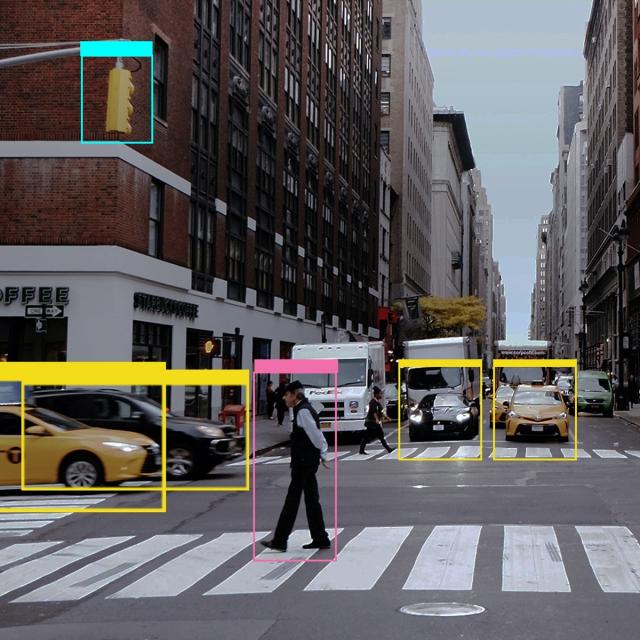
Cameras are an integral component in many new technologies. Autonomous systems use cameras to navigate their environment, while doctors use small cameras to help guide minimally invasive surgical techniques. It is essential that engineers use computer vision techniques to extract information from these types of images and videos.
In this specialization, you’ll gain the computer vision skills underpinning many of today’s top jobs. Specifically, you’ll:
Perform object detection
Train image classification models
Use features to track objects and align images
Detect motion in video
Implement multi-object tracking
You will use MATLAB throughout this specialization. MATLAB is the go-to choice for millions of people working in engineering and science and provides the capabilities you need to accomplish your computer vision tasks. You will be provided free access to MATLAB for the duration of the specialization to complete your work.

Filter Courses within "Computer Vision for Engineering and Science Specialization" (Click to filter)
Object Tracking and Motion Detection with Computer Vision (Coursera) Coursera
MathWorks

Object Tracking and Motion Detection with Computer Vision (Coursera)

Embark on a journey into the world of Computer Vision as you learn to track objects and detect motion in videos. This comprehensive course is designed for those interested in applying advanced techniques to fields such as microbiology and autonomous systems. You'll harness pre-trained deep neural networks for object detection and optical flow for detecting motion, unlocking new capabilities in video analysis.


Jun 1st 2026
4 Weeks
Machine Learning for Computer Vision (Coursera) Coursera
MathWorks

Machine Learning for Computer Vision (Coursera)

Dive into the world of Computer Vision with this specialized course on Machine Learning for Computer Vision. Master two essential tasks: image classification and object detection. Gain hands-on experience in preparing datasets, training models, and evaluating results. Perfect for engineers, scientists, and anyone passionate about leveraging machine learning to analyze visual data.

Jun 1st 2026
4 Weeks
Page 1