Wilderness First Aid - Medical Emergencies (Coursera)

Wilderness First Aid - Medical Emergencies (Coursera)

In this course, students will learn to identify and treat common traumatic injuries in the wilderness, and how to identify the difference between blunt and penetrating trauma. They will also be taught about common injuries of the chest, abdomen, pelvis, and signs and symptoms of different types of head trauma along with how to identify when a condition would warrant immediate evacuation.

Class Deals by MOOC List - Click here and see Coursera's Active Discounts, Deals, and Promo Codes.

Syllabus

WEEK 1
The Chest
In this module, we will talk about medical emergencies associated with the chest and when to evacuate.

WEEK 2
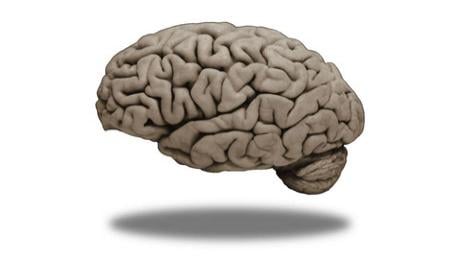
The Brain
In this module, we will learn about neurologic medical emergencies, psychiatric medical conditions, and learn an acronym to help remember conditions that can cause altered mental status. You will also watch a case study interview on how to assess and treat hypoglycemia.

WEEK 3
The Abdomen and Pelvic Organs
In this module, we will learn about medical emergencies associated with the gastrointestinal and genitourinary systems.

WEEK 4
Common Non-Life Threatening Diseases
In this module, you will learn about medical conditions associated with the eyes, ears, and nose.

Go to Class
MOOC List is learner-supported. When you buy through links on our site, we may earn an affiliate commission.

Related Courses

Anatomy of the Chest, Abdomen, and Pelvis (Coursera) Coursera
Yale University

Anatomy of the Chest, Abdomen, and Pelvis (Coursera)

Human structure is important to all of us as it has been for millennia. Artists, teachers, health care providers, scientists and most children try to understand the human form from stick figure drawings to electron microscopy. Learning the form of people is of great interest to us – physicians, nurses, physician assistants, emergency medical services personnel and many, many others. Learning anatomy classically involved dissection of the deceased whether directly in the laboratory or from texts, drawings, photographs or videos. There are many wonderful resources for the study of anatomy. Developing an understanding of the human form requires significant work and a wide range of resources.

Jul 6th 2026
4 Weeks
Aprendendo a aprender: ferramentas mentais poderosas para ajudá-lo a dominar assuntos difíceis (em Português) [Learning How to Learn] (Coursera) Coursera
Deep Teaching Solutions

Aprendendo a aprender: ferramentas mentais poderosas para ajudá-lo a dominar assuntos difíceis (em Português) [Learning How to Learn] (Coursera)

Este curso dá-lhe acesso fácil a técnicas de aprendizagem de valor inestimável, usadas por especialistas em Arte, Música, Literatura, Matemática, Ciência, Esportes e muitas outras disciplinas. Vamos aprender sobre a forma como o cérebro usa dois modos de aprendizagem muito diferentes e como ele encapsula (em "pedaços") informações. Também vamos falar sobre ilusões de aprendizagem, técnicas de memória, lidar com a procrastinação, e as melhores práticas apresentadas pela investigação a ser mais eficaz em o ajudar a dominar assuntos difíceis.

Jul 6th 2026
4 Weeks
Advanced Neurobiology I (Coursera) Coursera
Peking University

Advanced Neurobiology I (Coursera)

Hello everyone! Welcome to advanced neurobiology! Neuroscience is a wonderful branch of science on how our brain perceives the external world, how our brain thinks, how our brain responds to the outside of the world, and how during disease or aging the neuronal connections deteriorate. We’re trying to understand the molecular, cellular nature and the circuitry arrangement of how nervous system works.

Aug 24th 2026
5-12 Weeks
Aprendiendo a aprender: Poderosas herramientas mentales con las que podrás dominar temas difíciles (Coursera) Coursera
University of California, San Diego

Aprendiendo a aprender: Poderosas herramientas mentales con las que podrás dominar temas difíciles (Coursera)

Este curso te brinda acceso simple a las invaluables técnicas de aprendizaje utilizadas por expertos en arte, música, literatura, matemáticas, ciencia, deportes y muchas otras disciplinas. Aprenderemos cómo el cerebro utiliza dos modos de aprendizaje muy distintos y cómo encapsula (“fragmentas”) información. También hablaremos sobre ilusiones de aprendizaje, técnicas de memoria, cómo ocuparse de la procrastinación y las mejores prácticas, según lo demuestra la investigación, para ayudarte a dominar los temas más complicados.

Jul 6th 2026
4 Weeks
Wilderness First Aid - Introduction (Coursera) Coursera
University of Colorado System

Wilderness First Aid - Introduction (Coursera)

In this course, students will learn the basics of wilderness medicine, including how it is a unique clinical environment, and concepts of scene safety. They will learn how to perform a basic assessment of a patient, including a physical exam, gather history data using the SAMPLE approach, and how to evaluate a patient for a potential spinal cord injury.

Aug 31st 2026
4 Weeks
Advanced Neurobiology II (Coursera) Coursera
Peking University

Advanced Neurobiology II (Coursera)

Hello everyone! Welcome to advanced neurobiology! Neuroscience is a wonderful branch of science on how our brain perceives the external world, how our brain thinks, how our brain responds to the outside of the world, and how during disease or aging the neuronal connections deteriorate. We’re trying to understand the molecular, cellular nature and the circuitry arrangement of how nervous system works.

Sep 7th 2026
5-12 Weeks
The Neuroscience of Personal Excellence (Coursera) Coursera
University of Colorado Boulder

The Neuroscience of Personal Excellence (Coursera)

Many of us struggle to understand our actions and behavior in any given situation. Especially when pressure and stress are highest. What if we could make better decisions, create healthy habits more easily, regulate our emotions, become more mentally tough and perform well under pressure? There are certain defining moments in your life, in this course you'll learn to tap into your personal excellence when it matters. The reason we struggle often comes down to the fact that we are unaware how our engine works. The engine, in this metaphor, is our brain. It is the driving force behind our actions and behavior. Understanding how it works best is crucial to perform at your best.

Aug 24th 2026
5-12 Weeks
Decision-Making: Blending Art & Science (Coursera) Coursera
Dartmouth College

Decision-Making: Blending Art & Science (Coursera)

Why do smart people sometimes think they are right when they are very, very wrong? Our brains are designed to make quick decisions, and sometimes we miss out on what’s really going on. Knowing this, Professor Sydney Finkelstein walks you through the neuroscience behind decision-making, and teaches you to make conscious decisions that are right for you at work and in life. By teaching you to reflect and move forward even better than before, Professor Finkelstein will help you to be the best you possibly can at whatever you do.

Aug 24th 2026
4 Weeks
Trauma Emergencies and Care (Coursera) Coursera
University of Colorado System

Trauma Emergencies and Care (Coursera)

Welcome to Trauma Emergencies and Care. In this course, you will learn about some of the mechanics and physics of trauma on the human body, and how this can cause injury. You will continue to expand your new vocabulary with medical terminology, and learn how to describe the different injuries you may see. You will also learn about the trauma system itself- and when it is important to transport patients to a trauma center.

Aug 31st 2026
4 Weeks
Introduction to Psychology (Coursera) Coursera
University of Toronto

Introduction to Psychology (Coursera)

This course highlights the most interesting experiments within the field of psychology, discussing the implications of those studies for our understanding of the human mind and human behavior. We will explore the brain and some of the cognitive abilities it supports like memory, learning, attention, perception and consciousness. We will examine human development - both in terms of growing up and growing old - and will discuss the manner in which the behavior of others affect our own thoughts and behavior.

Jul 6th 2026
5-12 Weeks
Psychological First Aid (Coursera) Coursera
Johns Hopkins University

Psychological First Aid (Coursera)

Learn to provide psychological first aid to people in an emergency by employing the RAPID model: Reflective listening, Assessment of needs, Prioritization, Intervention, and Disposition. Utilizing the RAPID model (Reflective listening, Assessment of needs, Prioritization, Intervention, and Disposition), this specialized course provides perspectives on injuries and trauma that are beyond those physical in nature. The RAPID model is readily applicable to public health settings, the workplace, the military, faith-based organizations, mass disaster venues, and even the demands of more commonplace critical events, e.g., dealing with the psychological aftermath of accidents, robberies, suicide, homicide, or community violence.

Sep 7th 2026
5-12 Weeks