Why Does Media Matter for Development? (FutureLearn)

Why Does Media Matter for Development? (FutureLearn)

Explore how the media can help to tackle poverty and inequality all around the world. Learn why the media matters for international development. This comprehensive four-week course will show you the ways that international development is conceptualised, imagined and communicated as an area of study. You’ll decipher the ways in which these understandings impact individuals living in different parts of the world, and how the media can shape, address and enhance key ideas and debates.

Class Deals by MOOC List - Click here and see FutureLearn's Active Discounts, Deals, and Promo Codes.

Discover the integral role of the media in international development
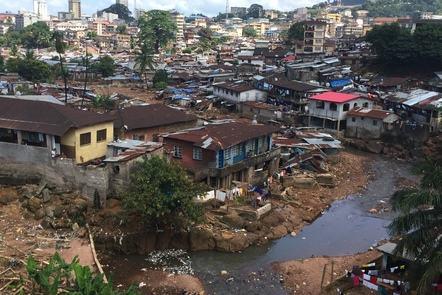
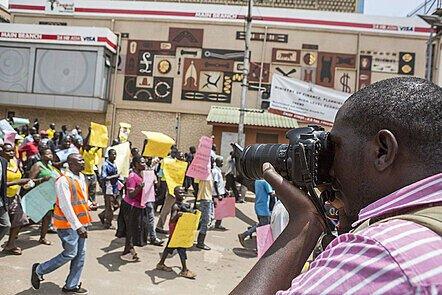
Through a range of different case studies - including in Kenya’s capital Nairobi - you’ll discover the integral role of the media and communication in development processes and social change.
You’ll address key ideas, concepts and debates about media representations of development, community media, participatory media, public media and the use of social media within international development campaigns.

Identify how the media can tackle uneven international development
You’ll also get to grips with how the media can tackle uneven international development - and the poverty that comes with it - as well as how the media can promote further development.

Learn from international development experts at the University of East Anglia (UEA)
The School of International Development at UEA is a leading global centre of excellence in research and teaching in international development.
You’ll be learning from experts within the international development field, and will be under the guidance of academics who regularly advise on policies for poverty reduction and environmental sustainability.

Syllabus

Week 1: Introduction and representations of development
Week 2: Participatory and community media
Week 3: Social media and development
Week 4: Public Media
What will you achieve?
By the end of the course, you‘ll be able to...

  • How media can tackle poverty and inequality, around the world
  • The key ideas, concepts and debates in media and international development
  • A range of case studies to discover the role of media and communications in development processes and social change
  • Media representations of development, community media, participatory media, public media and social media in campaigns
  • How media promotes development in your country / community and in other parts of the world

Go to Class
MOOC List is learner-supported. When you buy through links on our site, we may earn an affiliate commission.

Related Courses

Understanding Media: Introduction to Media Literacy and Representation (FutureLearn) FutureLearn
The University of Newcastle, Australia

Understanding Media: Introduction to Media Literacy and Representation (FutureLearn)

How does the media affect us? Find out and improve your media literacy by learning how to analyse media, film and culture. Develop your media literacy skills and explore our relationship with media. So many of the defining moments in our lives are connected in some way to media. Media are a central part of how we live, work and play.

Jul 19th 2021
3 Weeks
Digital Media Analytics: Earned Media (FutureLearn) FutureLearn
Purdue University

Digital Media Analytics: Earned Media (FutureLearn)

Learn about the importance of earned media and how to evaluate it so you can understand how to improve your online presence. Discover the importance of earned media. Earned media are the articles and mentions on social media that are produced by others about you. They can play a key role increasing the size of your online presence.

No sessions available
2 Weeks
The Ideal of Self-Governance: Public Policy Beyond Markets and States (FutureLearn) FutureLearn
King's College London

The Ideal of Self-Governance: Public Policy Beyond Markets and States (FutureLearn)

Learn how non-traditional forms of governance can help to make modern societies greener, safer, and more prosperous. Explore the opportunities and limitations of citizenship in the 21st century. On this course, you’ll explore a range of institutional responses to social problems. Using real-world examples, you’ll discover the role and vibrant world of citizen action groups, community businesses, local governments and public entrepreneurs.

Self Paced
3 Weeks
Becoming a Digital Citizen: an Introduction to the Digital Society (FutureLearn) FutureLearn
University of York

Becoming a Digital Citizen: an Introduction to the Digital Society (FutureLearn)

Become a more informed digital citizen and engage with debate about what is appropriate in the modern world of social media. The ‘digital citizen’ is a person who has developed the skills and knowledge to effectively use the internet and digital technologies, who uses digital technologies and the internet in a responsible and appropriate way in order to engage and participate in society and politics.

No sessions available
3 Weeks
Social and Digital Media Analytics (FutureLearn) FutureLearn
Purdue University

Social and Digital Media Analytics (FutureLearn)

Learn how to analyse social and digital media and how to turn this data into useful insights and actions. Understand how to get value from digital and social media. How can social and digital media help a business improve? How can we get useful data from social and digital media? What are the limitations of such data? Get answers to these questions and more in this introductory course to social and digital media analytics.

No sessions available
3 Weeks
Development and Planning in African Cities: Exploring theories, policies and practices from Sierra Leone (FutureLearn) FutureLearn
University College London,Sierra Leone Urban Research Centre,Njala University

Development and Planning in African Cities: Exploring theories, policies and practices from Sierra Leone (FutureLearn)

As African cities grow, learn how development and planning help urban actors to make cities just and sustainable for all. In the next 35 years, Africa will need to accommodate almost 900 million new urban dwellers. Hundreds of smaller cities are doubling in size every 20 years, half of Africa’s urban dwellers live in informal settlements in precarious conditions, and 75% of these are younger than 35. Our course will explore African cities through the lenses of spatial justice and social diversity, challenging myths and assumptions about urban development and demonstrating how different processes interact and shape the development of a city.

Self Paced
4 Weeks
Tackling Inequalities Through Health and Social Care Design (FutureLearn) FutureLearn
University of Dundee,University of the West of Scotland - UWS,Scottish Improvement Science Collaborating Centre - SISCC

Tackling Inequalities Through Health and Social Care Design (FutureLearn)

This course will explore what inequalities are and how they can be reduced through health and social care. This course explore the ways that health and social care service design can lead to, but also address, inequalities. Inequalities are caused by very similar factors everywhere, they just look a little different, depending on the setting.

No sessions available
4 Weeks
Understanding Mental Health: Continuum, Culture and Social Media (FutureLearn) FutureLearn
Anglia Ruskin University

Understanding Mental Health: Continuum, Culture and Social Media (FutureLearn)

Enhance your knowledge of mental health and mental illness and develop your understanding of the mental health continuum. Study the influence of society and social media on how we perceive mental health. The more we understand about mental health and mental illness, the more we can challenge and reduce social stigma.

Available now
3 Weeks