Using APIs for Network Automation (Coursera)

Using APIs for Network Automation (Coursera)

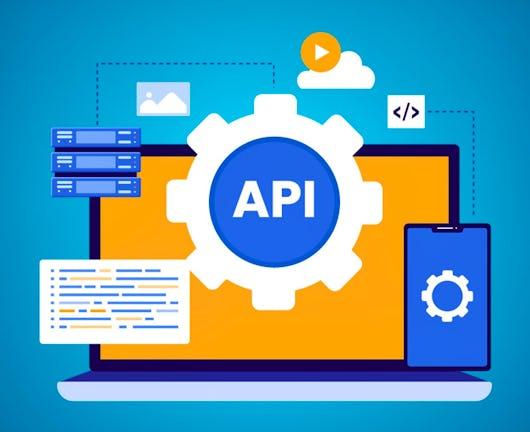
This course will provide a solid foundation for understanding how APIs are utilized in network automation by discussing important topics such as data encoding formats, REST APIs, and the Python Requests library. Upon completion of the course, you will be equipped with the necessary skills to utilize APIs in your network automation solution and be able to describe the usefulness of APIs in this context.

Class Deals by MOOC List - Click here and see Coursera's Active Discounts, Deals, and Promo Codes.

This course is primarily intended for network engineers, systems engineers, network architects, and managers interested in learning the fundamentals of network automation and network APIs.
By the end of the course, you will be able to:

  • Describe the need for data encoding formats and study various data encoding formats.
  • Interpret and construct HTTP-Based APIs calls to network devices.
  • Construct and interpret Python scripts using the Python requests module to automate devices that have HTTP-based APIs.

To be successful in this course, you should be proficient in fundamental network routing & switching technologies, understand the basics of Python programming (3-6 mos exp.) and have some familiarity with Linux.
Course 2 of 5 in the Network Automation Engineering Fundamentals Specialization.

Syllabus

WEEK 1
Course Introduction for Using APIs for Network Automation
In this module, we will review the topics and what you will learn in this course.
Reviewing Data Formats and Data Encoding
The foundational programming topic of data encoding formats is an essential skill for understanding the more advanced concepts like APIs (Application Programming Interfaces) and Python programmability. In this course, you will first learn about the two main data encoding formats, XML (extensible markup language) and JSON (JavaScript Object Notation), which are commonly used in APIs. This course also introduces YAML, a structured data format and markup language commonly used for configuration files in automation and is gaining popularity due to its ease of readability for humans.

WEEK 2
Introducing HTTP Network APIs
The application programming interface (API) enables unrelated applications to interface with each other without having to understand how each other works or share the same programmatic language. APIs are becoming more commonplace in today’s digital age and are enabling a world of automation and interactivity. Network Engineers need to understand how to leverage APIs as vendors like Cisco are designing APIs for many of their products, enabling the ease of Network Automation and creating more possibilities to interact with 3rd party non-networking products.

WEEK 3
Using Python Requests to Automate HTTP-Based APIs
Nearly any platform or commercial product comes with some sort of application programming interface (API) capability, many of which are HTTP APIs. These APIs can be used for machine-to-machine communication for network automation and can be the catalyst that you need to fully accelerate your network automation journey. You have seen how you can use Postman for testing and exploring HTTP APIs, but to do anything with the API, while in a programming language like Python, you need to use an HTTP client. One such client, which is presented in this section, is the Requests module for Python.

Go to Class
MOOC List is learner-supported. When you buy through links on our site, we may earn an affiliate commission.

Related Courses

Python Basics: Selection and Iteration (Coursera) Coursera
Codio

Python Basics: Selection and Iteration (Coursera)

Code and run your first python program in minutes without installing anything! This course is designed for learners with no coding experience, providing a solid foundation of not just python, but core Computer Science topics that can be transferred to other languages. The modules in this course cover printing, operators, iteration (i.e., loops), and selection (i.e., conditionals).

Jun 22nd 2026
4 Weeks
The Raspberry Pi Platform and Python Programming for the Raspberry Pi (Coursera) Coursera
University of California, Irvine

The Raspberry Pi Platform and Python Programming for the Raspberry Pi (Coursera)

The Raspberry Pi is a small, affordable single-board computer that you will use to design and develop fun and practical IoT devices while learning programming and computer hardware. In addition, you will learn how to set up up the Raspberry Pi environment, get a Linux operating system running, and write and execute some basic Python code on the Raspberry Pi. You will also learn how to use Python-based IDE (integrated development environments) for the Raspberry Pi and how to trace and debug Python code on the device.

Jun 22nd 2026
4 Weeks
Python Project: pillow, tesseract, and opencv (Coursera) Coursera
University of Michigan

Python Project: pillow, tesseract, and opencv (Coursera)

This course will walk you through a hands-on project suitable for a portfolio. You will be introduced to third-party APIs and will be shown how to manipulate images using the Python imaging library (pillow), how to apply optical character recognition to images to recognize text (tesseract and py-tesseract), and how to identify faces in images using the popular opencv library. By the end of the course you will have worked with three different libraries available for Python 3 to create a real-world data-analysis project.

Jun 22nd 2026
3 Weeks
Data Analysis and Visualization (Coursera) Coursera
University at Buffalo,The State University of New York

Data Analysis and Visualization (Coursera)

By the end of this course, learners are provided a high-level overview of data analysis and visualization tools, and are prepared to discuss best practices and develop an ensuing action plan that addresses key discoveries. It begins with common hurdles that obstruct adoption of a data-driven culture before introducing data analysis tools (R software, Minitab, MATLAB, and Python). Deeper examination is spent on statistical process control (SPC), which is a method for studying variation over time. The course also addresses do’s and don’ts of presenting data visually, visualization software (Tableau, Excel, Power BI), and creating a data story.

Jun 22nd 2026
4 Weeks
Hypothesis Testing with Python and Excel (Coursera) Coursera
Tufts University

Hypothesis Testing with Python and Excel (Coursera)

In today's job market, leaders need to understand the fundamentals of data to be competitive. An essential procedure to understand business and analytics is hypothesis testing. This short course, designed by Tufts University expert faculty, will teach the fundamentals of hypothesis testing of a population mean and a population proportion, using Excel and Python for calculations. You'll also discover the central limit theorem, which is essential for hypothesis testing. To conclude the course, you will apply your newfound skills by creating a plan for an experiment in your own workplace that uses hypothesis testing.

Jun 23rd 2026
1 Week
Databases and SQL for Data Science with Python(Coursera) Coursera
IBM

Databases and SQL for Data Science with Python(Coursera)

Much of the world's data resides in databases. SQL (or Structured Query Language) is a powerful language which is used for communicating with and extracting data from databases. A working knowledge of databases and SQL is a must if you want to become a data scientist. The purpose of this course is to introduce relational database concepts and help you learn and apply foundational knowledge of the SQL language. It is also intended to get you started with performing SQL access in a data science environment.

Jun 22nd 2026
4 Weeks
Machine Learning: Classification (Coursera) Coursera
University of Washington

Machine Learning: Classification (Coursera)

Case Studies: Analyzing Sentiment & Loan Default Prediction. In our case study on analyzing sentiment, you will create models that predict a class (positive/negative sentiment) from input features (text of the reviews, user profile information,...). In our second case study for this course, loan default prediction, you will tackle financial data, and predict when a loan is likely to be risky or safe for the bank.

Jun 22nd 2026
5-12 Weeks
Deploying Machine Learning Models (Coursera) Coursera
University of California, San Diego

Deploying Machine Learning Models (Coursera)

In this course we will learn about Recommender Systems (which we will study for the Capstone project), and also look at deployment issues for data products. By the end of this course, you should be able to implement a working recommender system (e.g. to predict ratings, or generate lists of related products), and you should understand the tools and techniques required to deploy such a working system on real-world, large-scale datasets.

Jun 22nd 2026
4 Weeks
Getting started with TensorFlow 2 (Coursera) Coursera
Imperial College London

Getting started with TensorFlow 2 (Coursera)

Welcome to this course on Getting started with TensorFlow 2! In this course you will learn a complete end-to-end workflow for developing deep learning models with Tensorflow, from building, training, evaluating and predicting with models using the Sequential API, validating your models and including regularisation, implementing callbacks, and saving and loading models.

Jun 22nd 2026
5-12 Weeks
Python for Data Science, AI & Development (Coursera) Coursera
IBM

Python for Data Science, AI & Development (Coursera)

Kickstart your learning of Python for data science, as well as programming in general, with this beginner-friendly introduction to Python. Python is one of the world’s most popular programming languages, and there has never been greater demand for professionals with the ability to apply Python fundamentals to drive business solutions across industries.

Jun 23rd 2026
5-12 Weeks