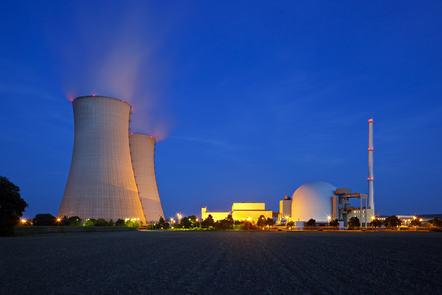
Understanding Nuclear Power (FutureLearn)

Offered by The Open University,
Understanding Nuclear Power (FutureLearn)

Learn more about nuclear power, from the risks and benefits to the technology and its future, with this free online course. Nuclear power remains a contentious issue - does it offer our best chance at sustainable energy future? Or do the risks outweigh the benefits? This course will answer some of these questions and is aimed at a broad audience - whether you’re an engineer or scientist thinking of working in the nuclear industry; a policy adviser working in energy or technology; a technical journalist; a teacher or lecturer; concerned with how infrastructure is financed or simply keep to develop your understanding of nuclear power.

Class Deals by MOOC List - Click here and see FutureLearn's Active Discounts, Deals, and Promo Codes.

Why do we use nuclear power?
Despite accidents like Fukushima Daiichi, countries around the world are keen to build new nuclear power plants. In the UK, a ‘nuclear renaissance’ is under way, while in other countries, like Poland, there is a lot of interest in building nuclear power plants for the first time. China and India have pressed ahead almost without interruption. In this course you’ll learn why the world has such an enthusiasm for nuclear power.

How does nuclear power work?
This course introduces the engineering aspects of nuclear power and asks how developers can finance these large infrastructures. You’ll learn about the technologies involved and explore how fuels and radioactive waste should be managed. Nuclear safety and the safety culture of organisations are vital issues.

What’s the future of nuclear power?
This course will also examine the future of nuclear power: exploring the challenges that lie ahead for companies and countries alike and whether these challenges can be overcome.

Requirements
This course is intended for those with a basic understanding of nuclear energy. You’ll need to be familiar with the following concepts: protons, neutrons, elements, isotopes; the difference between nuclear fission energy and nuclear fusion energy; alpha, beta and gamma radiation; radioactive decay; the difference between momentum and kinetic energy; the separate roles played by conduction and convection in heat transfer; the basic concept of a nuclear reactor; and finally the probability of four coin tosses yielding four ‘heads’ results.

Go to Class
MOOC List is learner-supported. When you buy through links on our site, we may earn an affiliate commission.

Related Courses

Agriculture and Nutrition (FutureLearn) FutureLearn
Taipei Medical University

Agriculture and Nutrition (FutureLearn)

The benefits of rice bran for preventing chronic diseases; the relationships of the mammary gland, and immune in cow. In this course, you will learn about the bioactive components and the benefits of rice bran and fermented rice bran for preventing chronic diseases such as metabolic syndrome. You will learn about the basic knowledge of the immune system and the correlations among mammary gland, epithelial mucosa, and immune in the dairy cows.

Apr 15th 2024
4 Weeks
Electric Two-and-Three-Wheelers: Steering the Mobility Revolution (FutureLearn) FutureLearn
RWTH Aachen,Transforming Urban Mobility Initiative - TUMI,GIZ,PEM Motion

Electric Two-and-Three-Wheelers: Steering the Mobility Revolution (FutureLearn)

Join this six-week course to explore the surging popularity of electric two-and-three-wheelers across the globe. The electric transportation sector is a rapidly changing industry that relies on innovative leaders to help shape policy and strive to create empowering solutions for the future. This six-week course offers an in-depth look into the surging popularity of electric two-and-three-wheelers across the globe, particularly in the Global South.

Mar 23rd 2026
5-12 Weeks
Energy-The Technology You Must Know in the 21st Century | 能源─21世紀你必須了解的科技! (edX) EdX
OECx

Energy-The Technology You Must Know in the 21st Century | 能源─21世紀你必須了解的科技! (edX)

A comprehensive introduction to existing and emerging energy technologies and their applications. (Taught in Mandarin). Energy technology is a highly multidisciplinary subject, which extends from engineering (e.g. mechanical, chemical, civil, environmental and electrical) to economy and ecology.

No sessions available
4 Weeks
Introduction to International Nuclear Law (Coursera) Coursera
National Research Nuclear University MEPhI

Introduction to International Nuclear Law (Coursera)

So, what is international nuclear law? What aspects of international cooperation exist in this direction? You will learn about this in our course. Nuclear power gives us hope and potential for significant benefits, in a variety of fields, from medicine and agriculture to electricity production and industry. At the same time, we all know that nuclear energy poses serious risks to the health and safety of humans and to the environment. These risks must be managed very carefully and thoroughly.

May 9th 2022
5-12 Weeks
Nuclear Knowledge Management (Coursera) Coursera
National Research Nuclear University MEPhI

Nuclear Knowledge Management (Coursera)

Learn why knowledge management is so vital to keeping nuclear power operations running safely and efficiently. Nuclear knowledge is critical now: the previous generation of nuclear personnel is retiring; countries are expanding nuclear programs; ageing nuclear installations may face challenges to ensure they can be operated safely; and there is a growing need for long-term management of radioactive waste and for countries phasing out nuclear programs. Do you work in the field of nuclear energy and realize that knowledge is used inefficiently and even could be lost?

May 9th 2022
4 Weeks
Introduction to nuclear (POK) Polimi OPEN KNOWLEDGE
Politecnico di Milano

Introduction to nuclear (POK)

Nuclear processes and measurement for radiation detection. The study of static and dynamic properties of nuclei constitutes a first essential step in the comprehension and exploitation of Nuclear Science. Starting from the experimental evidence of radioactivity, the course will explore: the physical and the random nature of radioactive decay and nuclear reactions; the experimental methods and detector technologies to measure radiations produced by nuclear processes.

Available
4 Weeks
Discovering Nuclear Science: energy and beyond (POK) Polimi OPEN KNOWLEDGE
Politecnico di Milano

Discovering Nuclear Science: energy and beyond (POK)

Where do natural radioactivity come from? What is a radioactive atom? Which are the phases of nuclear fission? How is radioactive pollution monitored? Are nuclear waste managed managed? Talking about “nuclear issues”, many questions arise: this MOOC aims at providing scientific answers. Enroll in the course and unlock the potential of Nuclear Science to shape our future for the better. Let's get started!

Available
3 Weeks
Exploring the World of Electric Mobility: Key Concepts and Strategies (FutureLearn) FutureLearn
RWTH Aachen,Transforming Urban Mobility Initiative - TUMI,GIZ,PEM Motion

Exploring the World of Electric Mobility: Key Concepts and Strategies (FutureLearn)

Explore concepts, policies, and innovations in electric mobility to help decarbonise and build more sustainable transport systems. Learn how e-mobility can help create sustainable cities. Electric mobility is crucial for making urban transport greener and more sustainable. But with recommendations and policies on electric vehicles evolving rapidly, it can be hard to know what’s what in the world of e-mobility. This six-week course from the Transformative Urban Mobility Initiative (TUMI) provides a comprehensive overview of issues relating to electric mobility.

Oct 7th 2024
5-12 Weeks
Environmental Challenges: Rights and Values in Ecosystem Services (FutureLearn) FutureLearn
University of Leeds

Environmental Challenges: Rights and Values in Ecosystem Services (FutureLearn)

Differences in values can create conflict. How can we learn to manage our natural resources with integrity? Humans are very innovative, but we’ve also created many ecological problems. We’ve changed the face of the planet, fished the oceans, and we’re causing climate change through emissions. Designing institutional arrangements that recognise ecosystem services in the values we place upon natural systems will be an important way to help governing the planet, for both present and future generations.

Feb 12th 2024
2 Weeks
Ecology and Wildlife Conservation (FutureLearn) FutureLearn
University of Leeds

Ecology and Wildlife Conservation (FutureLearn)

Discover ecology and how we can protect wildlife and conserve the natural world. Do you worry about the effects of climate change on nature? This course will show you how the work of conservation biologists and study of ecosystems can help with conserving the world’s biodiversity. You’ll explore the impact that the presence of wind farms on populations of seabirds and understand how the use of advanced techniques can be used to study different populations.

Feb 16th 2026
2 Weeks