FUN

Terrorismes (FUN)

Offered by le cnam,
Terrorismes (FUN)

Ce cours propose une analyse historique précise et détaillée des mutations du terrorisme, de ses évolutions et ruptures, de son passage d’un outil criminel singulier à une dimension plurielle. Y sont abordées : les définitions, les acteurs, les cibles, les méthodes et les outils de lutte contre le terrorisme. Ce cours a pour objectif de fournir une meilleure connaissance et une plus grande capacité d’analyse de l’information sur les problématiques terroristes.

Depuis toujours, l'action violente est apparue comme un acte de résistance, parfois désespéré. Elle est souvent qualifiée de terroriste en fonction des intérêts des parties et des cibles choisies. Malgré de nombreux efforts, aucune définition internationale commune n'a pu être trouvée, et la plupart des organisations ayant pratiqué l'action violente ont été dénoncées comme terroristes à un moment ou à un autre de leur histoire. Le terrorisme a également évolué. Singulier, il est devenu pluriel. Ses cibles se sont diversifiées. Si la notion de terrorisme fait souvent l’objet de controverses et de polémiques c’est qu’elle est empreinte d’une forte subjectivité et qu’elle désigne un phénomène complexe, mouvant et multiforme.

Format
Il est organisé en 6 modules et dure 6 semaines.
Chaque module se compose de 5 à 6 séquences vidéo, suivies d'une ou deux questions.
Pour chaque séquence des discussions sont ouvertes sur le forum. Les retours hebdomadaires aux principales questions des forums, se font en direct par hangout.

Plan du cours

Semaine 1 : Une définition incertaine et complexe
Aux origines du terrorisme
Un ou des terrorismes ?
De Genève 1937 a l'ONU 2005
Les Etats-Unis et le terrorisme
L'Union européenne et le terrorisme
La vision française

Semaine 2 : Les moyens
Du mauvais usage de la terreur
Les terroristes disent toujours ce qu'ils vont faire
Justifications et habillage
Terroriser pour négocier ou pour ne pas négocier
Recruter
Financer

Semaine 3 : les techniques
Assassiner
Enlever
Détourner
Détruire
NRBC
Cyber

Semaine 4 : Les opérateurs historiques
Zélotes et Haschichins
La Terreur révolutionnaire
Vers la modernité
La Mère du terrorisme contemporain : Narodnaya Volya
Les anarcho terroristes : Bonnot et ses amis
Les révolutionnaires

Semaine 5 : Le terrorisme de 1945 à nos jours
Décolonisations
Le terrorisme Rouge
Le terrorisme mafieux
Le terrorisme révolutionnaire
Le terrorisme palestinien/arabe
Ce qu'on croit devoir appeler Al Qaida
L'État Islamique - Daech

Semaine 6 : La révolution dans les affaires du terrorisme
Khelkal et les hybrides
Le Lumpenterrorisme
Radicalisation 2.0
La naissance l'antiterrorisme en France
Les services antiterroristes
La coopération internationale
Go to Class
MOOC List is learner-supported. When you buy through links on our site, we may earn an affiliate commission.

Related Courses

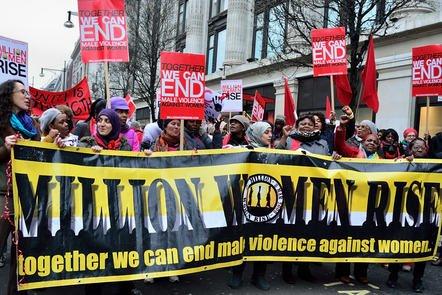
Understanding Violence Against Women: Myths and Realities (FutureLearn) FutureLearn
University of Strathclyde

Understanding Violence Against Women: Myths and Realities (FutureLearn)

Learn how to challenge attitudes that lead to violence against women and develop your knowledge of this human rights issue. The United Nations considers violence against women to be a grave violation of human rights of epidemic proportions. Such violence has profoundly negative consequences for individuals, communities and entire societies. This is why violence against women is a priority issue for governments and societies around the world.

Apr 18th 2022
5-12 Weeks
Supporting Victims of Domestic Violence (FutureLearn) FutureLearn
The University of Sheffield

Supporting Victims of Domestic Violence (FutureLearn)

Learn to recognise the signs of domestic violence and support domestic violence survivors as a health or social care worker. Enhance your knowledge of gender-based violence and the forms of domestic abuse. Domestic violence is a global health issue that can take many forms and affect anyone. Health and social care professionals play an important role in recognising and helping victims of violent and abusive relationships.

Available now
3 Weeks
Violence Against Healthcare (Coursera) Coursera
University of Geneva

Violence Against Healthcare (Coursera)

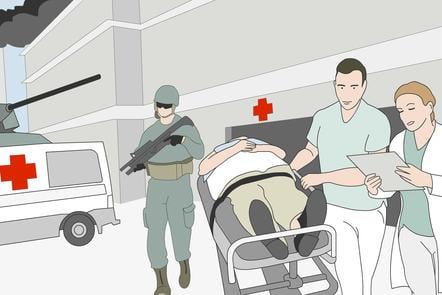
At the global level, there are many countries marked by violence affecting health care. The 'Health care in danger' project aims to establish practical measures and recommendations that can be implemented on the ground by policy-makers, humanitarian organizations and health professionals. In view of the multiplicity of actors and latitudes concerned, it is essential to be able to make available the tools needed to make informed decisions, guide behaviour in high-risk areas and provide everyone the means to create and optimize the dialogue between humanitarian professionals and health on the one hand and relevant authorities or other armed actors.

Sep 7th 2026
5-12 Weeks
How to be an active bystander in a post #MeToo world (edX) EdX
Jesus College, University of Cambridge

How to be an active bystander in a post #MeToo world (edX)

Learn what you can do to address sexual harassment and violence – in the workplace, at home, and in wider social relations. In 2017, an international movement gained momentum highlighting the pervasiveness of sexual harassment and violence. Millions worldwide used #MeToo, #TimesUp, #BalanceTonPorc, #NotYourHabibti, #Teknisktfel, #QuellaVoltaChe, #YoTambien and similar hashtags not just to bring collective attention to these issues, but to push for changes that would bring an end to sexual violence and discrimination in all their forms by breaking the silence and promoting social change.

Self Paced
Self-Paced
Understanding Violence (Coursera) Coursera
Emory University

Understanding Violence (Coursera)

We are so pleased to have you join us as we investigate this crucial topic. Violence is a leading cause of death, disability and health care use worldwide. Violence is a complex problem and can only be understood and reduced though a multidisciplinary approach. This course introduces you to experts who study different forms of violence and we will discuss the various causes of violence. You will also learn about efforts to reduce violence and engage in a day of compassion.

Aug 24th 2026
5-12 Weeks
A History of Violence: From the Middle Ages to Modern Times (edX) EdX
The University of Newcastle, Australia

A History of Violence: From the Middle Ages to Modern Times (edX)

Examine the origins, changing nature, uses, and attitudes towards human violence in western history. What is violence? What do we mean by it? Is it innate or learned? Are we becoming more or less violent? These are all questions that we will ask throughout this course. A History of Violence will examine the different types of violence that humans have practiced over the centuries, put them into historical context, and try to understand why those different forms of violence are used at particular times, and not others; why some kinds of violence are accepted in some parts of the world but not others?

No sessions available
5-12 Weeks
Il était une fois la littérature de jeunesse (FUN) FUN
Université de Liège

Il était une fois la littérature de jeunesse (FUN)

Pendant 6 semaines, vous découvrirez les richesses de la littérature de jeunesse dans un MOOC qui évoquera le livre dans sa globalité, depuis ses origines jusqu'aux représentations actuelles. On évoquera les romans, les albums mais également quelques maisons d'édition et leur inscription dans le paysage éditorial, les livres numériques ainsi que l'univers numérique des livres de jeunesse, pour clôturer par une dernière séance sur les fictions hors du livre comme les fanfictions ou les objets dérivés.

Feb 28th 2022
5-12 Weeks
Children Deprived of Liberty: Learning from the UN Global Study (GCHumanRights) Global Campus of Human Rights
Global Campus of Human Rights

Children Deprived of Liberty: Learning from the UN Global Study (GCHumanRights)

Despite the fact that the Convention on the Rights of the Child affirms that, in principle, children should not be detained and deprivation of liberty should be a measure of last resort, millions of children in the world are locked away. To address this problem, the United Nations appointed Manfred Nowak as Independent Expert to lead the Global Study on children deprived of liberty. This unique MOOC stems from this study and provides insights, learning and recommendations in this important area at the crossroad of children, violence, and human rights studies.

Self Paced
Self-Paced
Radicalización violenta: análisis, detección y prevención (URJC) URJCx
Universidad Rey Juan Carlos

Radicalización violenta: análisis, detección y prevención (URJC)

Este MOOC estudia y analiza qué hay detrás de muchas de las acciones violentas y terroristas que, en principio, resultan incomprensibles para la mayoría de los ciudadanos. En muchas ocasiones, estos actos se desatan de procesos previos de radicalización de diferente índole. Procesos que no solo son significativos porque puedan acabar en violencia, sino porque también revelan que la radicalización ideológica o ideológico-religiosa es, en sí misma, un asunto público de gran relevancia que atañe a la cohesión social y a la polarización de nuestras sociedades democráticas.

No sessions available
5-12 Weeks
Religion and Conflict (FutureLearn) FutureLearn
University of Groningen

Religion and Conflict (FutureLearn)

Understand and analyze the role of religion in conflicts and peacebuilding in present-day societies, with this free online course. Many conflicts in the world today are framed in terms of religion, but there is much discussion and confusion concerning the precise role religion plays in these conflicts. According to some, conflict and violence are inherent to religion. Others claim that religion is only the guise under which social, economic or political conflicts are fought out. The first step to solving religiously framed conflicts is understanding the role of religion in them, and that is what this free online course is about.

No sessions available
5-12 Weeks
Violences et religions (Coursera) Coursera
University of Geneva

Violences et religions (Coursera)

La question « violences et religions » est d’actualité, et pas seulement depuis les attentats d’Al-Qaïda ou de Daech. Pour bien la comprendre, ce cours propose de prendre du recul et de l’envisager sous un angle historique et comparatiste. Le domaine concerné étant l’espace euro-méditerranéen, ce sont essentiellement le christianisme et l’islam qui seront traités (quelques séquences sont également consacrées au judaïsme).

Sep 7th 2026
5-12 Weeks