Sustainable Textile Manufacturing (POK)

Offered by Politecnico di Milano,
Sustainable Textile Manufacturing (POK)

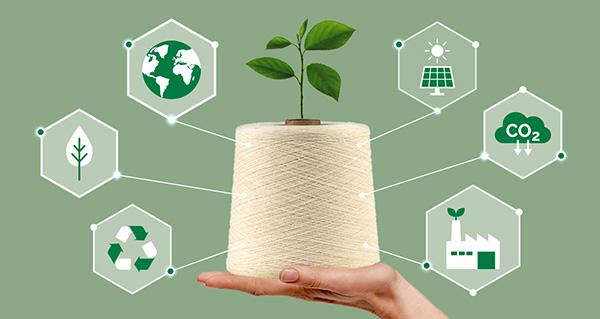
An overview of the Italian textile manufacturing sector to learn and understand how excellent companies are integrating sustainable practices and processes along the supply chain. The MOOC aims to describe the approach to sustainability in the Italian textile manufacturing sector (for clothing and other sectors) with a specific focus on all steps of the production chain.

Each video focuses on one step of the supply chain (raw material sourcing, spinning, weaving, design, prototyping, production, integration of innovative technologies in the processes) and tells the state of the art on the sector's sustainable approach, possible plans and interventions, as well as the opportunities that companies will have to seize in the immediate future in terms of social and environmental responsibility. The topics are addressed by Politecnico di Milano lecturers and industry professionals as guest speakers.

Intended Learning Outcomes
By actively participating in this MOOC, you will achieve different intended learning outcomes (ILOs):

  • Acquiring technical knowledge of traditional manufacturing processes
  • Acquiring technical knowledge about sustainable requirements and solutions
  • Understanding contemporary change towards sustainability
  • Understanding of the complexity and multitude of processes and stakeholders along the textile supply chain

Go to Class
MOOC List is learner-supported. When you buy through links on our site, we may earn an affiliate commission.

Related Courses

Circular business models fostering sustainable production and consumption (POK) Polimi OPEN KNOWLEDGE
Politecnico di Milano

Circular business models fostering sustainable production and consumption (POK)

How to make real the transition from linear to circular: key concepts, tools and enablers. The course will start with the basic concept of Circular Economy, its definition, core characteristics, and differences with the linear economy. The definition of Circular Economy will then be enriched with the main frameworks for understanding Circular Economy (e.g., the butterfly diagram and the RESOLVE model). Additionally, the course will give some practical examples of companies applying Circular Economy principles.

Available
4 Weeks
Sustainable Development in the 21st Century with Ban Ki-moon (Coursera) Coursera
Yonsei University

Sustainable Development in the 21st Century with Ban Ki-moon (Coursera)

The course is designed for people that want to learn about the latest development agenda the international community agreed to achieve by 2030. Structured around the five pillars of Agenda 2030 – people, prosperity, planet, peace and justice, and partnership, students will learn that these pillars are interconnected and need to be integrated in practical policy-making and operational activities for development, in both developed and developing country settings.

Jun 8th 2026
5-12 Weeks
Introduction to Sustainability (Coursera) Coursera
University of Illinois at Urbana-Champaign

Introduction to Sustainability (Coursera)

This course introduces the academic approach of Sustainability and explores how today’s human societies can endure in the face of global change, ecosystem degradation and resource limitations. The course focuses on key knowledge areas of sustainability theory and practice, including population, ecosystems, global change, energy, agriculture, water, environmental economics and policy, ethics, and cultural history.

Jun 8th 2026
5-12 Weeks
New paradigms in wastewater management: from a sanitation problem to a circular sustainable solution (POK) Polimi OPEN KNOWLEDGE
Politecnico di Milano

New paradigms in wastewater management: from a sanitation problem to a circular sustainable solution (POK)

The new paradigms in the management of the urban water service: originally conceived to protect public health through safe water supply and adequate treatment of wastewater, current trends aim not only at process optimization and energy savings but also at energy and material recovery from wastewater and sludge.

Available now
4 Weeks
Natural Attenuation of Groundwater Contaminants: New Paradigms, Technologies, and Applications (Coursera) Coursera
Rice University

Natural Attenuation of Groundwater Contaminants: New Paradigms, Technologies, and Applications (Coursera)

Cleaning up the large number of groundwater contamination sites is a significant and complex environmental challenge. The environmental industry is continuously looking for remediation methods that are both effective and cost-efficient. Over the past 10 years there have been amazing, important developments in our understanding of key attenuation processes and technologies for evaluating natural attenuation processes, and a changing institutional perspective on when and where Monitored Natural Attenuation (MNA) may be applied.

Jun 8th 2026
5-12 Weeks
The Sustainable Development Goals – A global, transdisciplinary vision for the future (Coursera) Coursera
University of Copenhagen

The Sustainable Development Goals – A global, transdisciplinary vision for the future (Coursera)

In 2015, the UN launched the 17 Sustainable Development Goals (SDGs). Adopted by 193 member states, the goals represent an important international step in setting humanity on a trajectory towards sustainable development. Within this course, you will get a historical overview of how sustainability has been understood, as well as a thorough introduction to the SDGs – what they are, how progress can be measured, and how the SDGs are relevant for the management of the global systems supporting humanity. The course will examine how various societal actors are responding to and implementing the SDGs.

Jun 8th 2026
3 Weeks
ESG Investing: Setting Standards & Conducting Analysis (Coursera) Coursera
Interactive Brokers

ESG Investing: Setting Standards & Conducting Analysis (Coursera)

The ESG Investing: Setting Standards & Conducting Analysis course provides students with basic knowledge of traditional financial products with some fundamental concepts to help better define what ESG is, including the rationale behind its inception, and how it has developed. Through the series of video, webinar, and reading modules in this course, you’ll learn how to identify and describe the basic principles underpinning the “E”, “S” and “G” in ESG, as well as obtain a brief background of ESG’s origins and evolution.

Jun 8th 2026
5-12 Weeks
Securing Investment Returns in the Long Run (Coursera) Coursera
University of Geneva

Securing Investment Returns in the Long Run (Coursera)

In this course, you will learn about the famous dichotomy between active and passive investing, how to appropriately measure and analyze investment performance and what the future trends in the investment management industry are. You will first learn about absolute and relative performance, risk-adjusted returns and how to decompose investment performance. The focus will then shift to the two main categories of investment vehicles, active and passive funds, and what they entail in terms of expected performance.

Jun 8th 2026
4 Weeks
Supply Chain Principles (Coursera) Coursera
Georgia Institute of Technology

Supply Chain Principles (Coursera)

This course will provide a solid understanding of what a supply chain is all about. The course: provides an introduction to Supply Chain; leverages graphics to promote the Integrated Supply Chain model; emphasizes understanding the Extended Supply Chain; presents a holistic approach – Incorporating People, Process, and Technology; calls-out industry-specific supply chain; leverages discussions, videos, quizzes, and questions for consideration; provides awareness of career path opportunities; presents emerging and futuristic trends in supply chain and given that at GT we are focused on developing what’s next in the world, we include Discussion of emerging and futuristic trends in supply chain. There is very little math involved in this course – so don’t worry at all about your math skills.

Jun 8th 2026
5-12 Weeks
Sustainable Tourism – promoting environmental public health (Coursera) Coursera
University of Copenhagen

Sustainable Tourism – promoting environmental public health (Coursera)

The MOOC introduces learners to key environmental health and natural resources management challenges associated with the rapid growth in international tourist arrivals into low-income countries. Since infrastructural and regulatory capacities in such countries are often limited they are more exposed to the negative implications of such development. The MOOC will present experiences and potential avenues to develop a more sustainable form of tourism.

Jun 8th 2026
3 Weeks
Predictive Modeling and Transforming Clinical Practice (Coursera) Coursera
University of Colorado System

Predictive Modeling and Transforming Clinical Practice (Coursera)

This course teaches you the fundamentals of transforming clinical practice using predictive models. This course examines specific challenges and methods of clinical implementation, that clinical data scientists must be aware of when developing their predictive models.

Jun 8th 2026
5-12 Weeks
Arctic Change & the Nexus of Governance, Economics & Culture (Coursera) Coursera
University of Colorado Boulder

Arctic Change & the Nexus of Governance, Economics & Culture (Coursera)

In this course, you will learn how the changing Arctic environment is tied to the growing economic and strategic importance of the North. After setting the stage through a review of the peoples of the Arctic and how they are dealing with change, Arctic governance, economies national defense, attention turns to marine use of the Arctic, oil and gas exploration, mining, fisheries and tourism.

Jun 8th 2026
4 Weeks