Studying Cities: Social Science Methods for Urban Research (Coursera)

Studying Cities: Social Science Methods for Urban Research (Coursera)

Are you looking to learn more about how to conduct scientific research, specifically in an urban or local context? Then you have found the right course: Studying Cities: Social Science Methods for Urban Research by the Institute for Housing and Urban Development Studies (IHS), Erasmus University Rotterdam. During the course you will gain more insight in the different steps of the research cycle, and build a firm foundation for your own future research endeavors.

Class Deals by MOOC List - Click here and see Coursera's Active Discounts, Deals, and Promo Codes.

Before any (urban) researcher may start conducting research, it is crucial to understand the different aspects and elements of doing research. The course will guide you through the various steps of the research cycle to provide you with the basic knowledge necessary for any Master-level program, but with a special focus on urban and local development. The course starts with introductory lectures on the problem statement, research objective, empirical cycle and the research question. Over the following weeks you will also learn the components and criteria of the theoretical framework and operationalization, research strategies, and the collection and analysis of quantitative and qualitative data. You will be provided with the necessary tools to understand and evaluate these key steps in scientific research by watching video lectures with in-video questions and by completing the final peer review, which will use all the elements you have learnt throughout the course.

Syllabus

Week 1
Research Topic
By studying this week’s materials and by answering the related questions and quiz, you will gain a deeper understanding of the need and the criteria for a problem statement, the main components of the research design and how to formulate a good research question. You will learn the different aspects in order to understand these primary steps in conducting research, and be given the tools to evaluate the quality of research questions according to the criteria.

Week 2
Theoretical Framework and Operationalization
By studying this week’s materials and by answering the related questions and quiz, you will gain more insight in how operationalization transitions theory to empirical research. You will learn how an empirical researcher creates the transformation from the research question to the conceptual framework, and from the complex concepts of this framework to measurable (unambiguous) indicators. You will also become aware of the most common mistakes inexperienced researchers make in the operationalization.

Week 3
Research Strategies
By studying this week’s materials and by answering the related questions and quiz, you will gain more knowledge about the possible strategies or approaches in empirical research. The research strategy of any research should be a coherent body of decisions concerning the way in which the researcher is going to carry out the research in order to obtain valid answers to the research questions. The main strategies in social science research will be discussed during this week’s lectures, namely the survey, quasi-experiment, case study and desk research (working with existing large data sets). You will gain basic knowledge on these 4 strategies, and how they link to research questions. By the end of the week you will understand the importance of choosing appropriate methods and techniques in relation to a research question.

Week 4
Quantitative and Qualitative Data
By studying this week’s materials and by answering the related questions and quiz, you will gain knowledge on the basics of collecting data. The video lectures will teach you how to deal with primary quantitative data collection (survey) and secondary quantitative data collection (existing large data sets). We’ll continue the week with qualitative data collection, both primary (interviews) and secondary (from existing literature). Therefore you will gain a basic understanding of the data collection for each of the research strategies treated last week.

Week 5
Quantitative and Qualitative Analysis
By studying this week’s materials and by answering the related questions and quiz, you will gain insight in the analysis of the different types of data. From the point of data collection last week, it is important to understand the various ways to analysis the data. During this week you collect the essential knowledge on data collection that any academic researcher needs. Links to other MOOCs will be shared that can be used to broader your knowledge on specific statistics. The week concludes with the final test, encompassing all you have learned during the course. By passing this final test, you will pass the course.

Go to Class
MOOC List is learner-supported. When you buy through links on our site, we may earn an affiliate commission.

Related Courses

Whole genome sequencing of bacterial genomes - tools and applications (Coursera) Coursera
Technical University of Denmark - DTU

Whole genome sequencing of bacterial genomes - tools and applications (Coursera)

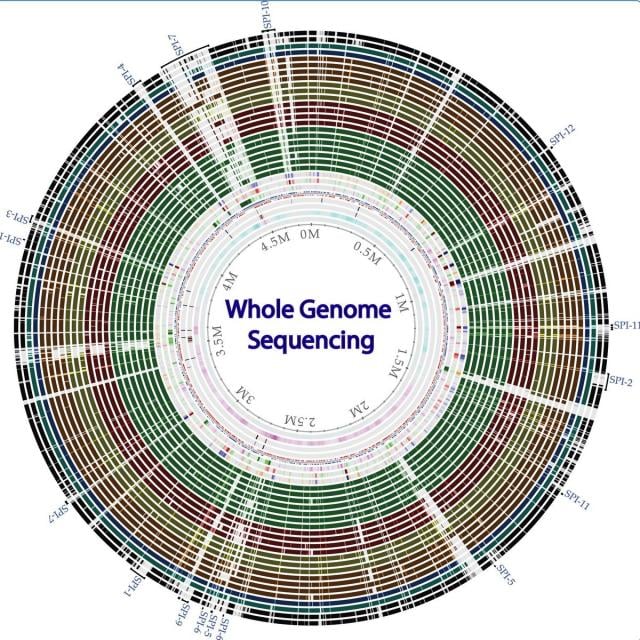
This course will cover the topic of Whole genome sequencing (WGS) of bacterial genomes which is becoming more and more relevant for the medical sector. WGS technology and applications are high on international political agenda, as the classical methods are being replaced by WGS technology and therefore bioinformatic tools are extremely important for allowing the people working in this sector to be able to analyze the data and obtain results that can be interpreted and used for different purposes.

Oct 5th 2026
5-12 Weeks
A Law Student's Toolkit (Coursera) Coursera
Yale University

A Law Student's Toolkit (Coursera)

Whether you are an advanced law student looking to review the basics, or an aspiring law student looking for head start, this course will help you build the foundation you will need to succeed in law school and beyond. This course will introduce you to terminology, concepts, and tools lawyers and legal academics use to make their arguments. It will help you follow these arguments—and make arguments of your own.

Sep 28th 2026
3 Weeks
What future for education? (Coursera) Coursera
University of London,UCL Institute of Education

What future for education? (Coursera)

Through this course you will start to critically examine your own ideas about education, teaching and learning. The critique will be developed through engagement with theories and ideas developed through educational research. You will be encouraged to use these ideas to challenge or support your own ideas about education. Each week we will focus on one key question, using video lectures, key readings and challenges to explore some commonplace notions about education.

Oct 12th 2026
5-12 Weeks
Civic Engagement in American Democracy (Coursera) Coursera
Duke University

Civic Engagement in American Democracy (Coursera)

So how does the American political system work? Who are some of the key actors? What are key concepts for a student trying to understand what’s going on? How can I as a citizen influence politics? Civic Engagement in American Democracy takes on these and other key questions. We’re Dr. Nicholas Carnes and Dr. Bruce Jentleson, the principal course instructors. Along with our Duke faculty colleagues who also contributed modules, we’ve designed the course to provide a strong foundational introduction to US politics.

Oct 5th 2026
4 Weeks
Introduction to the Orbital Perspective (Coursera) Coursera
University of Florida,University of Arizona,Drexel University

Introduction to the Orbital Perspective (Coursera)

The goals of this course are to develop the student’s critical thinking skills, global awareness, and ability to work as an integral part of a team in an increasingly complex global job market. The course provides a foundation in such skills as team building, collaboration, and elevated empathy using real-world scenarios from some of world’s most effective collaborative projects including the Earthrise-2068 Project.

Oct 12th 2026
5-12 Weeks
International Law in Action: the Arbitration of International Disputes (Coursera) Coursera
Leiden University

International Law in Action: the Arbitration of International Disputes (Coursera)

‘The Arbitration of International Disputes’ is the third course of Leiden University’s series on International Law in Action. The first course covered generalities on the international courts and tribunals in The Hague, while the second course provided an insider's perspective into the work of international criminal courts and tribunals. This third course explores the major aspects of international arbitration as one of the most common method of international dispute settlement .

Oct 5th 2026
4 Weeks
Basic Statistics (Coursera) Coursera
University of Amsterdam

Basic Statistics (Coursera)

Understanding statistics is essential to understand research in the social and behavioral sciences. In this course you will learn the basics of statistics; not just how to calculate them, but also how to evaluate them. This course will also prepare you for the next course in the specialization - the course Inferential Statistics. In the first part of the course we will discuss methods of descriptive statistics. You will learn what cases and variables are and how you can compute measures of central tendency (mean, median and mode) and dispersion (standard deviation and variance). Next, we discuss how to assess relationships between variables, and we introduce the concepts correlation and regression.

Sep 28th 2026
5-12 Weeks
Economic Growth and Distributive Justice Part II - Maximize Social Wellbeing (Coursera) Coursera
Tel Aviv University

Economic Growth and Distributive Justice Part II - Maximize Social Wellbeing (Coursera)

If you really care about the big questions in the economies and societies of the 21st century, such as distributive justice - namely, inequality of income or wealth, and its correlation with economic growth - this course is meant for you. The knowledge you will gain can truly change your outlook on our world.

Sep 28th 2026
5-12 Weeks
Quantitative Methods (Coursera) Coursera
University of Amsterdam

Quantitative Methods (Coursera)

Discover the principles of solid scientific methods in the behavioral and social sciences. Join us and learn to separate sloppy science from solid research! This course will cover the fundamental principles of science, some history and philosophy of science, research designs, measurement, sampling and ethics. The course is comparable to a university level introductory course on quantitative research methods in the social sciences, but has a strong focus on research integrity. We will use examples from sociology, political sciences, educational sciences, communication sciences and psychology.

Oct 12th 2026
5-12 Weeks
Understanding Medical Research: Your Facebook Friend is Wrong (Coursera) Coursera
Yale University

Understanding Medical Research: Your Facebook Friend is Wrong (Coursera)

How can you tell if the bold headlines seen on social media are truly touting the next big thing or if the article isn't worth the paper it's printed on? Understanding Medical Studies, will provide you with the tools and skills you need to critically interpret medical studies, and determine for yourself the difference between good and bad science. The course covers study-design, research methods, and statistical interpretation. It also delves into the dark side of medical research by covering fraud, biases, and common misinterpretations of data. Each lesson will highlight case-studies from real-world journal articles.

Oct 5th 2026
5-12 Weeks
Design and Interpretation of Clinical Trials (Coursera) Coursera
Johns Hopkins University

Design and Interpretation of Clinical Trials (Coursera)

Clinical trials are experiments designed to evaluate new interventions to prevent or treat disease in humans. The interventions evaluated can be drugs, devices (e.g., hearing aid), surgeries, behavioral interventions (e.g., smoking cessation program), community health programs (e.g. cancer screening programs) or health delivery systems (e.g., special care units for hospital admissions). We consider clinical trials experiments because the investigators rather the patients or their doctors select the treatment the patients receive.

Sep 28th 2026
5-12 Weeks
Foundations of Health Equity Research (Coursera) Coursera
Johns Hopkins University

Foundations of Health Equity Research (Coursera)

Introduces students to the core principles of health equity research. Covers topics such as defining health equity, engaging community and policy stakeholders, patient-centeredness, cultural competence, and dissemination of research findings. Content will recognize different geographic, cultural, and social contexts where health inequities occur.

Oct 12th 2026
5-12 Weeks