EdX

Structured Database Environments with SQL (edX)

Structured Database Environments with SQL (edX)

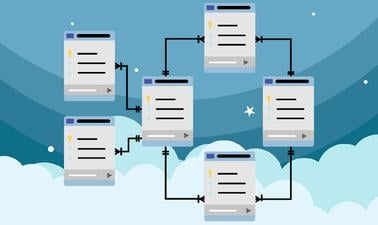
Discover Structured Query Language (SQL) programming basics in relation to database management and data manipulation. This course can provide you with an overview of topics like joins, database schemas, database design and importing data into a database. Develop the skills necessary to create structured database environments using a relational database management system (RDBMS), such as MySQL, that incorporates basic processing functionality and allows for data management, data manipulation and data analysis.

Class Deals by MOOC List - Click here and see EdX's Active Discounts, Deals, and Promo Codes.

Learn about types of data and types of databases to store data, as well as design for scalability. You’ll also learn to prepare digital data storage using the relational model, including resolving integrity constraints, and proper assignments of primary and foreign keys. In addition, you’ll construct and analyze queries to address data requirements.
By completing this course and the final exam, you will:
Demonstrate knowledge of the relational model
Build skills in SQL
Construct SQL queries
Read and develop database schemas
Apply the concept of normalization to a dataset or database
Understand how to add/export data to existing schemas and SQL joins
Learn how to troubleshoot SQL code
If you’re looking to advance your career, you should take this course if you’re interested in data analytics, data engineering, database design or business intelligence. Structured query language (SQL) is the fundamental cornerstone to extract, transact and load data necessary for analysis using a relational database.
This is the second course in the introductory, undergraduate-level offering that makes up the larger Data Management with Python and SQL MicroBachelors program. We recommend taking them in order, unless you have a background in these areas already and feel comfortable skipping ahead.

  1. Scripting with Python - starting February 2021
  2. Structured Database Environments with SQL - starting February 2021

This course is part of the Data Management with Python and SQL MicroBachelors.

What you'll learn

  • Understanding what SQL is
  • How to use SQL statements such as:

. Select
. From
. Where
. Having
. Group by
. Order by
. Max
. Min
. Count
. Count distinct
. Joins
. Import/export

  • Reading schemas
  • Creating database schemas
  • Importing/exporting data
  • Troubleshooting queries
  • Modifying tables and data structures
  • Analyzing SQL outputs
Go to Class
MOOC List is learner-supported. When you buy through links on our site, we may earn an affiliate commission.

Related Courses

Statistics and R (edX) EdX
HarvardX,Harvard University

Statistics and R (edX)

An introduction to basic statistical concepts and R programming skills necessary for analyzing data in the life sciences. We will learn the basics of statistical inference in order to understand and compute p-values and confidence intervals, all while analyzing data with R. We provide R programming examples in a way that will help make the connection between concepts and implementation.

Self Paced
Self-Paced
Analytics for Decision Making (edX) EdX
Babson College

Analytics for Decision Making (edX)

Discover the foundational concepts that support modern data science and learn to analyze various data types and quality to make smart business decisions. Want to know how to avoid bad decisions with data? Making good decisions with data can give you a distinct competitive advantage in business. This statistics and data analysis course will help you understand the fundamental concepts of sound statistical thinking that can be applied in surprisingly wide contexts, sometimes even before there is any data! Key concepts like understanding variation, perceiving relative risk of alternative decisions, and pinpointing sources of variation will be highlighted.

Self Paced
Self-Paced
Estadística Aplicada a los Negocios (edX) EdX
Galileo University,GalileoX

Estadística Aplicada a los Negocios (edX)

Aprende las principales herramientas y técnicas de la estadística descriptiva y la estadística inferencial para analizar e interpretar datos desde la perspectiva de negocios facilitando la toma de decisiones. Este curso proporciona una introducción al análisis de datos en base a las principales herramientas estadísticas, enfocándose en la estadística descriptiva y la estadística inferencial.

Self Paced
Self-Paced
RShiny for Everyone (edX) EdX
Davidson College,DavidsonX

RShiny for Everyone (edX)

Use R’s Shiny package to create data-driven, interactive web applications. In this course, you will use R Shiny to create an interactive web application that highlights the biodiversity of America’s National Parks. Your application will feature an interactive map, biodiversity calculator, trail journal and species images. Using R Shiny, you will expand your data analysis and visualization skills while developing your workflow through web application deployment.

Self Paced
Self-Paced
Data Processing and Analysis with Excel (edX) EdX
Rochester Institute of Technology,RITx

Data Processing and Analysis with Excel (edX)

Learn to use Excel to organize and clean data so it can be manipulated and analyzed. In this course, you will learn how to organize your data within the Microsoft Office Excel software tool. Once organized, we will discuss data cleaning. You will learn how to identify outliers and anomalies in the data, and how to identify and change data-types. Together we will develop a data analysis plan, after which we will apply analysis methods and tools, including exploratory analysis, evaluation of results, and comparison with other findings.

Self Paced
Self-Paced
Analyzing Data with Excel (edX) EdX
IBM

Analyzing Data with Excel (edX)

Build the fundamental knowledge required to use Excel spreadsheets to perform basic data analysis. The course covers the basic workings and key features of Excel to help students analyze their data. This course provides students with the fundamental knowledge required to use Excel spreadsheets to perform basic data analysis.The course consists of several videos, demos, examples, and hands-on labs to help you learn, and ends with a final assignment project which will help you put what you have learned into practice.

Self Paced
Self-Paced
Excel avanzado: importación y análisis de datos (edX) EdX
Universitat Politècnica de València,UPValenciaX

Excel avanzado: importación y análisis de datos (edX)

Conoce técnicas y estrategias avanzadas para importar, consolidar y visualizar con Excel datos provenientes de cualquier fuente. En este curso de análisis e interpretación de datos te presentaremos técnicas avanzadas de importación de datos y estrategias diversas para consolidarlos y prepararlos una vez importados de forma que puedas extraer las conclusiones que necesitas (basadas en nuestra experiencia en el uso de Microsoft Excel y demostradas con casos reales).

Self Paced
Self-Paced
Data Science: Inference and Modeling (edX) EdX
HarvardX,Harvard University

Data Science: Inference and Modeling (edX)

Learn inference and modeling, two of the most widely used statistical tools in data analysis. Statistical inference and modeling are indispensable for analyzing data affected by chance, and thus essential for data scientists. In this course, you will learn these key concepts through a motivating case study on election forecasting.

Self Paced
Self-Paced
Data Science: Capstone (edX) EdX
HarvardX,Harvard University

Data Science: Capstone (edX)

Show what you’ve learned from the Professional Certificate Program in Data Science. To become an expert data scientist you need practice and experience. By completing this capstone project you will get an opportunity to apply the knowledge and skills in R data analysis that you have gained throughout the series. This final project will test your skills in data visualization, probability, inference and modeling, data wrangling, data organization, regression, and machine learning.

Self Paced
Self-Paced