EdX

Solar Energy 2 (edX)

Solar Energy 2 (edX)

The growth in global PV capacity towards 100 Terawatt by 2050 requires a diverse portfolio of PV technologies. Apply the solar design rules to PV technologies and analyze them using metrics related to performance, costs, reliability and circularity. In the second course of the Solar Energy program, you will apply the design rules for a solar cell, mastered in the first course, on various photovoltaic (PV) technologies from cell up to module level.

Class Deals by MOOC List - Click here and see EdX's Active Discounts, Deals, and Promo Codes.

You will be introduced to crystalline silicon, the leading technology on the market. We will cover the manufacturing process from sand to cell and from cell to module, as well as high-efficiency concepts.
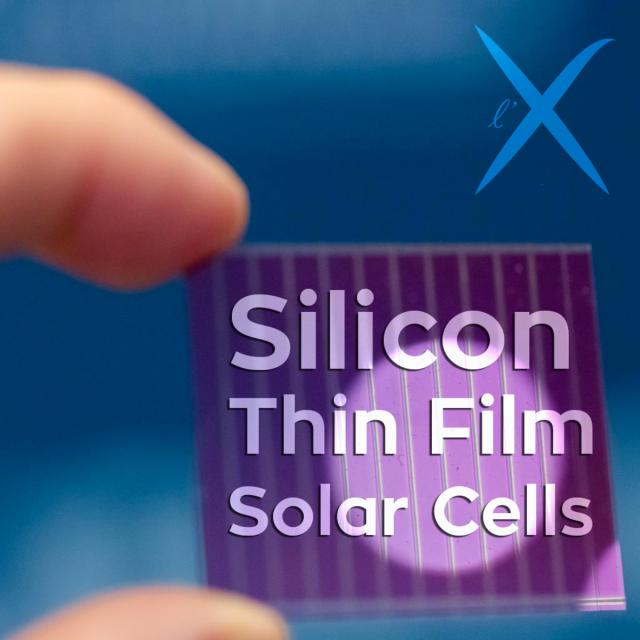
You will also be familiarized with thin-film PV technologies, which are an alternative to crystalline silicon technology (III-V semiconductor materials, thin-film silicon, and chalcogenides like CdTe and CIGS, organics and perovskites materials will be covered.) The device architectures and processing methods of the PV technologies will be reviewed as well as novel future concepts for going beyond the conventional limits.
Finally, various metrics will be applied to compare different PV technologies. These are related to performance, costs, reliability and you will be able to evaluate the advantages and limitations of different PV technologies and their applications.
This course is part of the Solar Energy Professional Certificate.

What you'll learn

  • Recognize and describe the various photovoltaic technologies and evaluate their applicability
  • Understand the manufacturing process and the design rules of crystalline silicon and other PV technologies
  • Use various metrics related to performance, costs, reliability and circularity to evaluate the advantages and the limitations of different PV technologies
  • Analyze the performance of solar cells and modules

Syllabus

Week 1: Crystalline Silicon
Week 2: Thin-Film PV technologies 1
Week 3: Thin-Film PV technologies 2
Week 4: Comparing PV technologies

Go to Class
MOOC List is learner-supported. When you buy through links on our site, we may earn an affiliate commission.

Related Courses

Hydro, Wind & Solar power: Resources, Variability & Forecast (Coursera) Coursera
École Polytechnique

Hydro, Wind & Solar power: Resources, Variability & Forecast (Coursera)

The development of hydro, wind and solar power is growing strongly with as one objective to limit and reduce greenhouse gas emissions. All these renewable energies are intermittent with more or less strong variability. This course provides the basis for estimating the resource of these different modes of production and understanding the physical causes of intermittency and seasonal variability. The different modes of electricity production are detailed as well as the sensitivity induced by meteorological variations.

May 11th 2026
5-12 Weeks
Solar Energy 3 (edX) EdX
Delft University of Technology,DelftX

Solar Energy 3 (edX)

Solar photovoltaics (PV) is the cheapest source of electricity in many parts of the world. Learn to both design a complete PV system and to perform technical and economic assessments for PV systems ranging from large solar farms to residential systems. In the third course of the program Solar Energy, you will learn to design a complete photovoltaic (PV) system for any application and location, from utility scale solar farms to residential scale systems. For these scales, both grid-connected and stand-alone solutions will be examined.

Self Paced
Self-Paced
Renewable Energy: Fundamentals and Job Opportunities (Coursera) Coursera
University at Buffalo

Renewable Energy: Fundamentals and Job Opportunities (Coursera)

This course prepares you to recognize the complexities and nuances of different renewable energy solutions, as well as relevant career opportunities (both technical occupations and roles not typically associated with clean energy). Learners are immersed in discussions about green energy technologies, the impact of sustainability on society, energy consumption in the United States and conservation. Topics include: tenets of green building design and construction, solar energy conversion through photovoltaic cells, wind turbine site selection and design, and nanotechnology applications in clean energy.

May 18th 2026
5-12 Weeks
Solar Energy: Photovoltaic (PV) Energy Conversion (edX) EdX
Delft University of Technology,DelftX

Solar Energy: Photovoltaic (PV) Energy Conversion (edX)

Learn how solar cells generate electricity, and about the semiconductor physics and optics required to design and manufacture solar cells. The key factor in getting more efficient and cheaper solar energy panels is the advance in the development of photovoltaic cells. In this course you will learn how photovoltaic cells convert solar energy into useable electricity. You will also discover how to tackle potential loss mechanisms in solar cells.

Aug 29th 2023
5-12 Weeks
New Energy Technologies: Energy Transition and Sustainable Development (FutureLearn) FutureLearn
Grenoble Ecole de Management

New Energy Technologies: Energy Transition and Sustainable Development (FutureLearn)

Explore the development of new energy technologies and discover key energy challenges with this online course. In a world facing pressing energy challenges, the need for alternative energy and new energy technologies has never been more pressing. This course explores the new and upcoming technologies that may help solve some of the world’s biggest energy challenges - examining them from both a business and technological perspective.

May 3rd 2021
4 Weeks
Energy, Environment, and Everyday Life (Coursera) Coursera
University of Illinois at Urbana-Champaign

Energy, Environment, and Everyday Life (Coursera)

This course teaches you everything you need to know about energy, the environment, and at least a number of things in everyday life. It starts by talking about energy itself and where it comes from. This includes how much we have, who has it, who uses it, and what that all means. The video clips are produced in a fast-paced multimedia format during which Professor Ruzic throws in fun and demonstrations. There are multiple-choice questions to check your understanding and some more in-depth exercises to guide you deeper into the subject.

May 11th 2026
5-12 Weeks
Introduction to Time Value of Money (TVM) (Coursera) Coursera
University of Michigan

Introduction to Time Value of Money (TVM) (Coursera)

The strength of finance is that it takes a structured approach to decision making, with one key building block underlying all decisions — understanding the value of time, or the Time Value of Money (TVM). In this course, we will develop this building block using introductory, and simple, applications. We will learn about the Time Value of Money (TVM), Simple Future Value (FV) , Simple Present Value (PV) , Future Value of Annuity, Loans, compounding, and Valuing Perpetuities.

May 25th 2026
4 Weeks
Physics of silicon solar cells (Coursera) Coursera
École Polytechnique

Physics of silicon solar cells (Coursera)

The first MOOC “Photovoltaic solar energy” is a general presentation of the solar photovoltaics technologies in the global energetic context, without extensive details. In particular the description of the solar cell operation is restricted to the ideal case. In contrast this second MOOC allows a deep understanding of the properties of solar cells based on crystalline semiconductors.

May 11th 2026
5-12 Weeks
Valuation for Startups Using Discounted Cash Flows Approach (Coursera) Coursera
Yonsei University

Valuation for Startups Using Discounted Cash Flows Approach (Coursera)

Discounted cash flow method means that we can find firm value by discounting future cash flows of a firm. That is, firm value is present value of cash flows a firm generates in the future. In order to understand the meaning of present value, we are going to discuss time value of money, first. That is, the value of $100 today is different from the value of $100 a year later. Then, what should be the present value of $100 that you are going to receive in 1 year? How about the value of $100 dollars that you are going to receive every year for next 10 years? How about forever?

Jun 4th 2026
4 Weeks
Solar Energy: Photovoltaic (PV) Technologies (edX) EdX
Delft University of Technology,DelftX

Solar Energy: Photovoltaic (PV) Technologies (edX)

Explore the main PV technologies in the current market. Get in-depth knowledge on the design and processing methods of solar cells. The technologies used to produce solar cells and photovoltaic modules are advancing to deliver highly efficient and flexible solar panels. In this course you will explore the main PV technologies in the current market.

Aug 29th 2023
5-12 Weeks