Software Engineering: Modeling Software Systems using UML (Coursera)

Software Engineering: Modeling Software Systems using UML (Coursera)

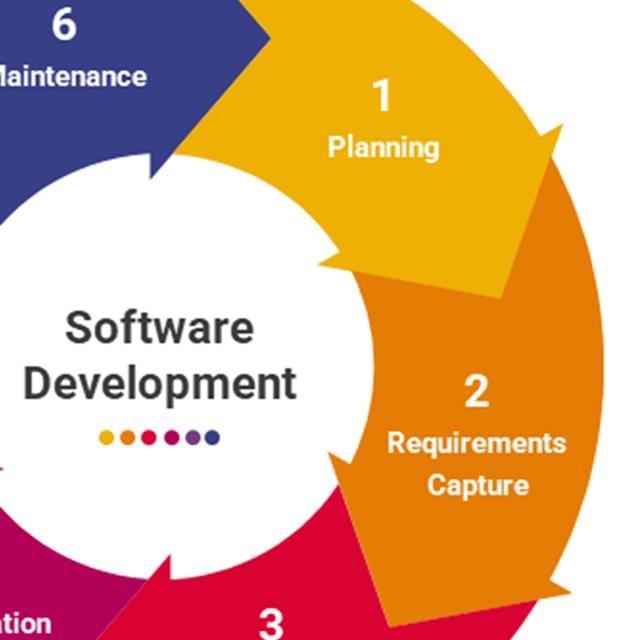
Software Development Life Cycle (SDLC) is the process of developing software through planning, requirement analysis, design, implementation, testing, and maintenance. This course focuses on the requirement analysis phase of SDLC, and you will learn how to use UML models to capture the system requirements and to facilitate communication between client/users and developers.

Class Deals by MOOC List - Click here and see Coursera's Active Discounts, Deals, and Promo Codes.

UML is a general purpose visual modeling language for systems. It can be used to highlight different aspects of the system that are of interest to different stakeholders. Data requirements are captured in the domain model, which describes the important concepts of the application domain as classes, associations between them and constraints on them. Functional requirements are captured in the use-case model to describe the interactions between the system and its environment (users, other systems).
UML incorporates the current best practices in Object-Oriented modeling techniques. Basic object-oriented programming (OOP) concepts are required to attempt the course. It is recommended to take the courses in the order they are listed, as they progressively develop techniques and concepts about software engineering, but it is not a hard requirement.
Course 1 of 3 in the Software Engineering Specialization.

Syllabus

WEEK 1
Introduction to Software Engineering
Welcome to the first module of this course! In this module, you will learn: (1) Developing large software systems is a complex process.(2) How to deal with the complexity of software development.(3) What is software engineering.

WEEK 2
Modeling Software Systems Using UML
In this module, you will learn: (1) What is UML. (2) How to model a software system as a collection of collaborating objects. (3) The basic modeling components (Class, Association and Aggregation/Composition) of UML class diagrams.

WEEK 3
Types of Relationships in Class Diagram
In this module, you will learn: (1) The basic modeling components (Association Class, Inheritance and Other Constraints) of UML Class Diagram.

WEEK 4
System Requirements Capture and Domain Modeling
In this module, you will learn: (1) What is requirements capture and its role in the software development process. (2) How to capture data requirements in a domain model. (3) How to evaluate attributes, classes, and associations in a domain model.

WEEK 5
Use Case Modeling
In this module, you will learn: (1) How to capture functional requirements in a use case model. (2) How to evaluate use cases in a use case model.

WEEK 6
Use Case Specification
In this module, you will learn: (1) How to write use case specification to describe the behavior within a use case.

WEEK 7
Non-Functional Requirements
In this module, you will learn: (1) How to capture non-functional requirements. (2) How to validate system requirements.

Go to Class
MOOC List is learner-supported. When you buy through links on our site, we may earn an affiliate commission.

Related Courses

Introduction to Embedded Systems Software and Development Environments (Coursera) Coursera
University of Colorado Boulder

Introduction to Embedded Systems Software and Development Environments (Coursera)

Welcome to the Introduction to Embedded Systems Software and Development Environments. This course is focused on giving you real world coding experience and hands on project work with ARM based Microcontrollers. You will learn how to implement software configuration management and develop embedded software applications. Course assignments include creating a build system using the GNU Toolchain GCC, using Git version control, and developing software in Linux on a Virtual Machine.

Jun 22nd 2026
4 Weeks
Desenvolvimento Ágil de Software (curso baseado em projetos e problemas) (IFSULDEMINAS) Other Providers
Instituto Federal de Educação, Ciência e Tecnologia do Sul de Minas Gerais - IFSULDEMINAS

Desenvolvimento Ágil de Software (curso baseado em projetos e problemas) (IFSULDEMINAS)

Desenvolvimento Ágil de Software utilizando Projetos, Problemas e uma Comunidade de Aprendizagem. No curso, o estudante aprende desenvolvendo projetos e resolvendo problemas reais (curso inspirado nas metodologia ativas de aprendizagem baseada em projetos e problemas).

Not Available
5-12 Weeks
Software Engineering Essentials (edX) EdX
Technische Universität München - TUM,TUMx

Software Engineering Essentials (edX)

Learn agile methods, object-oriented programing and best practices for analysis, design, testing and management in software engineering. The world of software engineering requires high flexibility, an influx of new ideas, and the courage to challenge traditional approaches. As a software engineer, you need to know the methods, workflows and tools to handle continuously growing complexity and shortened development cycles. You must be able to work in teams to build high-quality software.

This course is archived
5-12 Weeks
Software Engineering: Software Design and Project Management (Coursera) Coursera
The Hong Kong University of Science and Technology - HKUST

Software Engineering: Software Design and Project Management (Coursera)

Software Development Life Cycle (SDLC) is the process of developing software through planning, requirement analysis, design, implementation, testing, and maintenance. This course focuses on the project planning and analysis/design phases of SDLC, and you will learn about different architectural patterns and design patterns to solve common problems in software design. It covers project planning, scheduling, and cost estimating, which are the principal tasks of software project managers.

Jun 22nd 2026
3 Weeks
Version Control with Git (Udacity) Udacity
Udacity

Version Control with Git (Udacity)

Learn to track and manage changes. This course covers the essentials of using the version control system Git. You'll be able to create a new Git repo, commit changes, and review the commit history of an existing repo. You'll also learn how to keep your commits organized using tags and branches and you'll master the art of merging changes by crushing those pesky merge conflicts.

Self Paced
Self-Paced
Introduction to Java Programming: Writing Good Code (edX) EdX
Universidad Carlos III de Madrid - UC3M,UC3Mx

Introduction to Java Programming: Writing Good Code (edX)

Learn to program in an easy and interactive way and enter the fascinating world of computer science. This is an introductory course to learn programming with Java designed to teach how to code good programs in Java, understanding “good” as both correct and efficient. Basic principles of software engineering will be introduced to make it easier for our future self and others to reuse code. Ethical issues and the intellectual property of our programs will also be addressed in the last part of this course. Examples and case studies will be provided, so that learners can implement simple but increasingly complex programs in Java.

Self Paced
Self-Paced
Engineering Maintainable Android Apps (Coursera) Coursera
Vanderbilt University

Engineering Maintainable Android Apps (Coursera)

Engineering Maintainable Android Apps, which is a 4 week MOOC that shows by example various methods for engineering maintainable Android apps, including test-driven development methods and how to develop/run unit tests using JUnit and Robotium (or equivalent automated testing frameworks for Android), as well as how to successfully apply common Java/Android software patterns to improve the extensibility and clarity of Android apps.

Jun 22nd 2026
4 Weeks