Software Development Processes and Methodologies (Coursera)

Software Development Processes and Methodologies (Coursera)

Software is quickly becoming integral part of human life as we see more and more automation and technical advancements. Just like we expect car to work all the time and can't afford to break or reboot unexpectedly, software industry needs to continue to learn better way to build software if it were to become integral part of human life.

Class Deals by MOOC List - Click here and see Coursera's Active Discounts, Deals, and Promo Codes.

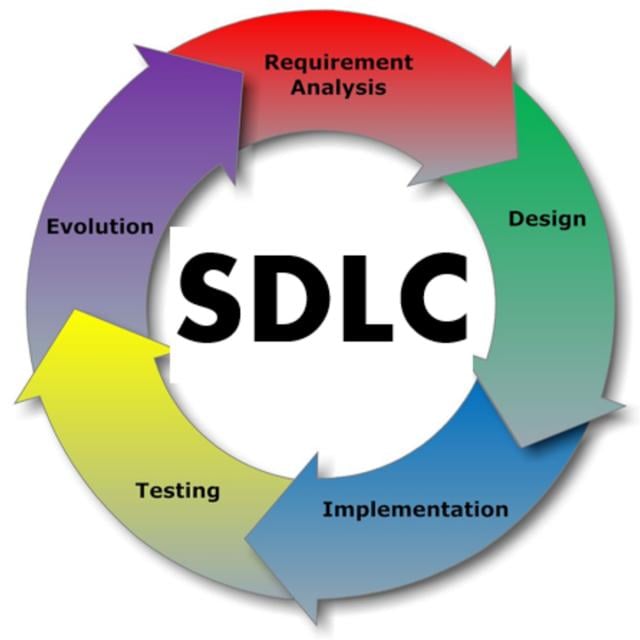
In this course, you will get an overview of how software teams work? What processes they use? What are some of the industry standard methodologies? What are pros and cons of each? You will learn enough to have meaningful conversation around software development processes.
After completing this course, a learner will be able to
1) Apply core software engineering practices at conceptual level for a given problem.
2) Compare and contrast traditional, agile, and lean development methodologies at high level. These include Waterfall, Rational Unified Process, V model, Incremental, Spiral models and overview of agile mindset
3) Propose a methodology best suited for a given situation
Course 1 of 4 in the Software Development Lifecycle Specialization.

Syllabus

WEEK 1
Software development processes : Part 1
In this module and next one, we will learn about various software development processes at a high level to understand what is involved in each of these processes. In this module, we will cover Requirements and Architecture.

WEEK 2
Software Development Processes : Part 2
In this module, we will learn about processes that are used to implement the software, verify and validate the software, deploy the software and maintain the software.

WEEK 3
Software Development Models: Traditional Models
In this module we will learn about various traditional models like waterfall, RUP, Incremental, and Spiral models.

WEEK 4
Software Development Models: Agile and Lean
In this module, we will learn about agile and modern techniques of software development. We will also learn about techniques that helps you learn faster about your market, your users, and your product.
Go to Class
MOOC List is learner-supported. When you buy through links on our site, we may earn an affiliate commission.

Related Courses

Solving Algorithms for Discrete Optimization (Coursera) Coursera
University of Melbourne,The Chinese University of Hong Kong

Solving Algorithms for Discrete Optimization (Coursera)

Discrete Optimization aims to make good decisions when we have many possibilities to choose from. Its applications are ubiquitous throughout our society. Its applications range from solving Sudoku puzzles to arranging seating in a wedding banquet. The same technology can schedule planes and their crews, coordinate the production of steel, and organize the transportation of iron ore from the mines to the ports.

Sep 7th 2026
4 Weeks
Software Architecture for the Internet of Things (Coursera) Coursera
EIT Digital

Software Architecture for the Internet of Things (Coursera)

This course will teach you how to design futureproof systems that meet the requirements of IoT systems: systems that are secure, interoperable, modifiable and scalable. Moreover, you'll learn to apply best-in-class software architecture methods to help you design complex IoT and other applications. Lastly, you'll come to understand the business impact of the technical decisions that you make as an IoT system architect.

Aug 31st 2026
5-12 Weeks
Games, Sensors and Media (Coursera) Coursera
University of California, Irvine

Games, Sensors and Media (Coursera)

You will learn to make fluid digital interactive experiences that are suitable for gaming and use the advanced sensor hardware built into the iPhone and iPad. This includes drawing 2D graphics, playing sounds and music, integrating with Game Center, the iOS physics engine and detecting device orientation and location.

Aug 31st 2026
4 Weeks
Build a Modern Computer from First Principles: Nand to Tetris Part II (project-centered course) (Coursera) Coursera
Hebrew University of Jerusalem

Build a Modern Computer from First Principles: Nand to Tetris Part II (project-centered course) (Coursera)

In this project-centered course you will build a modern software hierarchy, designed to enable the translation and execution of object-based, high-level languages on a bare-bone computer hardware platform. In particular, you will implement a virtual machine and a compiler for a simple, Java-like programming language, and you will develop a basic operating system that closes gaps between the high-level language and the underlying hardware platform.

Sep 14th 2026
5-12 Weeks
An Introduction to Interactive Programming in Python (Part 2) (Coursera) Coursera
Rice University

An Introduction to Interactive Programming in Python (Part 2) (Coursera)

This two-part course is designed to help students with very little or no computing background learn the basics of building simple interactive applications. Our language of choice, Python, is an easy-to learn, high-level computer language that is used in many of the computational courses offered on Coursera. To make learning Python easy, we have developed a new browser-based programming environment that makes developing interactive applications in Python simple.

Sep 7th 2026
4 Weeks
Audio Signal Processing for Music Applications (Coursera) Coursera
Stanford University,Universitat Pompeu Fabra

Audio Signal Processing for Music Applications (Coursera)

In this course you will learn about audio signal processing methodologies that are specific for music and of use in real applications. We focus on the spectral processing techniques of relevance for the description and transformation of sounds, developing the basic theoretical and practical knowledge with which to analyze, synthesize, transform and describe audio signals in the context of music applications.

Sep 14th 2026
5-12 Weeks
Managing an Agile Team (Coursera) Coursera
University of Virginia

Managing an Agile Team (Coursera)

While agile has become the de facto standard for managing digital innovation teams, many wonder if they’re doing it ‘right’. Twitter is full of jokes about how teams say they do agile but don’t ‘really’ do it. The reality is that getting the most out of agile is less about observing specific procedures and more about how a team focuses and measures their progress. Rather than just boring you with an accounting of agile methodologies, this course focuses on helping you better charter your team’s focus, definition of success, and practice of agile.

Aug 31st 2026
4 Weeks
Introduction to Programming with MATLAB (Coursera) Coursera
Vanderbilt University

Introduction to Programming with MATLAB (Coursera)

This course teaches computer programming to those with little to no previous experience. It uses the programming system and language called MATLAB to do so because it is easy to learn, versatile and very useful for engineers and other professionals. MATLAB is a special-purpose language that is an excellent choice for writing moderate-size programs that solve problems involving the manipulation of numbers.

Aug 31st 2026
5-12 Weeks
Advanced Modeling for Discrete Optimization (Coursera) Coursera
University of Melbourne,The Chinese University of Hong Kong

Advanced Modeling for Discrete Optimization (Coursera)

Optimization is a common form of decision making, and is ubiquitous in our society. Its applications range from solving Sudoku puzzles to arranging seating in a wedding banquet. The same technology can schedule planes and their crews, coordinate the production of steel, and organize the transportation of iron ore from the mines to the ports. Good decisions in manpower and material resources management also allow corporations to improve profit by millions of dollars.

Sep 14th 2026
5-12 Weeks
COBOL Programming with VSCode (Coursera) Coursera
IBM

COBOL Programming with VSCode (Coursera)

Professor Tak Auyeung of American River College, said it beautifully, “A programming language is not a fashion statement” it is used for a purpose. Whether it is to add new features, modify logic, create APIs to integrate it into other applications, or implement modern development practices, businesses around the world need application developers who know COBOL.

Sep 14th 2026
3 Weeks
Version Control with Git (Coursera) Coursera
Atlassian

Version Control with Git (Coursera)

The Version Control with Git course provides you with a solid, hands-on foundation for understanding the Git version control system. Git is open source software originally created by Linus Torvalds. Git manages team files for large and small projects. This allows the team to continuously improve its product. It is used by most major technology companies, and is assumed knowledge for many modern programming and IT jobs. It is a core component of DevOps, continuous delivery pipelines and cloud-native computing. You could also use Git to manage the many continuously improving revisions of that book that you are writing.

Sep 7th 2026
4 Weeks