Social Computing (Coursera)

Social Computing (Coursera)

People are social creatures and the modern Internet reflects that. Technology has made collaboration at a distance possible in new ways that present their own set of challenges. This course will introduce you to the major challenges and opportunities for creating online communities. What does the future hold? Learn how social computing can create collaboration experiences that go beyond what’s possible face to face.

Class Deals by MOOC List - Click here and see Coursera's Active Discounts, Deals, and Promo Codes.

Course 3 of 8 in the Interaction Design Specialization

Syllabus

WEEK 1
Connecting People through Technology
When you think of social media, you might think of a popular social network, like Facebook, Twitter, or LinkedIn. These are indeed powerful, but the universe of social media is much larger. Both online and off, most everything we do has a social component that is mediated by some technology. After all, technologies have been helping people communicate since long before your favorite curly-haired CEO dropped out of college. In this module, you’ll learn about different types of social software, how to think about physical collaboration and digital collaboration using the same framework, and what the challenges to success for collaborative software are.

WEEK 2
Challenges & Opportunities of Collaboration Online
In our always-on, pervasively connected world, it can seem as if space and distance don’t matter anymore. Indeed, more and more organizations are outsourcing work around the globe and/or opening satellite locations. But being instantly reachable from anywhere in the world, isn’t the same as being there. In this module, you’ll learn the ways that distance does and doesn’t matter, how to design for this reality and how to create technologies that go beyond being there.

WEEK 3
Crowdsourcing
It can’t possibly work, can it? Slice up challenging problems into tiny pieces, distribute them to people all over the planet, and then gather their responses to piece together a solution. In this module, you’ll learn both the possibilities and limits of crowdsourcing. You’ll learn strategies for being able to use crowdsourcing successfully, and even hear from the voice of a professional crowdworker about what makes it successful from a worker’s perspective. To gain deeper intuitions, you’ll get to try it out yourself in the assignment.


Go to Class
MOOC List is learner-supported. When you buy through links on our site, we may earn an affiliate commission.

Related Courses

e-Learning Ecologies: Innovative Approaches to Teaching and Learning for the Digital Age (Coursera) Coursera
University of Illinois at Urbana-Champaign

e-Learning Ecologies: Innovative Approaches to Teaching and Learning for the Digital Age (Coursera)

For three decades and longer we have heard educators and technologists making a case for the transformative power of technology in learning. However, despite the rhetoric, in many ways and at most institutional sites, education is still relatively untouched by technology. Even when technologies are introduced, the changes sometimes seem insignificant and the results seem disappointing. If the print textbook is replaced by an e-book, do the social relations of knowledge and learning necessarily change at all or for the better?

Nov 2nd 2026
4 Weeks
Social Media Data Analytics (Coursera) Coursera
University of Washington

Social Media Data Analytics (Coursera)

Learner Outcomes: After taking this course, you will be able to: utilize various Application Programming Interface (API) services to collect data from different social media sources such as YouTube, Twitter, and Flickr; process the collected data - primarily structured - using methods involving correlation, regression, and classification to derive insights about the sources and people who generated that data; analyze unstructured data - primarily textual comments - for sentiments expressed in them; use different tools for collecting, analyzing, and exploring social media data for research and development purposes.

Oct 19th 2026
4 Weeks
Programming Mobile Applications for Android Handheld Systems: Part 2 (Coursera) Coursera
University of Maryland, College Park

Programming Mobile Applications for Android Handheld Systems: Part 2 (Coursera)

This course introduces you to the design and implementation of Android applications for mobile devices. You will build upon concepts from the prior course, including handling notifications, using multimedia and graphics and incorporating touch and gestures into your apps.

Oct 26th 2026
5-12 Weeks
Science and Technology in the Silla Cultural Heritage (Coursera) Coursera
Pohang University of Science and Technology - POSTECH

Science and Technology in the Silla Cultural Heritage (Coursera)

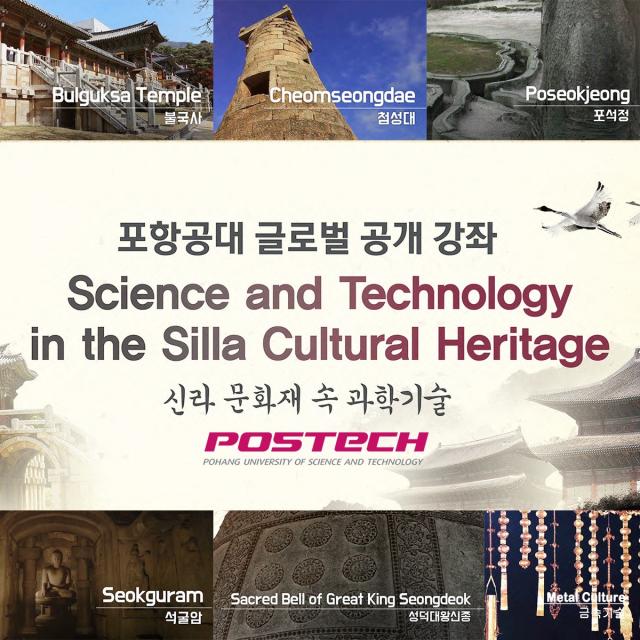
Science and Technology in the Silla Heritage. The course explores the scientific and technological aspects of the cultural heritage of Silla, an ancient dynasty in Korea, and its relationship with other ancient civilizations in the world. The lecture series will cover major cultural heritage of Silla: Bulguksa, Seokguram, Cheomseongdae, Poseokjeong, the Sacred Bell of Great King Seongdeok, and metallurgy.

Oct 19th 2026
5-12 Weeks
Emerging Trends & Technologies in the Virtual K-12 Classroom (Coursera) Coursera
University of California, Irvine

Emerging Trends & Technologies in the Virtual K-12 Classroom (Coursera)

Welcome to Emerging Trends and Technologies in K-12! This course will help you evaluate and implement technology in the most useful way within your virtual classroom setting. We will discuss the possibilities and challenges of using technology in fully online environments, although many of the ideas can be applied to blended and traditional environments as well.

Oct 26th 2026
4 Weeks
Introduction to solar cells (Coursera) Coursera
Technical University of Denmark - DTU

Introduction to solar cells (Coursera)

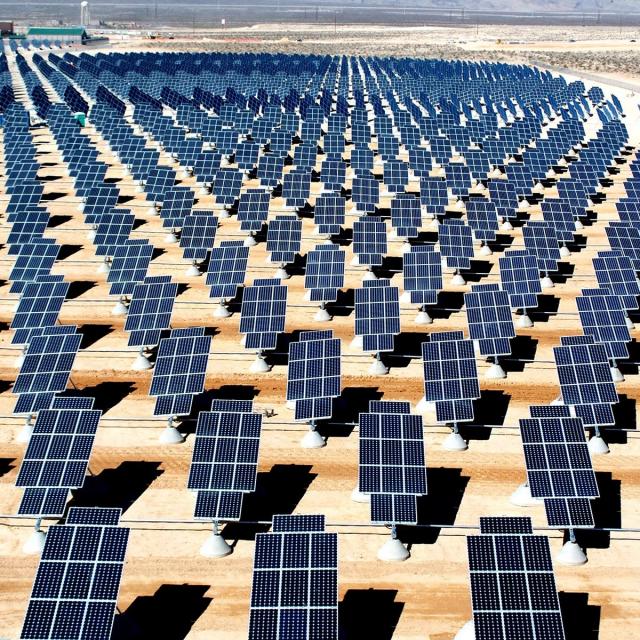
How do solar cells work, why do we need, and how can we measure their efficiency? These are just some of the questions Introduction to solar cells tackles. Whether you are looking for general insight in this green technology or your ambition is to pursue a career in solar, “Introduction to Solar Cells” is an excellent starting point. The course is a tour through the fundamental disciplines including solar cell history, why we need solar energy, how solar cells produce power, and how they work. During the course we cover mono- and multi-crystalline solar cells, thin film solar cells, and new emerging technologies.

Oct 19th 2026
5-12 Weeks
Job Success: Get Hired or Promoted in 3 Steps (Coursera) Coursera
The State University of New York

Job Success: Get Hired or Promoted in 3 Steps (Coursera)

This course, Job Success: Get Hired or Promoted in Three Steps, will prepare you to stand out in a crowded applicant pool so that you can get hired or promoted. In three steps you will leave this course with : an upgraded social media presence (one that you can be proud of); a visual, infographic resume that will get you noticed; a professional pitch that highlights your strengths and skills.

Oct 26th 2026
3 Weeks