Sensation and Perception (saylor.org)

Offered by Saylor.org,
Sensation and Perception (saylor.org)

Sensation and perception are the processes by which we absorb information from environmental stimuli and convert it into data that our brains and bodies use to modify behavior. This course will introduce you to these two closely related, though distinct, processes.

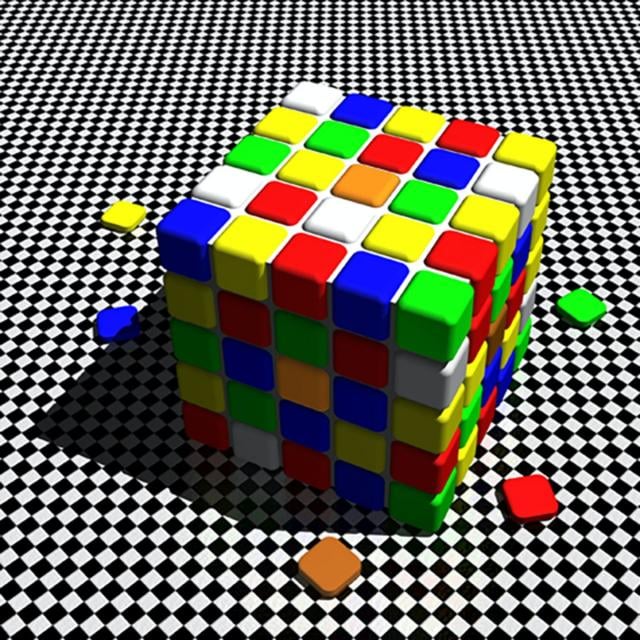
We will begin with sensation, the physical process by which we use our sense organs (i.e. tongues for taste or noses for smell) to respond to the environmental stimuli around us. Perception, on the other hand, refers to our interpretation of stimuli. It occurs through cognitive processing and enables us to use information in order to change our behavior. While these processes may seem simple, they are just the opposite: large portions of the brain are devoted to the seemingly straightforward processes of seeing and hearing, and entire sensory organs have developed in order to facilitate them. Further, while the brain is constantly using the information it gathers to make decisions, we are entirely unaware of this activity. Unbelievably, studying illusions is one of the easiest ways to learn about how we process stimuli (especially visual stimuli). We will accordingly devote a substantial amount of time to illusions later in this course. In this course, you will not only learn how we use sensation and perception to understand the world around us, but identify the ways in which these processes can fail. We will take a close look at how we use specific behaviors in the presence of certain stimuli by learning about the biology of both the hearing system and the visual system (we will learn, for example, how the visual system measures light, how it sees color and motion, and how it recognizes distinct objects). We will conclude with a discussion of how the other senses (smell, taste, and touch) affect perception.

Go to Class
MOOC List is learner-supported. When you buy through links on our site, we may earn an affiliate commission.

Related Courses

La percepción del paisaje (edX) EdX
Universidad Autonoma de Madrid,UAMx

La percepción del paisaje (edX)

En este MOOC nos proponemos dos objetivos: recrear la historia del paisaje y percibirlo no sólo por la vista, sino por los cinco sentidos. De forma que veremos cómo se ha ido pasando de una percepción frontal del paisaje (la del caminante y el navegante), a una lateral (la de las ventanillas del ferrocarril) y a otra vertical (la de los submarinos y los satélites espaciales). Y desde la aparición de internet ha surgido otra dimensión: el paisaje virtual.

Self Paced
Self-Paced
Intro to Psychology (Udacity) Udacity
Udacity,San Jose State University

Intro to Psychology (Udacity)

The Science of Thought and Behavior. Introduction to Psychology is a journey through all of the major psychological concepts and principles. The knowledge gained from this course will allow students to critically evaluate psychological research and have a more in-depth understanding of human thought and behavior.

Self Paced
Self-Paced
Introduction to Politics (saylor.org) Saylor Academy
Saylor.org

Introduction to Politics (saylor.org)

This is a survey course, and as such it can either be used by students who are looking to take just one general overview course, or for students who want to go on to more advanced study in any of the subfields that comprise the political science discipline, such as American politics, comparative politics, international politics, or political theory.

Self Paced
Self-Paced
Industrial/Organizational Psychology (saylor.org) Saylor Academy
Saylor.org

Industrial/Organizational Psychology (saylor.org)

This course will introduce you to the major concepts of and debates surrounding industrial and organizational psychology. Industrial and organizational psychology is the application of psychological research and theory to human interaction (both with other humans and with human factors, or machines and computers) in the workplace.

Legacy Course
Self-Paced
Input and Interaction (Coursera) Coursera
University of California, San Diego

Input and Interaction (Coursera)

In this course, you will learn relevant fundamentals of human motor performance, perception, and cognition that inform effective interaction design. You will use these models of how people work to design more effective input and interaction techniques. You’ll apply these to both traditional graphic and gestural interfaces.

Jun 29th 2026
3 Weeks
Fundamentals of Neuroscience, Part 3: The Brain (edX) EdX
HarvardX,Harvard University

Fundamentals of Neuroscience, Part 3: The Brain (edX)

Discover what makes your brain tick in this third part of a four-part introductory series in Neuroscience. The human brain is a fantastically complex system, capable of transforming a torrent of incoming information into thought and action. In this course, we will look at how the various subsystems of the brain work together to enable us to survive and thrive in a changing world.

Self Paced
Self-Paced
Il disegno della luce (EMMA) EMMA
University of Naples Federico II

Il disegno della luce (EMMA)

La produzione di questo MOOC fa capo al Corso di Disegno edile, afferente alla facoltà di Ingegneria edile dell'Università Federico II di Napoli. Durante le lezioni, particolarmente indicate per coloro che abbiano conoscenze dei fondamenti della geometria proiettiva e del metodo delle proiezioni ortogonali, si affronterà la questione della rappresentazione delle ombre. Saranno affrontati e risolti alcuni problemi grafici legati a questo tipo di rappresentazione, attraverso l'utilizzo di numerosi esempi interattivi che, in maniera evidente, illustreranno le soluzioni risultanti dall'applicazione delle regole.

Self-Paced
Self-Paced
Risk Communication (KTU) Other Providers
Kaunas University of Technology - KTU

Risk Communication (KTU)

This MOOC provides practical tips, hands-on tools and the most recent examples for the effective risk communication. Course is open for everyone who is interested in individual, national or global risks in contemporary world and would like to acquire skills in designing, visualising and using media for risk messages. This course is based on the Erasmus+ project "Risk and Security Governance Studies within Baltic – Nordic Academic Community of Practice".

No sessions available
5-12 Weeks
Seeing: How the Brain Creates the Visual World (FutureLearn) FutureLearn
National Yang Ming Chiao Tung University (NYCU)

Seeing: How the Brain Creates the Visual World (FutureLearn)

Gain insights into how we perceive sensory system input when it reaches our brains, and the factors affecting that process. Explore how our visual system and human psychology influence our world view. Our visual system is complicated; using our eyes and brains to convert external information into internal feelings and enabling us to see and interpret the world. On this four-week course from the National Chiao Tung University (NCTU), you’ll explore how our eyes and brains constitute the visual world for us and discover that seeing is not always believing.

Jul 11th 2022
4 Weeks
Lifespan Development  (saylor.org) Saylor Academy
Saylor.org

Lifespan Development (saylor.org)

Developmental psychology concerns itself with the changes (psychological and otherwise) that occur as a result of our physical and mental maturation. Typically, “development” refers to the systematic changes that take place between our conception and death. While this definition may seem quite broad, it will serve as a good starting point in our quest to understand the field of developmental psychology.

Legacy Course
Self-Paced