Secure Your Data at Rest (Coursera)

Offered by Microsoft,
Secure Your Data at Rest (Coursera)

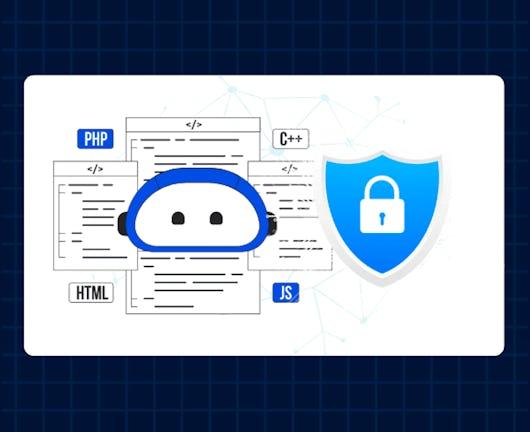
Secure Your Data at Rest is the fifth course in the Microsoft Azure Security Engineer Associate Professional Certificate training program. This course teaches storage security, data sovereignty, database monitoring, encryption, data masking, and using Defender for Cloud for advanced threat protection. You must secure data at rest as this will safeguard sensitive information, prevent unauthorized access, meet regulatory compliance, and ensure data confidentiality and integrity.

Class Deals by MOOC List - Click here and see Coursera's Active Discounts, Deals, and Promo Codes.

By the end of this course, you will be able to:

  • Deploy shared access signatures (SAS).
  • Generate SAS tokens.
  • Manage storage account access keys and key rollover.
  • Manage Azure Active Directory storage authentication.
  • Implement storage service encryption.
  • Configure blob data retention policies.
  • Configure Azure Files authentication.
  • Enable SQL database authentication with Azure Active Directory.
  • Monitor your database.
  • Enable and monitor database auditing.
  • Implement data discovery and classification.
  • Enable Defender for SQL for advanced threat protection.
  • Secure your data with dynamic data masking.
  • Implement transparent data encryption.
  • Deploy an Always Encrypted implementation.

This course is part of the Microsoft Azure Security Engineer Associate (AZ-500) Professional Certificate.

What you'll learn

  • Deploy shared access signatures (SAS).
  • Enable and monitor database auditing.
  • Enable Defender for SQL for advanced threat protection.
  • Deploy an Always Encrypted implementation.

Syllabus

Storage security
Module 1
In this module, you will gain an understanding about storage security and data sovereignty and how data sovereignty is achieved in Azure. You will learn how to deploy shared access signatures (SAS) and generate and test SAS tokens. You will also understand about storage access policies and how to create these policies. You will learn how to manage storage account access keys and key rollover.

Azure Storage and Azure Files
Module 2
In this module, you will learn how to configure Azure AD user account authentication for storage. You will learn how to implement storage service encryption - while the data is at rest and in transit. You will explore the difference between blobs and files. You will also learn how to configure blob data retention policies, Azure files authentication, and a storage account to accept requests from secure connections only by enabling the secure transfer required property. You will also understand how to secure a storage endpoint.

Database security and monitoring
Module 3
In this module, you will learn to configure which users and applications have access to your SQL databases. You will also learn how to block access to your servers using SQL database firewalls. You will learn how to discover, classify, and audit the use of your data. You will learn to encrypt and protect your data while is it stored in the database. You will gain an understanding about vulnerability assessments, data discovery and classification, and auditing. You will also learn to configure and lock down your SQL database on Azure to protect your corporate data while it is stored. Finally, you will learn how to secure your Azure SQL database to keep your data secure and diagnose potential security concerns as they happen.

Defender for Cloud and data masking and encryption
Module 4
In this module, you will gain understanding of Defender for Cloud, how it works, its basic and enhanced features, and when to use Defender for Cloud. You will learn how to use data encryption, data masking, firewalls, and auditing to protect databases from attacks. You will also learn how to secure your data in transit, at rest, and on display. You will learn to configure dynamic data masking and implement transparent data encryption. You will also learn to deploy an always encrypted implementation.

Project and graded assessment
Module 5
In this module, you will attempt a course-level ungraded project and graded assessment.
Go to Class
MOOC List is learner-supported. When you buy through links on our site, we may earn an affiliate commission.

Related Courses

Introduction to IT Security (Coursera) Coursera
Akamai Technologies, Inc.

Introduction to IT Security (Coursera)

Students will learn about the security management process. They will examine risk and risk management, including quantitative and qualitative risk assessments. The course includes discussion of security control types and physical security controls. Students will explore all aspects of Identity and Access Management (IAM) including single-factor and multi-factor authentication, account and access control, single sign-on and federation.

Jun 15th 2026
4 Weeks
Doing More with SAS Programming (Coursera) Coursera
SAS

Doing More with SAS Programming (Coursera)

This course is for business analysts and SAS programmers who want to learn data manipulation techniques using the SAS DATA step and procedures to access, transform, and summarize data. The course builds on the concepts that are presented in the Getting Started with SAS Programming course and is not recommended for beginning SAS software users.

Jun 15th 2026
5-12 Weeks
Implementing Security in IoT and Edge Devices (Coursera) Coursera
LearnQuest

Implementing Security in IoT and Edge Devices (Coursera)

This course is intended for IoT Product Developers and Cybersecurity Professionals. By the end of the course, learners will be able to explain the security needs of IoT devices and list their security aspects and how to protect them, identify IoT device vulnerabilities and how to develop effective security strategies to safeguard against potential threats, explain the basics of hardware security, list common encryption techniques used in IoT and edge devices, apply security measures to secure IoT and edge device deployments, and more.

Jun 22nd 2026
3 Weeks
Implement Platform Protection (Coursera) Coursera
Microsoft

Implement Platform Protection (Coursera)

Are you a security engineer who wants to learn how to lock down the infrastructure and network resources running in your Azure environment? Then, Implement Platform Protection is the right course for you! Throughout this course, you will explore perimeter security, network security, and host and containers security, along with various security components, tools, solutions, deployment methods, strategies, and services for protecting your Azure environment.

Jun 15th 2026
4 Weeks
Healthcare Data Security, Privacy, and Compliance (Coursera) Coursera
Johns Hopkins University

Healthcare Data Security, Privacy, and Compliance (Coursera)

In the final course of the Healthcare IT Support program, we will focus on the types of healthcare data that you need to be aware, complexities of security and privacy within healthcare, and issues related to compliance and reporting. As a health IT support specialist, you’ll be exposed to different types of data sources and data elements that are utilized in healthcare. It’s important for you to understand the basic language of healthcare data and for you to recognize the sensitive nature of protected health information (PHI). Maintaining data privacy and security is everyone’s responsibility, including IT support staff!

Jun 22nd 2026
4 Weeks
Predictive Modeling with Logistic Regression using SAS (Coursera) Coursera
SAS

Predictive Modeling with Logistic Regression using SAS (Coursera)

This course covers predictive modeling using SAS/STAT software with emphasis on the LOGISTIC procedure. This course also discusses selecting variables and interactions, recoding categorical variables based on the smooth weight of evidence, assessing models, treating missing values, and using efficiency techniques for massive data sets. You learn to use logistic regression to model an individual's behavior as a function of known inputs, create effect plots and odds ratio plots, handle missing data values, and tackle multicollinearity in your predictors. You also learn to assess model performance and compare models.

Jun 22nd 2026
5-12 Weeks
Cybersecurity Compliance Framework & System Administration (Coursera) Coursera
IBM

Cybersecurity Compliance Framework & System Administration (Coursera)

This course gives you the background needed to understand the key cybersecurity compliance and industry standards. This knowledge will be important for you to learn no matter what cybersecurity role you would like to acquire or have within an organization. You will learn the basic commands for user and server administration as it relates to security. You will need this skill to be able to understand vulnerabilities within your organizations operating systems.

Jun 22nd 2026
4 Weeks
Data Storage in Microsoft Azure for Associate Developers (Coursera) Coursera
Microsoft

Data Storage in Microsoft Azure for Associate Developers (Coursera)

Azure provides a variety of ways to store data: unstructured, archival, relational, and more. In this course, you will learn the basics of storage management in Azure, how to create a Storage Account, and how to choose the right model for the data you want to store in the cloud. This course part of a Specialization intended for Data engineers and developers who want to demonstrate their expertise in designing and implementing data solutions that use Microsoft Azure data services anyone interested in preparing for the Exam DP-203: Data Engineering on Microsoft Azure (beta).

Jun 15th 2026
5-12 Weeks
Data Management and Visualisation (Coursera) Coursera
Wesleyan University

Data Management and Visualisation (Coursera)

Whether being used to customize advertising to millions of website visitors or streamline inventory ordering at a small restaurant, data is becoming more integral to success. Too often, we’re not sure how use data to find answers to the questions that will make us more successful in what we do. In this course, you will discover what data is and think about what questions you have that can be answered by the data – even if you’ve never thought about data before. Based on existing data, you will learn to develop a research question, describe the variables and their relationships, calculate basic statistics, and present your results clearly.

Jun 15th 2026
4 Weeks