Science Research Foundations (Coursera)

Science Research Foundations (Coursera)

“Scientific Research Foundations” is now taught in many universities in a variety of specialties in almost any field of knowledge – almost to everyone who receives a higher education. There is also literature – focused on self-study or accompanying relevant courses. The feature of this author's course “Scientific Research Foundations” is in its focus on creating a picture of science in the head of a novice researcher. The “picture” is in the sense of Grenander’s pattern, not an image. This is important because pattern is a system, unlike image. From childhood, everyone imagines a scientist –like a bore in huge glasses distorting eyes, or like an extravagant Einstein with his tongue out. This is an image, and this is also very important for choosing your future. But when it comes not to imagine, but to be a scientist, your picture of a science is to be much more consistent.

Class Deals by MOOC List - Click here and see Coursera's Active Discounts, Deals, and Promo Codes.

Therefore, the course contains numerous references to the experience and conceptual approaches of various eminent scientists, contains reading materials with fragments of significant scientific books. Reading such texts, having their own face and valuable in themselves as piece of literature, is exactly what can make a talented beginner a promising researcher.
The course is intended for beginners in scientific activity in the field of information security or other technical specialties: students, undergraduates, graduates from higher school and graduate students. There may be difficulties in the course for students with only secondary or secondary special education. With motivation, these difficulties can be overcome.
What You Will Learn

  • The purpose is to form culture of researcher who owns the techniques and methods of scientific work, conducting research and formalizing its results.

Syllabus

WEEK 1
Introduction. Justification and evidence. Definitions
The subject matter, the purpose of the course, features of the discipline. Science research as a process and science research as a presentation of the research result, the relation between these essences. Signs of science. Detailing of different types of justification: reasoning, reference, experiment. The analysis of the types of justification (empirical ones, indirect ones, references) and their features. The hierarchy of justifications. The determinism of the type for justifying provisions of different types.

WEEK 2
Mistakes. Knowledge control
The comparison of logical, factual, methodological, system and speech mistakes. Self-control methods for conducting the research as well as for describing its results in a scientific text form.

WEEK 3
Method, methodics, methodology and scientific direction. Researcher's work and research work
Applied aspects of using the concepts of "method", "methodics", "methodology", "scientific direction" for positioning in the scientific process. The scientific search and the bibliographical search. The concept of "problem" in its distinction from "question", "task", "purpose", "topic" and "subject matter" of the study. Detailed analysis of purposes, objectives, conclusions and composition, respectively - of abstracts, term papers, articles and qualification theses. Background of the issue in research and in scientific texts of various genres.

WEEK 4
Background. Experiment
The principles of compiling the background of the issue. Types of referencing, the difference between retelling and analysis, analysis and polemics, the relevance of all the listed types of sources use. Experiment and observation. Real and mental experiment. The concept of "hypothesis". Requirements for a scientific hypothesis. Experiment planning and mathematical statistics. Signs of science in terms of experiment.

WEEK 5
Scientific Discourse. Defense of a PhD thesis is not self-defense. Knowledge control
Scientific discourse concept. Functional styles of language (FS), scientific FS. FS and discourse. Construction of a scientific paper as a piece of literature. The main difficulties and subtleties of the defense and tips for successful outcome.

WEEK 6
Scientific communication. Final examination. Conclusion
Forms of scientific communication, their specificity. Features of participation in scientific events of different formats. Scientific polemics. Questions to the speaker. Answers to questions of different types.
Go to Class
MOOC List is learner-supported. When you buy through links on our site, we may earn an affiliate commission.

Related Courses

Philosophy, Science and Religion: Religion and Science (Coursera) Coursera
University of Edinburgh

Philosophy, Science and Religion: Religion and Science (Coursera)

Philosophy, Science and Religion mark three of the most fundamental modes of thinking about the world and our place in it. Are these modes incompatible? Put another way: is the intellectually responsible thing to do to ‘pick sides’ and identify with one of these approaches at the exclusion of others? Or, are they complementary or mutually supportive? As is typical of questions of such magnitude, the devil is in the details. For example, it is important to work out what is really distinctive about each of these ways of inquiring about the world. In order to gain some clarity here, we’ll be investigating what some of the current leading thinkers in philosophy, science and religion are actually doing.

Sep 8th 2026
5-12 Weeks
Philosophy of Science (Coursera) Coursera
University of Pennsylvania

Philosophy of Science (Coursera)

For the last four centuries, scientists have aimed to provide us with an understanding of the world around us. By all appearances, science has made substantial progress during this time. But is this progress real or illusory? And if it is real, how has this progress been made? This four-week course will consider these important questions.

Sep 7th 2026
4 Weeks
The Science of the Solar System (Coursera) Coursera
Caltech

The Science of the Solar System (Coursera)

Learn about the science behind the current exploration of the solar system in this free class. Use principles from physics, chemistry, biology, and geology to understand the latest from Mars, comprehend the outer solar system, ponder planets outside our solar system, and search for habitability in our neighborhood and beyond. This course is generally taught at an advanced level assuming a prior knowledge of undergraduate math and physics, but the majority of the concepts and lectures can be understood without these prerequisites.

Sep 21st 2026
5-12 Weeks
Research Design: Inquiry and Discovery (Coursera) Coursera
University of North Texas

Research Design: Inquiry and Discovery (Coursera)

The main purpose of this course is to focus on good questions and how to answer them. This is essential to making considered decisions as a leader in any organization or in your life overall. Topics will include the basis of human curiosity, development of questions, connections between questions and approaches to information gathering design, variable measurement, sampling, the differences between experimental and non-experimental designs, data analysis, reporting and the ethics of inquiry projects.

Sep 14th 2026
4 Weeks
Bioinformatics: Introduction and Methods 生物信息学: 导论与方法 (Coursera) Coursera
Peking University

Bioinformatics: Introduction and Methods 生物信息学: 导论与方法 (Coursera)

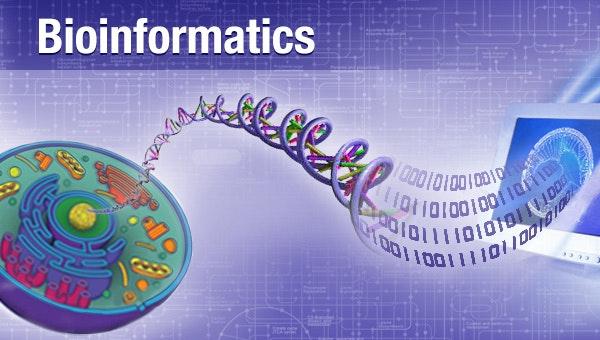
A big welcome to “Bioinformatics: Introduction and Methods” from Peking University! In this MOOC you will become familiar with the concepts and computational methods in the exciting interdisciplinary field of bioinformatics and their applications in biology, the knowledge and skills in bioinformatics you acquired will help you in your future study and research.

Sep 14th 2026
13-24 Weeks
社会调查与研究方法 (下)Methodologies in Social Research (Part 2) (Coursera) Coursera
Peking University

社会调查与研究方法 (下)Methodologies in Social Research (Part 2) (Coursera)

社会调查与研究方法, 首先,是一套观察社会现象、测量社会现象的工具; 其次,是一套分析和运用社会现象数据的科学方法; 最高境界,则是一套针对社会、经济、教育、政治、法律、管理、公共卫生、新闻报道等人类的生产与生活现象,进行科学沟通的思维逻辑与表达方式。

Sep 7th 2026
5-12 Weeks
Constructivism and Mathematics, Science, and Technology Education (Coursera) Coursera
University of Illinois at Urbana-Champaign

Constructivism and Mathematics, Science, and Technology Education (Coursera)

This course is designed to help participants examine the implications of constructivism for learning and teaching in science, mathematics, and technology focused areas. Course readings, discussions, and assignments will examine constructivist views of learning, research on students' ideas and idea-based interactions, research on instructional approaches taking student ideas into account, and challenges in implementing constructivist perspectives in instruction.

Sep 14th 2026
5-12 Weeks
Bugs 101: Insect-Human Interactions (Coursera) Coursera
University of Alberta

Bugs 101: Insect-Human Interactions (Coursera)

Of all the animals on earth, which are the strongest for their size? What about the fastest? Who were the first animals to evolve flight? Insects take all of these titles and more! As the most abundant animals on the planet, insects and other arthropods affect our lives in so many ways. From beneficial interactions like pollination and biological pest control, to the transmission of life threatening diseases; this course will teach you about the big ways that these little arthropods impact our lives.

Sep 1st 2026
13-24 Weeks
Quantitative Methods (Coursera) Coursera
University of Amsterdam

Quantitative Methods (Coursera)

Discover the principles of solid scientific methods in the behavioral and social sciences. Join us and learn to separate sloppy science from solid research! This course will cover the fundamental principles of science, some history and philosophy of science, research designs, measurement, sampling and ethics. The course is comparable to a university level introductory course on quantitative research methods in the social sciences, but has a strong focus on research integrity. We will use examples from sociology, political sciences, educational sciences, communication sciences and psychology.

Sep 14th 2026
5-12 Weeks
Climate Change and Water in Mountains: A Global Concern (Coursera) Coursera
University of Geneva

Climate Change and Water in Mountains: A Global Concern (Coursera)

What is climate change? How are mountain regions affected by the evolution of water resources and their uses? What kind of risks need to be considered? Mountains are recognized as particularly sensitive physical environments where intense and rapid changes have in the past, and may increasingly in the future, place pressure on their resource base.

Sep 7th 2026
5-12 Weeks
The Science of Gastronomy (Coursera) Coursera
The Hong Kong University of Science and Technology - HKUST

The Science of Gastronomy (Coursera)

This course introduces a number of basic scientific principles underpinning the methodology of cooking, food preparation and the enjoyment of food. All topics covered have a strong basis in biology, chemistry, and physics application. Among others, they include the consumption of cooked food, the physiological and evolutionary implication of the senses, geographic and cultural influences on food, and the rationale behind food preparation. We will also discuss issues such as coupling of senses to improve sense stimulation; altering flavor by chemical means; and modification of the coloration to improve the appearance of dishes. Following the video demonstrations of the scientific principles of cooking, you will learn to recognize the key ingredients and their combinations for preparing good healthy food.

Sep 1st 2026
5-12 Weeks