EdX

Rule of Law and Democracy in Europe (edX)

Rule of Law and Democracy in Europe (edX)

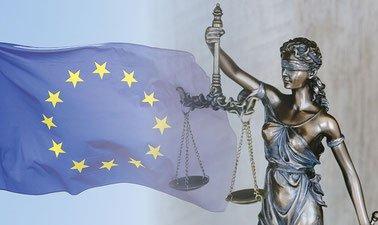
Critical and interdisciplinary introduction to democracy and the rule of law in the European Union (EU). Democracy and the rule of law are two of the fundamental values of the EU that are shared among the EU Member States (MS). As of late, however, they have come under increasing pressure. Not only does the Union face criticism about its own democratic and rule of law shortcomings, but it also appears to struggle to find effective responses when faced with the erosion of these values in several of its MS.

Class Deals by MOOC List - Click here and see EdX's Active Discounts, Deals, and Promo Codes.

In this course, an interdisciplinary team of experts will discuss what democracy and the rule of law mean in Europe, how these principles are put into practice, and how they can be defended against backsliding.
This project has received funding from the European Union’s Horizon 2020 Research & Innovation programme under Grant Agreement no. 770142.

What you'll learn

  • Acquire a general understanding of the EU, its fundamental values and its main institutions;
  • Familiarize yourself with the concepts of democracy and the rule of law, what they mean in a national and in an EU context, how they have evolved over time and which challenges and threats they are currently facing;
  • Understand which institutions are responsible to promote, uphold, and put democracy and the rule of law into practice and which tools they have at their disposal to effectively prevent or tackle the erosion of these values;
  • Familiarize yourself with the main challenges for democracy and the rule of law in some of the key EU policy areas, such as trade, migration and public health emergencies (COVID-19).

Syllabus

Week 1: Introduction to the European Union, its evolution, institutions and common values.
Week 2: Introduction to the concept and principles of democracy and the challenges democracy faces today.
Week 3: Introduction to the practices of democracy in the EU and national parliaments of the member states as well as citizen engagement in democratic systems.
Week 4: Introduction to the rule of law as a concept and its integration in the EU legal framework.
Week 5: Introduction to the rule of law practices and the EU’s toolbox to enforce rule of law compliance in the member states.
Week 6: Introduction to different policy areas of the EU and how they are intertwined with the democracy and rule of law debate in the EU.


Go to Class
MOOC List is learner-supported. When you buy through links on our site, we may earn an affiliate commission.

Related Courses

Moral Foundations of Politics (Coursera) Coursera
Yale University

Moral Foundations of Politics (Coursera)

When do governments deserve our allegiance, and when should they be denied it? This course explores the main answers that have been given to this question in the modern West. We start with a survey of the major political theories of the Enlightenment: Utilitarianism, Marxism, and the social contract tradition. In each case, we begin with a look at classical formulations, locating them in historical context, but then shift to the contemporary debates as they relate to politics today.

Aug 10th 2026
5-12 Weeks
EU policy and implementation: making Europe work! (Coursera) Coursera
Leiden University

EU policy and implementation: making Europe work! (Coursera)

People have become more critical of EU policy and often seem to prefer local policy solutions in response to globalisation problems. How do you experience EU policy? Does it help? And if not, how can we change this? In this course, we learn how the European Union prepares and decides on policy, and how policy is transferred to member states and implemented by various authorities, including regional and local governments. We discuss the challenges of the European multi-level governance structure. We also focus on the main causes of policy failure or success. On this journey, we focus on actual policy and present the views of various experts: how easy is it to establish yourself in another EU-country?

Aug 17th 2026
5-12 Weeks
Basic Japanese Civil Law (edX) EdX
Tokyo Institute of Technology,TokyoTechX

Basic Japanese Civil Law (edX)

Law

Learn Japanese Civil Law, covering various contemporary issues faced in everyday life. This course teaches Japanese law covering the legal system and basic concepts. Starting with the study of concepts common to many countries, such as sovereignty, constitution, separation of three rights, basic human rights and personal security.

Self Paced
Self-Paced
The Smithsonian Summer Sessions: Inspiring Civic Engagement (edX) EdX
Smithsonian,SmithsonianX

The Smithsonian Summer Sessions: Inspiring Civic Engagement (edX)

Discover how museum objects can help learners explore the challenges and opportunities of living in a democracy and inspire civic action. How can educators of all disciplines prepare students to be active and informed participants in a democracy? Join us to explore this question through the lens of six Smithsonian collections! Discover how museum objects can help learners explore the challenges and opportunities of living in a democracy and inspire civic action.

Self Paced
Self-Paced
Justice (edX) EdX
HarvardX,Harvard University

Justice (edX)

Justice, one of the most famous courses taught at Harvard College, is an introduction to moral and political philosophy, offering an opportunity to discuss contemporary dilemmas and controversies. Taught by lauded Harvard professor Michael Sandel, Justice explores critical analysis of classical and contemporary theories of justice, including discussion of present-day applications.

Self Paced
Self-Paced
Open and Smart Government (edX) EdX
Delft University of Technology,DelftX

Open and Smart Government (edX)

Explore the challenges, benefits and processes that governments and citizens face when deciding to join the Open Government Movement. How can governments become more open and transparent, while simultaneously dealing with various challenges, such as data sensitivity? How can open government data be used to improve policy making? Which technologies are available to make governments more open and to use open government data?How can data be turned into smartness?

Self Paced
Self-Paced