An Introduction to American Law (Coursera)

An Introduction to American Law (Coursera)

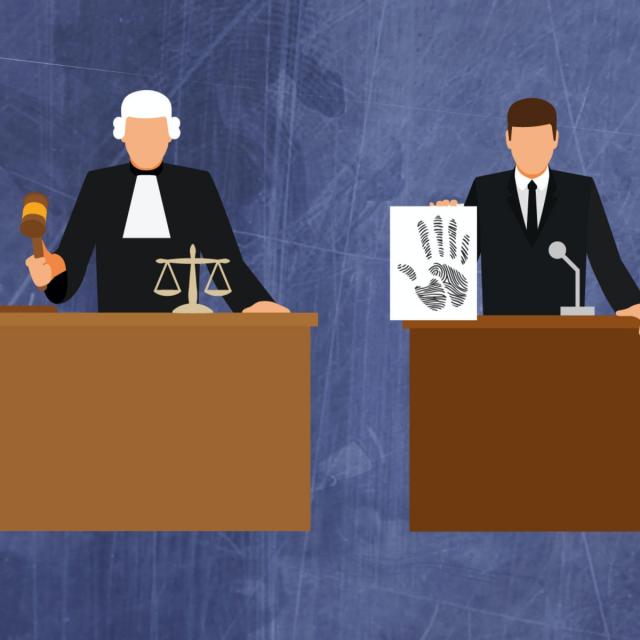
This course will give you a glimpse into six different areas of American law: Tort Law, Contract Law, Property, Constitutional Law, Criminal Law, and Civil Procedure. You will gain insight into the complexities and dilemmas that arise from the application of law in different settings, and what is distinctive about American approaches.

Class Deals by MOOC List - Click here and see Coursera's Active Discounts, Deals, and Promo Codes.

Syllabus

WEEK 1
Welcome
Tort Law
Tort law governs how people may sue each other civilly (as opposed to criminally) in order to receive compensation for harms or injuries other people caused them. In this module, Professor Allen will explore the goals of tort law through a historic case. She will address what makes tort law distinct and issues surrounding negligence and liability.

WEEK 2
Contract Law
Contract law governs how promises between two individuals are enforced. Few areas of law impact our daily lives as much as contract law, and in this module you will gain a deeper understanding of what a contract is and what makes it enforceable. Professor Wilkinson-Ryan will address what constitutes a contract, why the law enforces them, the legal meanings of words in contracts, and the important requirement of consideration. Expectation damages, or the amount a court orders someone who breached a contract to pay will also be explored, all through hypothetical and real cases.

WEEK 3
Property Law
Property law governs the relationship between individuals and things, known as property. In this module, Professor Balganesh will explore the differences between property and tort and contract law and about several specific examples of property law in action: adverse possession, landlord/tenant, and licenses. You will learn about what makes U.S. property law distinct - its origins in common law, imprint of legal realism, and pragmatism.

WEEK 4
Constitutional Law
The study of constitutional law is among the most exciting parts of the law because it provides for the structure and functioning of the U.S. government. In this module, Dean Ruger will address the document itself, how it has been applied over time, the history of the document, and what makes it unique. The structure of the U.S. government as a government of limited, separated powers will be explored along with the important individual rights the Constitution provides and how the U.S. Constitution compares to others around the world.

WEEK 5
Criminal Law
In this module, Professor Morse will focus on the basics of criminal law, an area of law so exciting that countless TV shows and movies have been based on it. The major aspects of criminal law will be discussed - why we impose punishment, when we impose the most punishment, and how the state proves a criminal case. Defenses to criminal charges, which are divided into justifications and excuses will also be addressed.

WEEK 6
Civil Procedure
In this module, Professor Wolff will introduce us to some of the major issues in civil procedure law. Civil procedure is the study of the rules of court that must be followed by the judge and parties in civil cases (as opposed to criminal cases – criminal procedure is a whole other area of the law, but law students learn civil procedure first because it gives the structure of typical trials). The essence of a law school civil procedure course is the study of the Federal Rules of Civil Procedure. A copy of these is linked in the syllabus for you to scan. The rules tell you how to file a lawsuit and how the court must function while it is considering a lawsuit. Professor Wolff will introduce you to the doctrinal area of procedure and will highlight some of the major modern issues in procedure law.

WEEK 7
Final Exam
Go to Class
MOOC List is learner-supported. When you buy through links on our site, we may earn an affiliate commission.

Related Courses

International Water Law (Coursera) Coursera
University of Geneva

International Water Law (Coursera)

In recent decades, international law has undergone a series of major developments in order to accommodate the many new facets of freshwater management and protection. The adoption of universal, regional and basin instruments highlights how important it is to study the evolution of international water regulations and to be able to identify the main principles in this field. This course aims to provide the necessary background to understand and examine the regulation applicable to transboundary freshwaters especially to rivers, lakes and aquifers. It presents the principles and legal standards that govern the use, sharing, management and protection of these resources.

Jun 1st 2026
5-12 Weeks
Revolutionary Ideas: Borders, Elections, Constitutions, Prisons (Coursera) Coursera
Rutgers University

Revolutionary Ideas: Borders, Elections, Constitutions, Prisons (Coursera)

What is the purpose of government? Why should we have a State? What kind of State should we have? Even within a political community, there may be sharp disagreements about the role and purpose of government. Some want an active, involved government, seeing legal and political institutions as the means to solve our most pressing problems, and to help bring about peace, equality, justice, happiness, and to protect individual liberty.

Jun 1st 2026
5-12 Weeks
Designing and Building Institutional Anti-Racist Spaces (Coursera) Coursera
Wesleyan University

Designing and Building Institutional Anti-Racist Spaces (Coursera)

Designing and Building Institutional Antiracist Spaces (D-BIAS) is a course whose mission is to teach and apply tenets of equity, anti-racism, and cultural justice to students from Institutions to achieve social change. The course is aimed at educators and administrators in educational spaces, lawyers and advocates in spaces that touch civil rights, equity, and whose Institutional mission it is to achieve greater cultural equity.

Jun 1st 2026
4 Weeks
Chemerinsky on Constitutional Law - Individual Rights and Liberties (Coursera) Coursera
University of California, Irvine

Chemerinsky on Constitutional Law - Individual Rights and Liberties (Coursera)

Chemerinsky on Constitutional Law: Individual Rights and Liberties will highlight the construction and interpretation of the U.S. Constitution through the centuries with an emphasis on protections of individual liberties and the evolution of equal protection. You'll learn the history behind the Constitution, cases that formed important precedent, and how changes in interpretation have been dependent on shifts in cultural and political climate as well as the composition of the Supreme Court.

May 18th 2026
5-12 Weeks
Water Resources Management and Policy (Coursera) Coursera
University of Geneva

Water Resources Management and Policy (Coursera)

Water management today is faced with new challenges such as climate change or the effects of human activity. Public and private stakeholders who are active in this field must develop new ways to better manage the water cycle "as a whole". The objective of this MOOC is to develop an understanding of the problems related to water management. Firstly, this course will define a resource and, more specifically, the resource of water.

May 25th 2026
5-12 Weeks
Children's Human Rights - An Interdisciplinary Introduction (Coursera) Coursera
University of Geneva

Children's Human Rights - An Interdisciplinary Introduction (Coursera)

Drawing on the contributions of several academic disciplines including law, psychology, sociology, history, educational and health sciences, economy and anthropology, an interdisciplinary approach guides the student into a selection of critical issues concerning children’s rights. Participants will gain insight relative to the development of this specific human rights category, as well as to the evolution of the challenges faced by children over time and society’s efforts to respond.

May 18th 2026
5-12 Weeks
Constitutional Struggles in the Muslim World (Coursera) Coursera
University of Copenhagen

Constitutional Struggles in the Muslim World (Coursera)

Learn what motivates the restive Muslim youth from Tunis to Tehran, what political positions Islamists from Mali to Chechnya are fighting for, where the seeming obsession with Islamic law comes from, where the secularists have vanished to, and whether it makes sense to speak of an Islamic state. This course is a survey of the constitutional ideas and institutions that have developed since the mid 19th century throughout predominantly Muslim countries, but its focus will lie on the actors that have dominated this discourse and shaped its outcomes. We will look at the large body of classical writings on the Islamic state only in so far as it is necessary to understand the contemporary debate, but concentrate on the legal and political developments of the 20th and 21st centuries.

May 25th 2026
5-12 Weeks
Patrick Henry: Forgotten Founder (Coursera) Coursera
University of Virginia,UVA Lifetime Learning, Patrick Henry Memorial Foundation

Patrick Henry: Forgotten Founder (Coursera)

“Give me liberty, or give me death:” Remembering Patrick Henry, the Forgotten Founder. Patrick Henry was enormously popular during the American Revolution. Even Thomas Jefferson, who over time developed a deep loathing of Henry (some would say jealousy), had to admit that “it is not now easy to say what we should have done without Patrick Henry.” Edmund Randolph, a patriot leader in his own right, explained that “It was Patrick Henry … awakening the genius of his country, and binding a band of patriots together to hurl defiance at the tyranny of so formidable a nation as Great Britain.”

Jun 1st 2026
5-12 Weeks
Cloud Computing Law: Data Protection and Cybersecurity (Coursera) Coursera
Queen Mary University of London

Cloud Computing Law: Data Protection and Cybersecurity (Coursera)

Vast amounts of personal information are processed in the cloud. But who is legally responsible for such ‘personal data’ in cloud environments? What duties do cloud providers like Amazon, Microsoft, and Google have? And what rights can you, as an individual, exercise under data protection law? If you’d like to find out, then this course is for you!

Jun 1st 2026
3 Weeks
Employment Contracts (Coursera) Coursera
University of Pennsylvania

Employment Contracts (Coursera)

The employment relationship is one of the foundations upon which modern society and the greater economy is built, but the nature of this relationship can be both complex and confusing. This course seeks to demystify the ways that U.S. contract law principles govern the fundamental relationship between employers and employees.

Jun 1st 2026
4 Weeks