RPA Basics and Introduction to UiPath (Coursera)

Offered by UiPath,
RPA Basics and Introduction to UiPath (Coursera)

The RPA Basics and Introduction to UiPath course provides knowledge on Robotic Process Automation basic concepts. It also introduces you to the UiPath Platform and its core components. The course provides a detailed explanation of UiPath Studio User Interface and its features. By the end of the course, you will be able to build your first automation project in UiPath Studio.

Class Deals by MOOC List - Click here and see Coursera's Active Discounts, Deals, and Promo Codes.

What You Will Learn

  • Robotic Process Automation basic concepts
  • UiPath Studio and its User Interface
  • How to build automation projects in UiPath Studio

Course 1 of 4 in the Robotic Process Automation (RPA) Specialization.

Syllabus

WEEK 1
RPA Overview
This module gives an overview of Robotic Process Automation (RPA). It also describes its benefits along with the industries and business processes best-suited for it.
UiPath Overview
This module provides an overview of UiPath and its products.
Studio Overview
This module provides detailed information about UiPath Studio.

WEEK 2
Features of Studio
This module explains the features of UiPath Studio.
Go to Class
MOOC List is learner-supported. When you buy through links on our site, we may earn an affiliate commission.

Related Courses

Create Image Captioning Models (Coursera) Coursera
Google Cloud

Create Image Captioning Models (Coursera)

This course teaches you how to create an image captioning model by using deep learning. You learn about the different components of an image captioning model, such as the encoder and decoder, and how to train and evaluate your model. By the end of this course, you will be able to create your own image captioning models and use them to generate captions for images.

Sep 21st 2026
1 Week
Enter Next-Level Bot Building with SAP Intelligent RPA 2.0 (openSAP) OpenSAP
SAP

Enter Next-Level Bot Building with SAP Intelligent RPA 2.0 (openSAP)

Join this free online course to learn about SAP Intelligent Robotic Process Automation (SAP Intelligent RPA) 2.0 and how the updated version of the solution simplifies the bot-building experience. SAP Intelligent Robotic Process Automation  (SAP Intelligent RPA) is a complete automation suite, where software robots are designed to mimic humans by replacing manual clicks and automate end-to-end scenarios for definable and repeatable business processes. The solution consists of several components that enable you to develop your own bots by capturing your process, creating your workflow, and configuring, executing, monitoring, and debugging your automations.

Self Paced
Self-Paced
Applying Data Analytics in Accounting (Coursera) Coursera
University of Illinois at Urbana-Champaign

Applying Data Analytics in Accounting (Coursera)

This course explores business analytic applications in accounting. First, it presents a survey of technology topics in accounting, including process mining, blockchain and applications in audit, tax, and assurance. Next, the course explores visualization and basic analytics in audit and control testing using R and Alteryx. Next, the course examines the uses of text analysis in accounting and conducts text analysis using R and RStudio. Finally, the course examines robot process automation in general using UiPath and its applications in accounting.

Aug 31st 2026
4 Weeks
Business Process Automation in SAP S/4HANA with SAP Intelligent RPA (openSAP) OpenSAP
SAP

Business Process Automation in SAP S/4HANA with SAP Intelligent RPA (openSAP)

Join this free online course to learn how you can use SAP Intelligent Robotic Process Automation as part of your SAP S/4HANA landscape, and how you can adjust the bots according to your business needs. Robotic process automation (RPA) helps reduce human error by automating business process-related manual tasks, increasing speed and lowering the total cost of ownership by saving you time and effort. Adding intelligence, which is what SAP Intelligent Robotic Process Automation does, means automated decision making, which leads to additional savings through the reduction of analytical effort.

Self Paced
Self-Paced
Robotic process and intelligent automation for finance (edX) EdX
ACCA

Robotic process and intelligent automation for finance (edX)

In this course we explain how automation can play a key role in delivering the requirement to have robust processes and clean data. By using automation tools and machine learning, finance leaders can identify, implement and configure the right solutions for their organisation. It also shows how tools, such as Python, can be applied to finance processes and the benefits this will bring.

Self Paced
Self-Paced
System Validation (4): Modelling Software, Protocols, and other behaviour (Coursera) Coursera
EIT Digital

System Validation (4): Modelling Software, Protocols, and other behaviour (Coursera)

System Validation is the field that studies the fundamentals of system communication and information processing. It allows automated analysis based on behavioural models of a system to see if a system works correctly. We want to guarantee that the systems does exactly what it is supposed to do. The techniques put forward in system validation allow to prove the absence of errors. It allows to design embedded system behaviour that is structurally sound and as a side effect enforces you to make the behaviour simple and insightful.

Sep 21st 2026
2 Weeks
Continuous Integration (Coursera) Coursera
University of California, Davis

Continuous Integration (Coursera)

In today's world, software development is highly complex and often has large teams of developers working on small pieces of a larger software project. This course will go over the basic principles of using a continuous integration system effectively to constantly improve software. We're going to describe the different stations of continuous test, build, integration and deploy processes required for DevOps practices and apply best practices for quality software management, and tooling to accomplish iterative software build & test processes.

Sep 21st 2026
4 Weeks
Embedded Hardware and Operating Systems (Coursera) Coursera
EIT Digital

Embedded Hardware and Operating Systems (Coursera)

This course is intended for the Bachelor and Master's students, who like practical programming and making IoTs applications! In this course we will talk about two components of a cyber physical system, namely hardware and operating systems. After completing this course, you will have the knowledge of both hardware components and operating systems. You are able to plan and use embedded operating systems in resource-constraint devices for Internet-of-Things (cyber physical system) applications.

Sep 21st 2026
4 Weeks
Data Manipulation in RPA (Coursera) Coursera
UiPath

Data Manipulation in RPA (Coursera)

The Data Manipulation in RPA course will provide knowledge about Variables, Arguments and Data Manipulation. It will also introduce you to the types of Variables and Arguments, and their application in automation projects. In the later part of the course, you will gain knowledge about data manipulation in Studio. You will also learn about the different methods and operations performed on different data types and their usage in automation projects.

Aug 31st 2026
2 Weeks
Industry 4.0: PLM, Value Chain, and Smart Factory (Coursera) Coursera
L&T EduTech

Industry 4.0: PLM, Value Chain, and Smart Factory (Coursera)

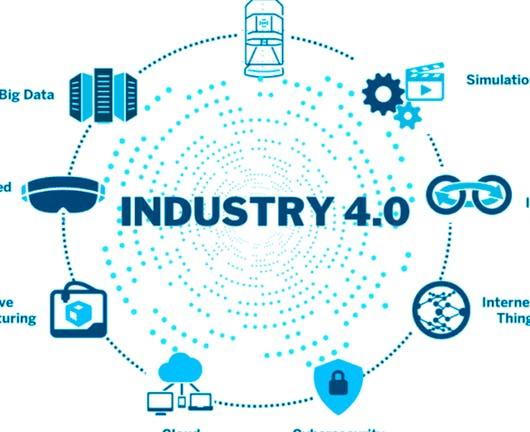
This course is designed for Mechanical, Manufacturing, and Mechatronics Engineers. Throughout the course, students will obtain an extensive understanding of Product Life Cycle and Value Chain Management, Manufacturing Workflow, and integration into the Smart Factory concept. Participants will gain a holistic understanding of how these elements collaborate to revolutionize traditional production methods, driving us towards a more connected, efficient, and intelligent future.

Aug 31st 2026
3 Weeks
Laboratório de Programação Orientada a Objetos - Parte 1 (Coursera) Coursera
Universidade de São Paulo, Brasil

Laboratório de Programação Orientada a Objetos - Parte 1 (Coursera)

Este curso apresenta os conceitos mais importantes em torno do paradigma de desenvolvimento mais comum da indústria de software hoje: a Programação Orientação a Objetos (POO). Oferecido pelo Departamento de Ciência da Computação do Instituto de Matemática e Estatística da USP, o curso é voltado para quem já conhece os conceitos básicos de POO e quer se aprofundar no assunto, tornando-se um excelente programador. Ele funciona bem como uma sequência natural aos 2 cursos anteriores do Prof. Fabio Kon do IME-USP no coursera: Introdução à Ciência da Computação com Python.

Sep 21st 2026
5-12 Weeks