Robotics With Raspberry Pi: Build and Program Your First Robot Buggy (FutureLearn)

Robotics With Raspberry Pi: Build and Program Your First Robot Buggy (FutureLearn)

Build and program your first robot buggy using a Raspberry Pi, learning how to connect motors, add sensors and write algorithms. Learn robotics by building a robot buggy and controlling it with a Raspberry Pi. On this course from the Raspberry Pi Foundation, you’ll build a robot buggy controlled by a Raspberry Pi.

Class Deals by MOOC List - Click here and see FutureLearn's Active Discounts, Deals, and Promo Codes.

You’ll start by learning how to connect motors to your Raspberry Pi, and how to write a Python program to control them to move your buggy. You’ll move on to adding sensors to your robot and writing algorithms that use the inputs from these sensors, giving your robot the ability to follow lines and avoid obstacles.
You’ll examine the wider context of modern robotics, and think about how robotics affects society.

Syllabus

Week 1: Building a mobile robot
Week 2: Automating actions using distance sensors
Week 3: Allowing robots to follow lines

What will you achieve?
By the end of the course, you‘ll be able to...

  • Describe the advantages of using robotics to teach computer science
  • Produce a robot buggy that can move in particular patterns, avoid obstacles, and follow a line
  • Develop suitable algorithms for your robot depending on the task
  • Demonstrate how to control a variety of components using the GPIO Zero Python library
  • Discuss different uses of robotics and the components that they may use

What software or tools do you need?
This course requires you to have the following:

Hardware

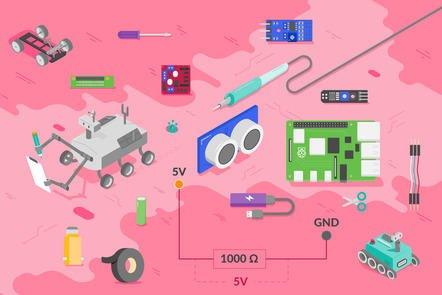
  • Raspberry Pi 3B, 3B+, or 4
  • Motor controller board
  • 2 x 3V - 6V DC motors
  • 2 x wheels
  • Ball caster (unless using more than 2 wheels)
  • Ultrasonic distance sensor (between 1 and 2)
  • 2 x line following sensors
  • Jumper leads (female-to-female and male-to-female) or wire
  • AA battery holder (for 4 AA batteries)
  • 4 x AA batteries
  • A USB battery pack (to power the Raspberry Pi)
  • Soldering iron and solder
  • Wire strippers
  • Scissors
  • Screwdriver
  • A small cardboard box for the chassis (can be plastic, wood, metal, etc.)

You can view most of the required components on this AliExpress wish list, but they can be ordered / bought anywhere, and alternatives are also available.

Software

  • The latest version of the Raspbian operating system
  • An IDE of your choice

Additional extras

  • Adhesives (duct tape / electrical tape, putty, glue, etc.)
  • Cable ties or velcro straps
  • GPIO reference card
Go to Class
MOOC List is learner-supported. When you buy through links on our site, we may earn an affiliate commission.

Related Courses

Teaching Physical Computing to 5-11 year olds (FutureLearn) FutureLearn
Raspberry Pi Foundation,National Centre for Computing Education

Teaching Physical Computing to 5-11 year olds (FutureLearn)

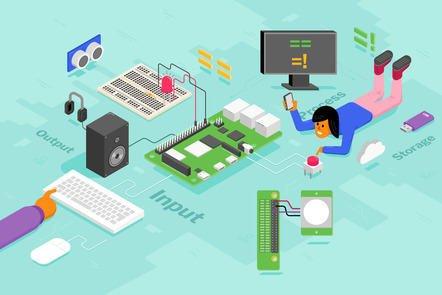
Teach your young learners how to create electronic circuits, then learn to control them using block-based programming languages. Learn how to create physical computing projects using a Crumble or micro:bit. Physical computing is the process of designing, building, and programming systems that use physical components such as buttons, lights, and motors.

Mar 6th 2023
3 Weeks
Begin Programming: Build Your First Mobile Game (FutureLearn) FutureLearn
University of Reading

Begin Programming: Build Your First Mobile Game (FutureLearn)

Learn basic Java programming by developing a mobile game that you can run on your computer, Android phone or tablet. Take your first steps into the world of computer programming and learn how to build your own mobile game in just five weeks. You’ll be introduced to the basic constructs and the principles behind computer programs, as well as the building blocks that are used to create them.

No sessions available
5-12 Weeks
Start a CoderDojo (FutureLearn) FutureLearn
Raspberry Pi Foundation

Start a CoderDojo (FutureLearn)

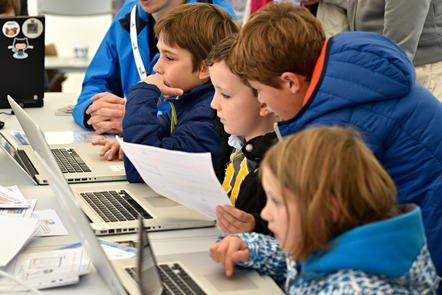
Get support and advice on how to grow your confidence in coding and start a CoderDojo for young people in your area. In today’s world, technology is everywhere, so it’s never been more important to know how to code. It’s easier to learn these skills early on in life, which is why coding is a great subject for young people to learn.

May 30th 2022
3 Weeks
Programming Essentials with Python: Cloud Technology and SaaS (FutureLearn) FutureLearn
FutureLearn

Programming Essentials with Python: Cloud Technology and SaaS (FutureLearn)

Launch your career in programming with this course on the fundamentals of Python and other programming languages. Develop your knowledge of cloud infrastructure and cloud technologies. What’s powering the architecture of cloud computing, and how does it rely on Python programming? Take a deep dive into the cloud and look at different types of cloud architecture and learn to articulate the benefits, challenges, and opportunities they offer.

May 23rd 2022
4 Weeks
Programming Applications with Python: Libraries and Web Scraping (FutureLearn) FutureLearn
FutureLearn

Programming Applications with Python: Libraries and Web Scraping (FutureLearn)

Consider applications for APIs and Python, and explore the purpose of web scraping. Examine Python libraries for web development. This course will introduce you to the popular Requests library in Python. You’ll study how to install the Requests library and get to know how it works. Learning via videos, interactive exercises, and quizzes, you’ll also explore what HTTP requests are and what each of the status codes in HTTP mean.

May 23rd 2022
4 Weeks
Begin Robotics (FutureLearn) FutureLearn
University of Reading

Begin Robotics (FutureLearn)

Learn robotics by exploring the history, anatomy and intelligence of robots and test drive robots using exciting simulations Explore our introduction to robotics. Robots today are roving Mars, hoovering our floors, building cars and entertaining us in films. You may even share Stephen Hawking’s world view that super-intelligent ones may one day bring about the end of the human race.

Jan 16th 2023
4 Weeks
Programming Applications with Python: Working with Files (FutureLearn) FutureLearn
FutureLearn

Programming Applications with Python: Working with Files (FutureLearn)

Discover how to read and create files and directories in Python, and how Python is used for data collection and exploration. Learn how to use Python create applications. On this course, you’ll start to develop the knowledge and skills needed to successfully launch a career in programming or software development, learning how to program applications using Python. You’ll study alongside industry experts at Github, giving you the confidence and competitive advantage to work in or manage development teams.

May 23rd 2022
4 Weeks
Programming 103: Saving and Structuring Data (FutureLearn) FutureLearn
Raspberry Pi Foundation,National Centre for Computing Education

Programming 103: Saving and Structuring Data (FutureLearn)

Learn how to save and structure data in external files, and import files back into your Python programs. Supported by Google. Discover how to save data to use it across multiple runs of your program. On this course, you will learn how to save text and binary files, and how to structure data so that programs can interpret it correctly.

Jan 2nd 2023
3 Weeks
Get ready for a Masters in Data Science and AI (FutureLearn) FutureLearn
Coventry University

Get ready for a Masters in Data Science and AI (FutureLearn)

Identify whether you’re ready for Master’s study, improve your data science skills, and get to grips with the basics of Python. Get a taste of life as a Data Science and AI Master's student. On this course, you’ll have the opportunity to explore the disciplines involved in a Master’s degree in Data Science and Artificial Intelligence (AI).

Apr 17th 2023
2 Weeks
Programming Pedagogy in Secondary Schools: Inspiring Computing Teaching (FutureLearn) FutureLearn
Raspberry Pi Foundation,National Centre for Computing Education

Programming Pedagogy in Secondary Schools: Inspiring Computing Teaching (FutureLearn)

Examine a range of pedagogical approaches suitable for teaching computing in Key Stage 3 (Grade 6–8 in the USA). Transform your teaching by developing your pedagogical approach. In the first two weeks of this course, you’ll be introduced to a range of pedagogical approaches suitable for Key Stage 3. You’ll look at a range of pedagogies aimed at developing your students’ computational thinking skills, from unplugged approaches to PRIMM, and more. You’ll also investigate worked examples and targeted tasks such as Parson’s Problems.

Mar 6th 2023
3 Weeks
Software Development: Introducing Java (FutureLearn) FutureLearn
FutureLearn

Software Development: Introducing Java (FutureLearn)

Explore how Java can help support your software development career and learn its basic uses and functions. Becoming a software developer requires you to confidently use programming languages such as Python and Java to design, build, and fix software. This course is designed to build your existing Python knowledge and introduce you to Java and its applications within the development environment.

May 23rd 2022
4 Weeks