Rehabilitation after COVID-19 (Coursera)

Rehabilitation after COVID-19 (Coursera)

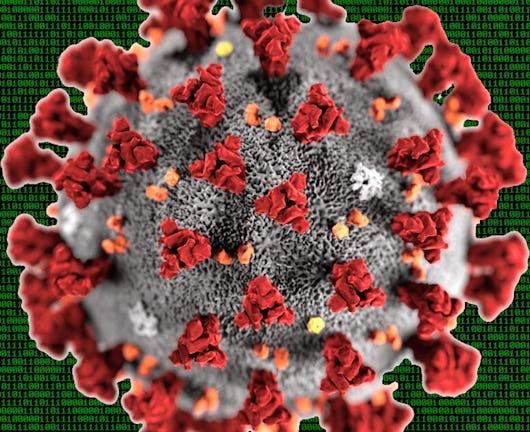
COVID-19 (Corona Virus Disease 2019) has significantly resulted in a large number of medical, social and psychological consequences. After COVID-19 disease people can experience a variety of problems with normal functioning and will require rehabilitation services to overcome these problems.

Class Deals by MOOC List - Click here and see Coursera's Active Discounts, Deals, and Promo Codes.

This course includes recommendations from the multidisciplinary expert team for evidence-based interventions for adults. It is designed for healthcare professionals who may have relatively limited understanding of rehabilitation – the process, the interventions, and its positive impact. It is also relevant to patients and their families. By the end of the course you will receive crucial knowledge necessary to provide safe, effective quality rehabilitation after COVID-19.

What You Will Learn

  • You'll receive crucial knowledge about the direct (physical) and indirect (psychological and social) effects associated with COVID-19
  • You'll learn to provide basic medical and psychological rehabilitation for people who are recovering from COVID-19 and/or suffering from COVID-stress
  • You'll learn to recognize factors that contribute to mental and physical well-being and get control over them

Syllabus

WEEK 1
The Science Of SARS-CoV-2
This module covers several topics associated with COVID-19 origins, clinical signs and symptoms, transmission, course, treatment and prognosis.

WEEK 2
Medical Rehabilitation
This module provides basic medical rehabilitation techniques and advise to improve physical state after COVID-19 disease.

WEEK 3
COVID-19 Stress and Adaptation
This module outlines significant factors associated with rehabilitation for COVID-19 patients and strategies to address risks.

WEEK 4
Managing Emotional Impairments
This module provides advice on strategies to help patients and their families manage emotional impairment. As well as detect alarming symptoms requiring immediate special assistance.

WEEK 5
Managing Cognitive Impairments And Behavioral
This module describes factors that contribute to mental and physical well-being. It highlights cognitive problems common for people after recovery and proposes techniques to asses and improve cognitive functioning. Evidence-based techniques to reduce behavioral impairments are provided.
Go to Class
MOOC List is learner-supported. When you buy through links on our site, we may earn an affiliate commission.

Related Courses

Measuring and Maximizing Impact of COVID-19 Contact Tracing (Coursera) Coursera
Johns Hopkins University

Measuring and Maximizing Impact of COVID-19 Contact Tracing (Coursera)

This course aims to provide managers and developers of contact tracing programs guidance on the most important indicators of performance of a contact tracing program, and a tool that can be used to project the likely impact of improvements in specific indicators. Students who complete the course will be proficient in using the Contact Tracing Evaluation and Strategic Support Application (ConTESSA) to estimate the impact of their contact tracing program on transmission and strategizing about how to increase their program’s impact.Free enrollment available until December 31, 2020. Valid for one enrollment per person.

Jun 1st 2026
1 Week
Hacking COVID-19 — Course 3: Unraveling COVID-19's Origins (Coursera) Coursera
University of California, San Diego

Hacking COVID-19 — Course 3: Unraveling COVID-19's Origins (Coursera)

In this course, you will follow in the footsteps of the bioinformaticians investigating the COVID-19 outbreak by investigating the origins of SARS-CoV-2. Whether you’re new to the world of computational biology, or you’re a bioinformatics expert seeking to learn about its applications in the COVID-19 pandemic, or somewhere in between, this course is for you!

Jun 1st 2026
2 Weeks
Easing Physical Symptoms: It's Not Just Hospice Anymore (Coursera) Coursera
University of Colorado System

Easing Physical Symptoms: It's Not Just Hospice Anymore (Coursera)

Palliative care provides important support for people living with serious or life-limiting illnesses and their family caregivers. In this course, you will learn to use symptom assessment tools to better understand which symptoms are present and which are most distressing. In subsequent weeks you will learn about some of the most common and distressing symptoms such as anorexia (loss of appetite), dyspnea (shortness of breath), fatigue (weakness), delirium(confusion) and constipation and nausea/vomiting.

Jun 8th 2026
5-12 Weeks
Introduction to Digital health (Coursera) Coursera
Imperial College London

Introduction to Digital health (Coursera)

This course introduces the field of digital health and the key concepts and definitions in this emerging field. The key topics include Learning Health Systems and Electronic Health Records and various types of digital health technologies to include mobile applications, wearable technologies, health information systems, telehealth, telemedicine, machine learning, artificial intelligence and big data. These technologies are assessed in terms of the key opportunities and challenges to their use and the evidence of their effectiveness in the field of digital health in relation to public health and healthcare globally. The use and application of digital health for COVID-19 forms a case study demonstrating the use of different types of digital health technologies to address key aspects of the response to the virus globally.

Jun 1st 2026
4 Weeks
Investigating Epidemics like COVID-19: An Analyst's Guide (Coursera) Coursera
Johns Hopkins University

Investigating Epidemics like COVID-19: An Analyst's Guide (Coursera)

Do you want to learn how to detect, identify the cause, and decrease the morbidity and mortality from outbreaks or pandemics like COVID-19? Are you considering a career in public health practice, but aren’t sure how health departments collect and use outbreak data? Are you working in public health, but interested in moving into analytical and/or technical roles or curious how health departments investigate outbreaks? If so, this course is for you.

May 18th 2026
4 Weeks
Rastreamento de contato da COVID-19 (Coursera) Coursera
Johns Hopkins University

Rastreamento de contato da COVID-19 (Coursera)

A crise da COVID-19 criou uma necessidade sem precedentes de rastreamento de contato em todo o país, exigindo que milhares de pessoas aprendessem rapidamente as principais habilidades. As qualificações para os cargos de rastreamento de contato diferem em todo o país e no mundo, com alguns novos cargos abertos a indivíduos com diploma de ensino médio ou equivalente.

Jun 1st 2026
1 Week
Primeros Auxilios Psicológicos (PAP). Edición especial COVID-19 (Coursera) Coursera
Universitat Autònoma de Barcelona

Primeros Auxilios Psicológicos (PAP). Edición especial COVID-19 (Coursera)

Bienvenidos a esta edición especial, simplificada y sin certificación de seguimiento, del curso sobre Primeros Auxilios Psicológicos, impartido en castellano por la Unidad de Crisis de la Universidad Autónoma de Barcelona (UAB) desde el año 2015. Ante la actual pandemia causada por el COVID 19, desde la UAB, en colaboración con la plataforma Coursera, hemos considerado que puede una selección de los materiales correspondientes al curso completo puede ayudar tanto a las familias como a los profesionales a responder con mayor eficacia al estrés que están generando el miedo al contagio, el confinamiento y las cantidad de muertes que se están produciendo.

Jan 6th 2025
1 Week
COVID-19 Contact Tracing (Coursera) Coursera
Johns Hopkins University

COVID-19 Contact Tracing (Coursera)

The COVID-19 crisis has created an unprecedented need for contact tracing across the country, requiring thousands of people to learn key skills quickly. The job qualifications for contact tracing positions differ throughout the country and the world, with some new positions open to individuals with a high school diploma or equivalent.

Jun 8th 2026
1 Week
Introduction to Participatory Approaches in Public Health (Coursera) Coursera
Imperial College London

Introduction to Participatory Approaches in Public Health (Coursera)

This course will introduce you to participatory approaches to public health. You will learn about the history of participatory health research and why it is essential to solving contemporary public health challenges. The course will help you to understand the social and cultural context of public health, before introducing you to essential concepts for working with communities: knowledge and power. Finally, you will engage with critical analyses of participatory approaches, to help you to determine if and when such strategies are appropriate.

Jun 8th 2026
4 Weeks
The City and You: Find Your Best Place (Coursera) Coursera
University of Toronto

The City and You: Find Your Best Place (Coursera)

Welcome to The City and You: Find Your Best Place. I'm excited to have you in the class and look forward to your contributions to the other learners in our community. This free course will provide the knowledge and the tools needed to understand what cities do, why they matter, the forces shaping the greatest wave of urbanization in history, and how to pick the right place for you.

Jun 8th 2026
5-12 Weeks
Formation COVID-19 pour personnels de santé (Coursera) Coursera
Stanford University

Formation COVID-19 pour personnels de santé (Coursera)

La COVID-19 se propage rapidement à travers le monde, et l’ensemble des personnels de santé doit être prêt à identifier, stabiliser et traiter les patients atteints de la nouvelle infection par le coronavirus. Après avoir effectué ce court programme, les médecins, infirmiers ou infirmières et autres professionnels de santé utiliseront une approche commune et factuelle pour sauver la vie de patients atteints de COVID-19, y compris de ceux qui sont gravement atteints.

Apr 27th 2026
1 Week
Disability Awareness and Support (Coursera) Coursera
University of Pittsburgh

Disability Awareness and Support (Coursera)

The goal of this course is to promote equal opportunity and the full participation of students with disabilities in higher education by helping participants advance their awareness of the meaning of accessibility in education. Participants will gain competence and confidence in working with students by focusing on legislation, universal design, and assistive technologies. Thank you to Abbas (Bobby) Husain Quamar, Graduate Student Researcher in the Department of Rehabilitation Science and Technology at the University of Pittsburgh, for his contributions to the course.

Jun 8th 2026
4 Weeks