EdX

Quantum Computing for Your Classroom 10-12 (edX)

Quantum Computing for Your Classroom 10-12 (edX)

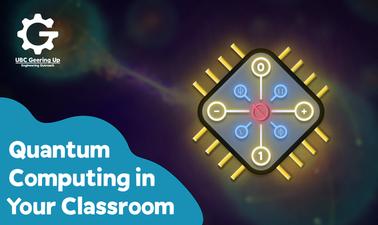
Quantum Computing for Your Classroom is an activity focused, self-paced course designed to help educators integrate an exciting new field into their physics and computer science classrooms. This course seeks to help bridge that gap by providing activities and knowledge of quantum computing that high school educators can integrate into their existing classrooms, providing the children of today with the future proof skills needed for tomorrow.

Class Deals by MOOC List - Click here and see EdX's Active Discounts, Deals, and Promo Codes.

Quantum computing is one of the primary emerging new technologies of our time. Currently there is an “understanding gap” between scientists engaged in research and the business community looking to transition research to commercialization.

What you'll learn
Intro & Welcome
Instructor Introduction
Overview of course
Content
Structure and Navigation

Module 1: Nature of Computation
Core Idea: Throughout history humans have utilized various physical phenomena to perform computations
The history and evolution of computers
Looking at past inventions and investigating the underlying physical phenomena which allows them to function
Ex:, Abacus, Sundial, Thermostat, Slide Rule

Module 2: Classical Computing
Core Idea: Classical computers utilize electricity and bits to perform digital math and logic calculations in a general-purpose way
Representing information as digital bits
Utilizing electricity and digital circuits to perform computation
Types of problems and time differences needed to solve them

Module 3: Quantum Phenomena
Core Idea: Identifying the features of quantum systems
Evolution of the atomic model
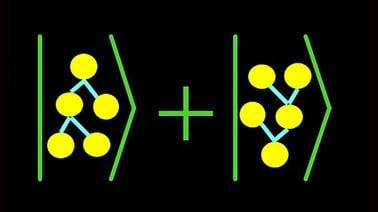
Understanding wavefunctions, interference, superposition and entanglement in quantum systems

Module 4: Quantum Computers
Core Idea: Quantum phenomena can be utilized for the purposes of computation
How quantum computers utilize quantum physics to solve problems
Bloch Sphere
Quantum problems
What types of problems can quantum computers solve
Quantum Logic
How quantum gates are formed, and how this can be used to solve computational problems

Go to Class
MOOC List is learner-supported. When you buy through links on our site, we may earn an affiliate commission.

Related Courses

Applied Quantum Computing II: Hardware (edX) EdX
Purdue University,PurdueX

Applied Quantum Computing II: Hardware (edX)

Learn how present-day material platforms are built to perform quantum information processing tasks. This course is part 2 of the series of Quantum computing courses, which covers aspects from fundamentals to present-day hardware platforms to quantum software and programming. The goal of part 2 is to provide the essential understanding of how the fundamental quantum phenomena discussed in part 1 can be realized in various material platforms and the underlying challenges faced by each platform.

Feb 12th 2024
5-12 Weeks
Introduction to Quantum Computing for Everyone (edX) EdX
University of Chicago,UChicagoX

Introduction to Quantum Computing for Everyone (edX)

This first course in quantum computing is for novices and requires learners to have only basic algebra. It covers the future impacts of quantum computing, provides intuitive introductions of quantum physics phenomenon, and progresses from single operations to a complete algorithm. Quantum computing is coming closer to reality, with 80+ bit machines in active use. This course provides an intuitive introduction to the impacts, underlying phenomenon, and programming principles that underlie quantum computing.

Self Paced
Self-Paced
Computing in Python II: Control Structures (edX) EdX
Georgia Institute of Technology,GTx

Computing in Python II: Control Structures (edX)

Learn about control structures, one of the most powerful parts of programming. This course covers conditionals, loops, functions, and error handling, specifically in Python but with broader applicability to other languages as well. Building on your prior knowledge of variables and operators, this course gets into the meat of programming. Organized into five chapters, this course starts by covering the fundamentals of what control structures are and what they do, then moves on to four common control structures in Python.

Self Paced
Self-Paced
Computing in Python IV: Objects & Algorithms (edX) EdX
Georgia Institute of Technology,GTx

Computing in Python IV: Objects & Algorithms (edX)

Learn about recursion, search and sort algorithms, and object-oriented programming in Python. Complete your introductory knowledge of computer science with this final course on objects and algorithms. Now that you've learned about complex control structures and data structures, learn to develop programs that more intuitively leverage your natural understanding of problems through object-oriented programming. Then, learn to analyze the complexity and efficiency of these programs through algorithms. In addition, certify your broader knowledge of Introduction to Computing with a comprehensive exam.

Self Paced
Self-Paced
Teaching & Learning in the Diverse Classroom (edX) EdX
CornellX,Cornell University

Teaching & Learning in the Diverse Classroom (edX)

Through real stories, reflection, and key research, learn how to create and sustain inclusive, student-centered learning environments. U.S.-based and higher education-centered, this is a five-week, instructor-paced course that offers an inclusive teaching framework with multiple entry points for reflection and exploration of the research on learning and diversity.

Self Paced
Self-Paced
Computing for Data Analysis (edX) EdX
Georgia Institute of Technology,GTx

Computing for Data Analysis (edX)

A hands-on introduction to basic programming principles and practice relevant to modern data analysis, data mining, and machine learning. The modern data analysis pipeline involves collection, preprocessing, storage, analysis, and interactive visualization of data. In the course, you’ll see how computing and mathematics come together.

Aug 19th 2024
13-24 Weeks
Hardware and Operating Systems (edX) EdX
IBM

Hardware and Operating Systems (edX)

This course will help you develop the skills to install and set up an operating system and gain expertise on hardware components, including motherboard, CPU, hard drives and more. If you’re ready to enter the world of Information Technology (IT), you need job-ready skills. Understanding the fundamentals of computer hardware and operating systems is critical to any technology related job role like Technical Support or Software Development.

Self Paced
Self-Paced
Teaching with Physical Computing: Soft skills, teamwork and the wider curriculum (edX) EdX
Arm Education,ArmEducationX

Teaching with Physical Computing: Soft skills, teamwork and the wider curriculum (edX)

Gain a comprehensive understanding of the ‘non-technical’ elements that make Project-Based Learning an important addition to STEM & Computing classrooms, and how to integrate them into your teaching. Brought to you by Arm, this course covers all the non-technological elements of Project-Based Learning. This includes soft skills such as gracious professionalism, teamwork, communication and collaboration.

Self Paced
Self-Paced