Quality Improvement in Healthcare Organizations (Coursera)

Offered by Rutgers University,
Quality Improvement in Healthcare Organizations (Coursera)

Have you ever though that healthcare quality could be improved - either where you get health care treatment or where you delivery health care? Have you ever thought that there should be a way for you to determine the relative quality of your choices? Have you found yourself thinking that there should be a way for you to provide your view and input on the quality of healthcare organization? Or do you work in a healthcare organization and find yourself thinking that there must be better ways to continuously and systematically improve the quality of your healthcare organization? If you have, this course is for you.

Class Deals by MOOC List - Click here and see Coursera's Active Discounts, Deals, and Promo Codes.

Course content includes an overview of quality and quality improvement programs, measures, and data in healthcare organizations. The course provides links to external sites to connect you to the larger "real world" of healthcare organization quality and quality improvement. The links also serve as resources you can take with you after you complete the course experience. And because everyone loves a road trip/field trip, there are also "virtual field trips" to the often hidden places of interest on the web.
The course format is readings, videos, quizzes, and a project. The project requires you to synthesize course material to design a quality improvement program for a healthcare organization the way you would have things run in the best of all worlds. The design (submitted as an electronic spreadsheet) is an artifact of the course which you can circulate to colleagues or use as the basis for talks or presentations.
Course 4 of 4 in the Healthcare Organization Operations Specialization.

Syllabus

WEEK 1
Lesson One: Definition of Quality and Quality Improvement in Healthcare Organizations
This lesson provides an overview of the course as well as an overview of quality and quality improvement in healthcare organizations.

WEEK 2
Lesson Two: Quality and Quality Improvement Measures in Healthcare Organizations
This lesson provides an overview of quality and quality improvement measures in healthcare organizations.

WEEK 3
Lesson Three: Data Collection and Analysis Methodologies for Quality and Quality Improvement Measures in Healthcare Organizations
This lesson provides an overview of data collection and analysis methodologies for quality and quality improvement measures in healthcare organizations

WEEK 4
Lesson Four: Design a Healthcare Organization Quality Improvement Program
This lesson is a synthesis of the course material to design a quality improvement program in a healthcare organization the way you would have things run in the best of all worlds.

Go to Class
MOOC List is learner-supported. When you buy through links on our site, we may earn an affiliate commission.

Related Courses

Unravelling solutions for Future Food problems (Coursera) Coursera
Universiteit Utrecht

Unravelling solutions for Future Food problems (Coursera)

Our society depends on the availability of food and accessibility to it. According to the United Nations nearly 800 million people are hungry and on the other hand, over 650 million people are obese. While many people in developing countries experience food shortage, in industrialized countries people are throwing food away. These facts show how paradoxical and complex the world’s food problem is.

Sep 6th 2026
5-12 Weeks
Tratando los síntomas urinarios por HPB (Coursera) Coursera
Universidad de los Andes

Tratando los síntomas urinarios por HPB (Coursera)

El curso Tratando los síntomas urinarios por Hiperplasia Prostática Benigna (HPB) es un curso completamente integral en donde se abordarán todos los aspectos necesarios para entender la frecuencia de los síntomas en nuestra sociedad, la necesidad que tienen los pacientes para buscar ayuda en una patología que afecta mucho la calidad de vida.

Sep 7th 2026
4 Weeks
The Oral Cavity: Portal to Health and Disease (Coursera) Coursera
University of Pennsylvania

The Oral Cavity: Portal to Health and Disease (Coursera)

This course will focus on the interprofessional realtionship of dentistry and medicine. For each session, the medical specialist will present a broad overview of specific disease entity which will be followed by a dental educator discussing the relevant oral manifestations and implications. The final module of each session will be devoted to the interaction between the dental and other health care professionals.

Sep 7th 2026
5-12 Weeks
Violence Against Healthcare (Coursera) Coursera
University of Geneva

Violence Against Healthcare (Coursera)

At the global level, there are many countries marked by violence affecting health care. The 'Health care in danger' project aims to establish practical measures and recommendations that can be implemented on the ground by policy-makers, humanitarian organizations and health professionals. In view of the multiplicity of actors and latitudes concerned, it is essential to be able to make available the tools needed to make informed decisions, guide behaviour in high-risk areas and provide everyone the means to create and optimize the dialogue between humanitarian professionals and health on the one hand and relevant authorities or other armed actors.

Sep 7th 2026
5-12 Weeks
Suicide Prevention (Coursera) Coursera
Wesleyan University

Suicide Prevention (Coursera)

This course will explore the science of suicide research, prevention, and intervention. The field of suicide research is young and knowledge is rapidly changing. Topics will include terminology, epidemiology, historical and contemporary theories of suicide, modern approaches to suicide research, empirically supported approaches to prevention and intervention, the lived experiences of those with suicidal thoughts and attempts.

Sep 7th 2026
4 Weeks
Community Awareness Course: Sexuality and Disability (Coursera) Coursera
University of Minnesota

Community Awareness Course: Sexuality and Disability (Coursera)

This community awareness course from the University of Minnesota Program on Human Sexuality will provide you with a solid introduction to human sexuality for those living with disabilities. Often there are assumptions that the disabled or differently abled people are not sexual, do not have sexual needs, or cannot be involved sexually. In this professionally produced one-hour course, you'll learn about the basics of disabilities and human sexuality.

Sep 7th 2026
5-12 Weeks
Introduction to Dental Medicine (Coursera) Coursera
University of Pennsylvania

Introduction to Dental Medicine (Coursera)

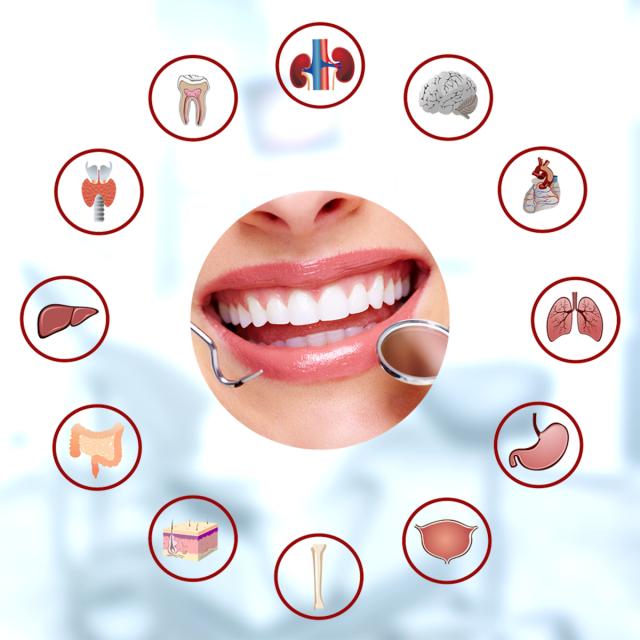
The mouth is the window into human health. This course provides an overview of dental medicine to engage, educate, excite and assist you in improving the oral health of your patients and members of your community. We will review topics in dental medicine including scope of the field, what to expect in function, and some of the many ways that dysfunction may present for different patients.

Sep 7th 2026
5-12 Weeks
Healthcare Information Design and Visualizations (Coursera) Coursera
Northeastern University

Healthcare Information Design and Visualizations (Coursera)

Introduces processes and design principles for creating meaningful displays of information that support effective business decision-making. Studies how to collect and process data; create visualizations (both static and interactive); and use them to provide insight into a problem, situation, or opportunity. Introduces methods to critique visualizations along with ways to answer the elusive question: “What makes a visualization effective?”

Sep 7th 2026
4 Weeks
Systems Thinking In Public Health (Coursera) Coursera
Johns Hopkins University

Systems Thinking In Public Health (Coursera)

This course provides an introduction to systems thinking and systems models in public health. Problems in public health and health policy tend to be complex with many actors, institutions and risk factors involved. If an outcome depends on many interacting and adaptive parts and actors the outcome cannot be analyzed or predicted with traditional statistical methods. Systems thinking is a core skill in public health and helps health policymakers build programs and policies that are aware of and prepared for unintended consequences.

Sep 7th 2026
4 Weeks
The exposome: cracking the science about what makes us sick (Coursera) Coursera
Universiteit Utrecht

The exposome: cracking the science about what makes us sick (Coursera)

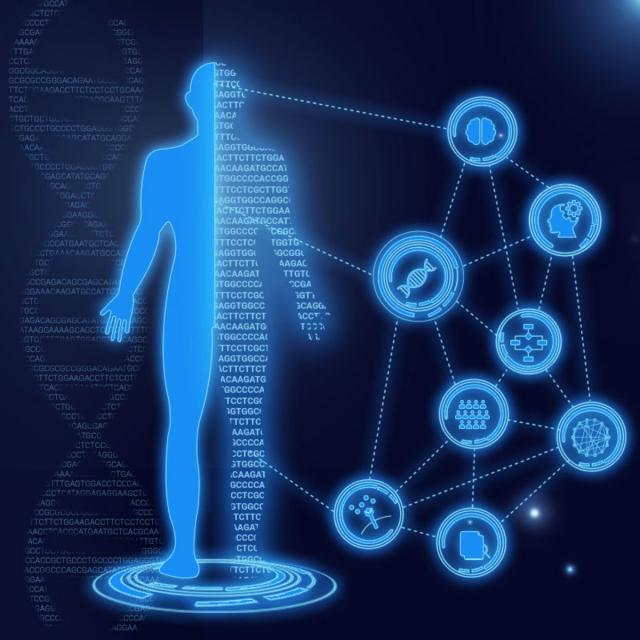
What are the causes of disease? We know that most diseases result from a combination of genes and environment (nature and nurture). Our genes alone do not determine our fate. For most complex diseases, externalities - environmental factors in the broad sense - are more important. This includes our living and working environments, diet, social support and stress, pollution, and exposure to infectious agents. Exposome research is about discovering the non-genetic drivers of health and disease.

Sep 6th 2026
5-12 Weeks