Public Policy Challenges of the 21st Century (Coursera)

Public Policy Challenges of the 21st Century (Coursera)

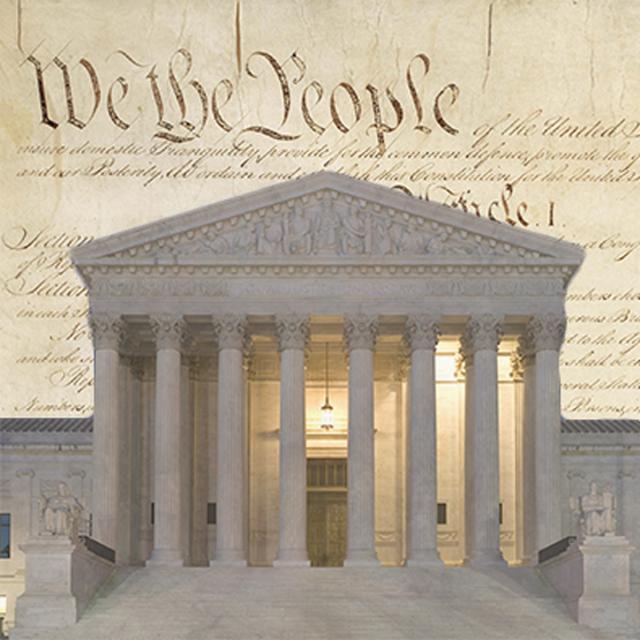
This course introduces class participants to the political significance and societal consequences of challenges facing U.S. and international policymakers. It is designed to help participants develop skills to analyze policy proposals and advocate for their preferred options for issues on the public policy agenda ahead. The class assumes basic knowledge about governing institutions and democratic processes, while recommending supplemental materials for further study to complement reading links provided.

Class Deals by MOOC List - Click here and see Coursera's Active Discounts, Deals, and Promo Codes.

The course focuses on future policy challenges, while examining the broad historical context in which policies are adopted and implemented.
As the course evaluates how issues are advanced by private sector interests, non-governmental organizations, and government policymakers, it examines how groups become effective policy advocates. Particular attention is paid to how winning coalitions are formed and how issue framing shapes the outcome of policy campaigns. The goal is neither to produce partisan talking points, nor to favor one governance philosophy over others. Rather it is to clarify the public policy challenges ahead and to enhance participants’ understanding of how policy options are adopted in the real world arena of contemporary politics.

Syllabus

WEEK 1
Course Roadmap
Professor Warburg and his UVa graduate teaching assistants outline the approach of the course and highlight upcoming topics and speakers.

WEEK 2
Public Policy Challenges in the 21st Century
Professor Warburg outlines global public policy challenges the next generation will face, as classroom participants collaborate in defining the future agenda.

WEEK 3
The Media and Changing Nature of Politics
Clinton White House Press Secretary Dee Dee Myers explains issue framing, coalition building and how modern media in shapes public policy options.

WEEK 4
Healthcare Systems and Insurance Markets
Professor Eric Patashnik examines healthcare reforms, weighing costs, benefits and the efficacy of alternative approaches, including 'Obamacare.'

WEEK 5
Federalism and the Power of State Governors
Professor Ray Scheppach examines the powerful role state governors play, examining how states serve as ‘laboratories’ for federal policy options in Washington.

WEEK 6
US-China Relations
Professor Harry Harding details the complex, all-important relationship between the U.S. and China, outlining different scenarios for future competition and cooperation.

WEEK 7
Congress and Politics
Congressman Gerry Connolly and former House Republican leader Tom Davis offer insights into how Congress meets public policy challenges.

WEEK 8
War Powers
U.S. Senator Tim Kaine discusses how American citizens, in an age of drone strikes and asymmetrical warfare, decide to commit the nation to war.

WEEK 9
Wrapping Up - Positive Change and Closing
Professor Warburg reviews key course themes, analytical skills and the importance of civic engagement with the public policy agenda ahead.

Go to Class
MOOC List is learner-supported. When you buy through links on our site, we may earn an affiliate commission.

Related Courses

Understanding the Music Business: What is Music Worth? (Coursera) Coursera
Vanderbilt University

Understanding the Music Business: What is Music Worth? (Coursera)

This course will examine the music industry in the United States, with the unique perspective gained by Vanderbilt University’s location in Nashville, TN. Nashville is a major center of music in the United States, and the music created here has a global reach, particularly in the country, rock, pop, singer-songwriter, and Americana genres. However, students will learn that the basic principles of recording, marketing, copyright, licensing, and live performance are the same, regardless of musical style or genre.

Jun 22nd 2026
5-12 Weeks
Social Norms, Social Change I (Coursera) Coursera
University of Pennsylvania

Social Norms, Social Change I (Coursera)

This is a course on social norms, the rules that glue societies together. It teaches how to diagnose social norms, and how to distinguish them from other social constructs, like customs or conventions. These distinctions are crucial for effective policy interventions aimed to create new, beneficial norms or eliminate harmful ones. The course teaches how to measure social norms and the expectations that support them, and how to decide whether they cause specific behaviors.

Jun 8th 2026
4 Weeks
Firearm Purchaser Licensing Teach-Out: The Background Check Policy Not Enough People Are Talking About (Coursera) Coursera
Johns Hopkins University

Firearm Purchaser Licensing Teach-Out: The Background Check Policy Not Enough People Are Talking About (Coursera)

The best available evidence shows that comprehensive background checks by themselves are insufficient at reducing gun violence, but strong bodies of research demonstrate that states with comprehensive background checks coupled with firearm purchaser licensing, or permit-to-purchase laws, have significantly fewer firearm-involved homicides, fatal mass shootings, and suicides. Additionally, public opinion polling research consistently finds that 75% or more of U.S. adults support firearm purchaser licensing laws and 60% or more of gun owners support these policies.

Jun 22nd 2026
4 Weeks
Ciudades en crisis y nuevas políticas urbanas (Coursera) Coursera
Universitat Autònoma de Barcelona

Ciudades en crisis y nuevas políticas urbanas (Coursera)

Las ciudades se han convertido en un foco de interés preferente para el análisis de políticas públicas. Con una concentración de personas cada vez mayor viviendo en contextos urbanos, las ciudades son hoy el escenario de un apasionante cambio de época que afecta la esfera social, política, económica y tecnológica.

Jun 8th 2026
4 Weeks
HI-FIVE: Health Informatics For Innovation, Value & Enrichment (Clinical Perspective) (Coursera) Coursera
Columbia University

HI-FIVE: Health Informatics For Innovation, Value & Enrichment (Clinical Perspective) (Coursera)

HI-FIVE (Health Informatics For Innovation, Value & Enrichment) Training is a 12-hour online course designed by Columbia University in 2016, with sponsorship from the Office of the National Coordinator for Health Information Technology (ONC). The training is role-based and uses case scenarios. Also, it has additional, optional modules on other topics of interest or relevance. Although we suggest to complete the course within a month's timeframe, the course is self-paced and so you can start and finish the course at anytime during a month's time period. No additional hardware or software are required for this course.

Jun 8th 2026
4 Weeks
Healthcare Data Literacy (Coursera) Coursera
University of California, Davis

Healthcare Data Literacy (Coursera)

This course will help lay the foundation of your healthcare data journey and provide you with knowledge and skills necessary to work in the healthcare industry as a data scientist. Healthcare is unique because it is associated with continually evolving and complex processes associated with health management and medical care.

Jun 22nd 2026
4 Weeks
Introduction to Environmental Law and Policy (Coursera) Coursera
University of North Carolina

Introduction to Environmental Law and Policy (Coursera)

Environmental law may be the one institution standing between us and planetary exhaustion. It is also an institution that needs to be reconciled with human liberty and economic aspirations. This course considers these issues and provides a tour though existing legal regimes governing pollution, water law, endangered species, toxic substances, environmental impact analyses, and environmental risk.

Jun 12th 2026
5-12 Weeks
Chinese Politics Part 1 - China and Political Science (Coursera) Coursera
The Hong Kong University of Science and Technology - HKUST

Chinese Politics Part 1 - China and Political Science (Coursera)

This course offers a conceptual framework for understanding China that highlights the intersection of politics and economics. It shows that rather than develop into a full blown market economy, state and party officials at all levels of the political system maintain significant influence in economic development. Such a “political” economy has had both positive and negative outcomes, which we will assess in detail.

Jun 22nd 2026
5-12 Weeks