EdX

Proteins: Biology's Workforce (edX)

Offered by Rice University, RiceX,
Proteins: Biology's Workforce (edX)

Learn how the protein you eat keeps you alive and healthy by powering key functions from metabolism to DNA replication. Protein is found in virtually every part of your body. At least 10,000 different proteins make you what you are and keep you that way. In this biology course you will learn how proteins drive almost all living processes.

Class Deals by MOOC List - Click here and see EdX's Active Discounts, Deals, and Promo Codes.

Proteins manufactured by cells perform a broad range of essential functions — the molecular workforce of living organisms.
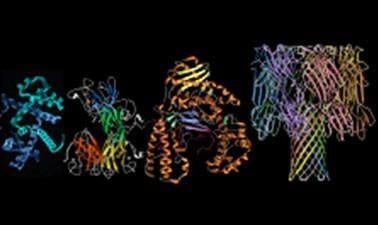
You will learn how proteins are the cellular manifestation of genetic information. They are assembled into a polymeric structure from monomers derived in part from components in our diet. Proteins catalyze metabolic reactions, replicate DNA, respond to stimuli, provide movement, and much more. Using video lectures, articles, case studies, and molecular models, we will explore how proteins are constructed, how they fold into 3-dimensional shapes, the kinds of bonds that hold these folded structures together, and the immense range of roles that proteins assume ‑ from structural proteins found in muscle to catalysts for cellular chemical reactions.
Purification and characterization are essential to understand protein structure and function, and we will identify a variety of methods to uncover how these tiny machines drive almost all living processes.

What you'll learn:

  • How proteins are structured and fold into functional forms
  • The variety of functions that proteins perform, including enzyme catalysis
  • How to purify, analyze, and characterize protein structure and function

Syllabus

Lecture 1: Protein Structure
Introduction tocentral concepts important for understanding biological molecules, components of proteins, and discovering how these components determine a protein's active, dynamic form.

Lecture 2: Protein Function
Examination of structure and function of the various classes of proteins, how shape determines function, how binding small molecules is important for function, and the nature of transport proteins that move materials

Lecture 3: Protein Function and Purification
Exploration of the dynamic nature and exquisite specificity of enzymes and the methods that can be used to purify a specific protein.

Lecture 4: Protein Characterization
Understanding methods that determine protein concentration, assess molecular weight, determine structure, and identify contribution to cell function.
Go to Class
MOOC List is learner-supported. When you buy through links on our site, we may earn an affiliate commission.

Related Courses

Industrial Fermentation (edX) EdX
Delft University of Technology,DelftX

Industrial Fermentation (edX)

Get introduced to the essentials of industrial fermentation processes, which convert renewable feedstocks into biomaterials, chemicals, nutrition products and biofuels with the help of microorganisms. Industrial fermentation is the central operation in a broad, sustainable value chain, also involving the upstream generation and supply of renewable feedstocks, and downstream purification of the products formed.

Self Paced
Self-Paced
AP® Biology - Part 2: Genetics (edX) EdX
Rice University,RiceX

AP® Biology - Part 2: Genetics (edX)

The second course in a comprehensive series designed to prepare you for the AP Biology exam, focusing on genetics and DNA. Preparing for the AP Biology exam requires a deep understanding of many different topics in biology as well as an understanding of the format of the AP exam and the types of questions it asks. This course is Part 2 of the AP Biology series designed to prepare you for the AP Biology exam.

No sessions available
5-12 Weeks
Innovate & Regulate: Drug Research, Costs, Clinical Trials & Approval (edX) EdX
Davidson College,DavidsonX

Innovate & Regulate: Drug Research, Costs, Clinical Trials & Approval (edX)

At some point in their life, essentially everyone needs to use medication for some type of disease treatment or cure. While medications offer great benefits, the cost of drugs, especially new drugs, and the lack of treatment for some diseases can raise questions about business activity behind the creation of new drugs. Better understanding of how drugs are discovered and developed as well as the legal and regulatory factors that affect the industry can help one better recognize both the shortcomings and opportunities faced by the drug industry at large.

Self Paced
Self-Paced
Zoologia (edX) EdX
University of Naples Federico II,FedericaX

Zoologia (edX)

Comprendere gli animali e i sistemi naturali, attraverso il filo conduttore dell’evoluzione. Un viaggio da percorrere con l’entusiasmo di un bambino e la professionalità di uno studioso. La zoologia è la conoscenza degli animali, i nostri coinquilini. Ci sono centinaia di specie animali che interagiscono insieme a noi in una relazione di comunità o ecosistema. Questo corso di Zoologia è una passeggiata nei temi propri della materia come elemento culturale essenziale per il biologo, il naturalista e chiunque si occupi della vita.

Self Paced
Self-Paced
BioStatistics (edX) EdX
DoaneX,Doane University

BioStatistics (edX)

This college-level, credit-eligible Biostatistics course will teach you the skills required for success in future analytical studies in biology. In this undergraduate-level biostatistics course, the learners will be introduced to the use of statistics and study designs in biology. Upon successful completion of this course, learners will be able to design experimental, quasi-experimental and observational studies that will meet regulatory guidelines; collect, analyze, and interpret data using appropriate statistical tools.

Self Paced
Self-Paced
Human Anatomy: Musculoskeletal Cases (edX) EdX
HarvardX,Harvard University

Human Anatomy: Musculoskeletal Cases (edX)

Learn the anatomy basic to understanding five musculoskeletal injuries commonly seen in primary care medicine and orthopedic clinical specialty practice. Follow hypothetical patients from injury to operating room. Human Anatomy: Musculoskeletal Cases invites students to join medical and basic science faculty at Harvard Medical School (HMS) to learn about musculoskeletal injuries commonly seen in clinical practice.

Self Paced
Self-Paced
Sharks! (edX) EdX
University of Queensland,CornellX,Cornell University,UQx

Sharks! (edX)

Learn about the most fascinating animals on Earth, their sophisticated senses and how sharks and their relatives have impacted human history and culture. Did you know that you can track some sharks’ movements on Twitter? Or that the scales on their skin have influenced the way humans design boats, planes, and even swimsuits? Or that sharks have more senses than humans?

Jul 3rd 2023
4 Weeks
Fundamentals of Neuroscience, Part 2: Neurons and Networks (edX) EdX
HarvardX,Harvard University

Fundamentals of Neuroscience, Part 2: Neurons and Networks (edX)

Discover what makes your brain tick in this second part of a four-part introductory series in Neuroscience. Neurons in isolation are fascinating and complicated, but the real magic of neuroscience happens in the interaction between neurons. In this course, we examine how neurons pass signals to one another and how complex dynamics can result from just a few neurons arranged in relatively simple circuits.

Self Paced
Self-Paced
One Planet, One Ocean (edX) EdX
SDGAcademyX,SDG Academy

One Planet, One Ocean (edX)

A holistic view of how the ocean functions, how human interactions with the ocean can be understood, and what solutions are available to support both sustainable use and stewardship of our blue planet. Is the ocean the real final frontier? Humans have a greater understanding of the surface of the moon than they do of the depths of these waters.

Self Paced
Self-Paced
Cell Biology: Mitochondria (edX) EdX
HarvardX,Harvard University

Cell Biology: Mitochondria (edX)

A human-centered approach to the fundamentals of cell biology with a focus on the power plants of the cell - mitochondria. The cell is a powerful case study to help us explore the functional logic of living systems. All organisms, from single-celled algae to complex multicellular organisms like us, are made up of cells. In this course, you will learn the how and why of biology by exploring the function of the molecular components of cells, and how these cellular components are organized in a complex hierarchy.

Self Paced
Self-Paced