EdX

Probability and Statistics I: A Gentle Introduction to Probability (edX)

Probability and Statistics I: A Gentle Introduction to Probability (edX)

This course provides an introduction to basic probability concepts. Our emphasis is on applications in science and engineering, with the goal of enhancing modeling and analysis skills for a variety of real-world problems. In order to make the course completely self-contained (and to bring back long-lost memories), we’ll start off with Bootcamp lessons to review concepts from set theory and calculus.

Class Deals by MOOC List - Click here and see EdX's Active Discounts, Deals, and Promo Codes.

We’ll then discuss the probability axioms that serve as the basis for all of our subsequent work – what makes probability tick? That discussion will give us the tools to study elementary probability counting rules, including permutations and combinations. We’ll use these rules to work on various cool applications, including poker probability calculations and baseball line-ups!
The next venues on our tour are the concepts of independence and conditional probability, which allow us to see how the probabilities of different events are related to each other, and how new information can be used to update probabilities. The course culminates in a discussion of Bayes Rule and its various interesting consequences related to probability updates.
This course is part of the Probability/Random Variables Professional Certificate.

What you'll learn
Upon completion of this course, learners will be able to:
• Review Bootcamp lessons based on set theory and calculus
• Identify underlying probability axioms
• Apply elementary probability counting rules, including permutations and combinations
• Recall the concepts of independence and conditional probability
• Determine how to update probabilities via Bayes Rule

Prerequisites:
You will be expected to come in knowing a bit of set theory and basic calculus. But don’t worry too much – we’ll provide bootcamps on that material in order to make the class pretty much self-contained. In addition, this course will involve a bit of computer programming, so it would be nice to have at least a little experience in something like Excel, just to bring back the programming memories.

Syllabus

Module 1: Course Introduction + Bootcamps
• Lesson 1: Introduction to Probability and Statistics
• Lesson 2 [OPTIONAL]: The Joy of Sets Bootcamp
• Lesson 3 [OPTIONAL]: Calculus Bootcamp: Introduction + Derivatives
• Lesson 4 [OPTIONAL]: Calculus Bootcamp: Integration and Beyond

Module 2: Getting Started with Probability
• Lesson 1: Experiments, Sample Spaces, and Events
• Lesson 2: What is Probability?
• Lesson 3: Basic Probability Results
• Lesson 4: Finite Sample Spaces
• Lesson 5: Counting Techniques: Baby Examples
• Lesson 6: Counting Techniques: Permutations
• Lesson 7: Counting Techniques: Combinations

Module 3 (cont’d): Getting Started with Probability
• Lesson 8: Hypergeometric, Binomial, and Multinomial Problems
• Lesson 9: Permutations vs. Combinations
• Lesson 10: The Birthday Problem
• Lesson 11: The Envelope Problem
• Lesson 12: Poker Problems
• Lesson 13: Conditional Probability
• Lesson 14: Independence Day
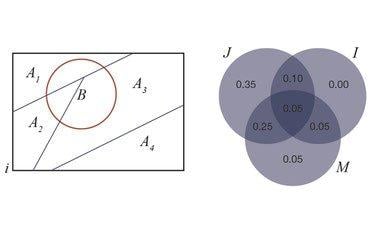
• Lesson 15: Partitions and the Law of Total Probability
• Lesson 16: Bayes Theorem


Go to Class
MOOC List is learner-supported. When you buy through links on our site, we may earn an affiliate commission.

Related Courses

Calculus 1B: Integration (edX) EdX
MIT,MITx

Calculus 1B: Integration (edX)

Discover the integral---what it is and how to compute it. See how to use calculus to model real world phenomena. Part 2 of 3. How long should the handle of your spoon be so that your fingers do not burn while mixing chocolate fondue? Can you find a shape that has finite volume, but infinite surface area? How does the weight of the rider change the trajectory of a zip line ride? These and many other questions can be answered by harnessing the power of the integral.

Sep 14th 2022
13-24 Weeks
Data, Analytics and Learning (edX) EdX
University of Texas at Arlington,UTArlingtonX

Data, Analytics and Learning (edX)

An introduction to the logic and methods of analysis of data to improve teaching and learning. Capturing and analyzing data has changed how decisions are made and resources are allocated in businesses, journalism, government, and military and intelligence fields. Through better use of data, leaders are able to plan and enact strategies with greater clarity and confidence.

No sessions available
4 Weeks
Predictive Analytics (edX) EdX
Indian Institute of Management, Bangalore,IIMBx

Predictive Analytics (edX)

Master the tools of predictive analytics in this statistics based analytics course. Decision makers often struggle with questions such as: What should be the right price for a product? Which customer is likely to default in his/her loan repayment? Which products should be recommended to an existing customer? Finding right answers to these questions can be challenging yet rewarding.

This course is archived
5-12 Weeks
Foundations of Data Analysis - Part 1: Statistics Using R (edX) EdX
University of Texas at Austin,UTAustinX

Foundations of Data Analysis - Part 1: Statistics Using R (edX)

Use R to learn fundamental statistical topics such as descriptive statistics and modeling. In this first part of a two part course, we’ll walk through the basics of statistical thinking – starting with an interesting question. Then, we’ll learn the correct statistical tool to help answer our question of interest – using R and hands-on Labs. Finally, we’ll learn how to interpret our findings and develop a meaningful conclusion.

No sessions available
5-12 Weeks
Supply Chain Analytics (edX) EdX
MIT,MITx

Supply Chain Analytics (edX)

Master and apply the core methodologies used in supply chain analysis and modeling, including statistics, regression, optimization and probability – part of the MITx Supply Chain Management MicroMasters Credential. Supply chains are complex systems involving multiple businesses and organizations with different goals and objectives. Many different analytical methods and techniques are used by researchers and practitioners alike to better design and manage their supply chains.

Jan 10th 2024
13-24 Weeks
Statistics Using Python (edX) EdX
University of Wisconsin–Madison,WisconsinX

Statistics Using Python (edX)

Learn the fundamentals of statistics using Python. This course is a compact primer in statistics as a foundation for data-driven business analysis. A selection of concepts include descriptive statistics, probability, inference, correlation, and regression. The course also exposes students to basic Python programming for use in statistics.

Jan 23rd 2024
5-12 Weeks
Statistics for Business - II (edX) EdX
Indian Institute of Management, Bangalore,IIMBx

Statistics for Business - II (edX)

Examine data drawn from allied fields of business such as Finance and HR, and learn how to simulate data to follow a specified distribution. Statistics is a versatile discipline that has revolutionized the fields of business, engineering, medicine and pure sciences. This course is Part 2 of a 4-part series on Business Statistics, and is ideal for learners who wish to enroll in business programs. The first two parts cover topics in Descriptive Statistics, whereas the next two focus on Inferential Statistics.

No sessions available
5-12 Weeks
Pre-University Calculus (edX) EdX
Delft University of Technology,DelftX

Pre-University Calculus (edX)

Prepare for Introductory Calculus courses. Mathematics is the language of Science, Engineering and Technology. Calculus is an elementary Mathematical course in any Science and Engineering Bachelor. Pre-university Calculus will prepare you for the Introductory Calculus courses by revising four important mathematical subjects that are assumed to be mastered by beginning Bachelor students: functions, equations, differentiation and integration.

Self Paced
Self-Paced