Power BI Integration with AWS and Snowflake (Coursera)

Offered by Edureka,
Power BI Integration with AWS and Snowflake (Coursera)

Welcome to the course on Power BI Integration with AWS and Snowflake. Design and build data models on Snowflake using Snowflake Architecture's unique schema . Manage the hosting of datasets on AWS and connect them with Power BI to stream data and use it to visualize data.

Class Deals by MOOC List - Click here and see Coursera's Active Discounts, Deals, and Promo Codes.

By the end of this course, you will be able to:

  1. Create AWS and Snowflake accounts
  2. Associate different features offered by Snowflake on Snowsight
  3. Compose databases, tables, and S3 buckets in Snowflake and AWS
  4. Create connections between Power BI with Snowflake and AWS

This course is designed for data analysts, data administrators, and business analysts seeking to enhance their analytical and design skills.
Prior experience with MS Excel, SQL, AWS Console, R, and RDBMS is beneficial but not mandatory for this course.
Join us on this journey to enhance your visualization skills and elevate your analytical and design capabilities.
This course is part of the Mastering Power BI for Data Analytics & Storytelling Specialization.

What you'll learn
Connect AWS and Snowflake with Power BI and import data to be used in visualization

Syllabus

Snowflake Integration with Power BI
In this module, you will learn how different data sources are used to store and manage databases, which can be later connected with Power BI. Make use of Snowflake storage services to store and manipulate data into the correct structure, which later can be used to visualize data to find hidden insights and findings to further the decision-making skills of an individual.

AWS Integration with Power BI
In this module, you will learn about AWS's benefits and improvements over traditional databases and also explore the Amazon console, which is used to manage services. Learn to create and upload a database on S3 storage and connect it to Power BI. Gain knowledge of connectors used to manage the database. Visualize the imported data and find the hidden insights present in the database.

Course Wrap-Up and Assessment
This module is designed to assess an individual on the various concepts and teachings covered in this course. Answer a comprehensive quiz which marks you as a learner who is confident in working with Power BI.

Go to Class
MOOC List is learner-supported. When you buy through links on our site, we may earn an affiliate commission.

Related Courses

Data-Driven Decisions with Power BI (Coursera) Coursera
Knowledge Accelerators

Data-Driven Decisions with Power BI (Coursera)

New Power BI users will begin the course by gaining a conceptual understanding of the Power BI desktop application and the Power BI service. Learners will explore the Power BI interface while learning how to manage pages and understand the basics of visualizations. Learners will engage in numerous hands-on experiences to discover how to import, connect, clean, transform, and model their own data in the Power BI desktop application.

Jun 22nd 2026
5-12 Weeks
Relational Database Design (Coursera) Coursera
Illinois Tech

Relational Database Design (Coursera)

This course provides you with the opportunity to learn about relational database design. You will be provided an in-depth understanding of the design principles and methodologies involved in creating well-structured, normalized, and efficient relational databases to manage data for small, medium, and large-scale enterprises.

Jun 22nd 2026
4 Weeks
Data Analysis Using SQL (Coursera) Coursera
Fractal Analytics

Data Analysis Using SQL (Coursera)

In this comprehensive course, you will embark on a transformative journey to master the art of analyzing data through SQL. SQL is a powerful tool used for managing and manipulating data in relational databases. Throughout this course, you will acquire the essential skills to efficiently extract relevant data from databases, empowering you to navigate through vast amounts of information with ease.

Jun 22nd 2026
5-12 Weeks
Software Design as an Abstraction (Coursera) Coursera
University of Colorado System

Software Design as an Abstraction (Coursera)

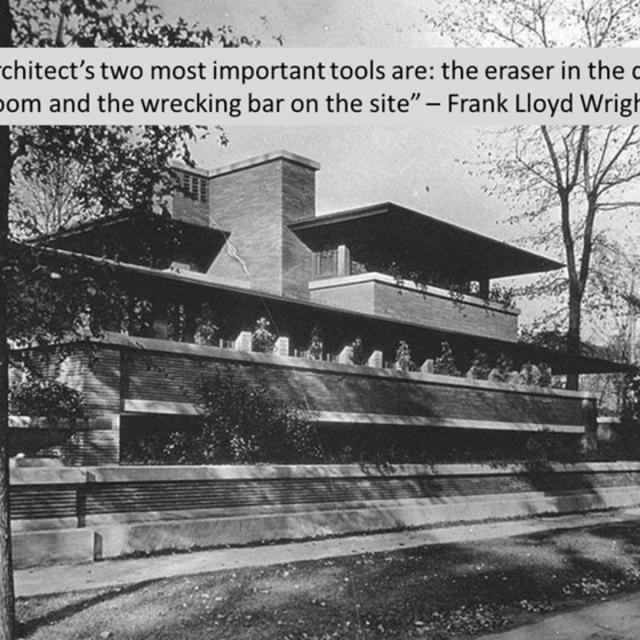
The design step in developing software has some unique characteristics. First of all, it’s the only step where drawing pictures of things is the norm. Why is that? What do pictures do that other representations cannot do? Pictures have varying levels of detail; pictures have context. Pictures…paint a picture. Why are these things important? In this course, too, we begin looking at other disciplines (building architecture is a favorite one) for lessons on design.

Jun 22nd 2026
5-12 Weeks
Data Storytelling with Power BI (Coursera) Coursera
Edureka

Data Storytelling with Power BI (Coursera)

Welcome to the Data Storytelling with Power BI course, where you'll embark on a journey to acquire practical expertise in data transformation and visualization. Leverage the potential of Power BI to craft narratives through structured data, leading to the discovery of more profound insights. Throughout this course, you'll explore the industry-specific applications of Power BI and delve into its various features and functionalities.

Jun 22nd 2026
5-12 Weeks
Relational Database Design (Coursera) Coursera
University of Colorado Boulder

Relational Database Design (Coursera)

Have you ever wanted to build a database but don't know where to start? This course will provide you a step-by-step guidance. We are going to start from a raw idea to an implementable relational database. Getting on the path, practicing the real-life mini cases, you will be confident and comfortable with Relational Database Design. Let's get started!

Jun 22nd 2026
4 Weeks
Excel Essentials and Beyond (Coursera) Coursera
Board Infinity

Excel Essentials and Beyond (Coursera)

Dive into "Excel Essentials and Beyond", a comprehensive exploration of Excel, the world's leading spreadsheet tool. This course is thoughtfully crafted for both newcomers to Excel and also for those aiming for mastery. We begin by introducing Excel's robust interface and foundational features, ensuring a firm grasp of data organization techniques. As you advance, you'll delve into data visualization, transforming raw data into captivating stories.

Jun 22nd 2026
5-12 Weeks
Data Manipulation at Scale: Systems and Algorithms (Coursera) Coursera
University of Washington

Data Manipulation at Scale: Systems and Algorithms (Coursera)

Data analysis has replaced data acquisition as the bottleneck to evidence-based decision making --- we are drowning in it. Extracting knowledge from large, heterogeneous, and noisy datasets requires not only powerful computing resources, but the programming abstractions to use them effectively. The abstractions that emerged in the last decade blend ideas from parallel databases, distributed systems, and programming languages to create a new class of scalable data analytics platforms that form the foundation for data science at realistic scales.

Jun 22nd 2026
4 Weeks
Introduction to Data Science in Python (Coursera) Coursera
University of Michigan

Introduction to Data Science in Python (Coursera)

This course will introduce the learner to the basics of the python programming environment, including fundamental python programming techniques such as lambdas, reading and manipulating csv files, and the numpy library. The course will introduce data manipulation and cleaning techniques using the popular python pandas data science library and introduce the abstraction of the Series and DataFrame as the central data structures for data analysis, along with tutorials on how to use functions such as groupby, merge, and pivot tables effectively. By the end of this course, students will be able to take tabular data, clean it, manipulate it, and run basic inferential statistical analyses.

Jun 22nd 2026
4 Weeks
Data Processing and Manipulation (Coursera) Coursera
University of Colorado Boulder

Data Processing and Manipulation (Coursera)

The "Data Processing and Manipulation" course provides students with a comprehensive understanding of various data processing and manipulation concepts and tools. Participants will learn how to handle missing values, detect outliers, perform sampling and dimension reduction, apply scaling and discretization techniques, and explore data cube and pivot table operations. This course equips students with essential skills for efficiently preparing and transforming data for analysis and decision-making.

Jun 22nd 2026
4 Weeks