The Politics of Economics and the Economics of Politicians (FutureLearn)

The Politics of Economics and the Economics of Politicians (FutureLearn)

Investigate links between economics and politicians with Sir Vince Cable and leading economists at the University of Nottingham. How does economics impact on politicians? And how do politicians impact on economics? In this three-week course, Sir Vince Cable and a team of leading economists at the University of Nottingham will explain the links between politics and economics. You will explore these links by looking at the work of major political figures and the key economic ideas they adopted.

Class Deals by MOOC List - Click here and see FutureLearn's Active Discounts, Deals, and Promo Codes.

Find out about the links between politicians and economics
You will study both contemporary economics – for example exploring responses to the financial crisis of 2008 – and some of the political leaders who have put key economic theories into practice throughout history.
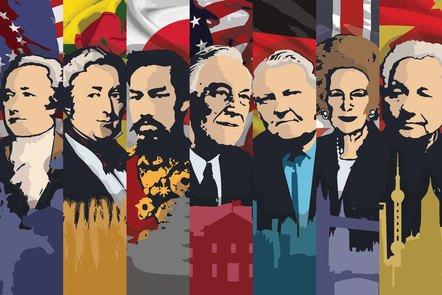
These are political figures from around the world who have changed economic history, including Alexander Hamilton, Sir Robert Peel, the Mejii Emperor, FD Roosevelt, Margaret Thatcher and Deng Xiaoping. The economic policies and practices of these former leaders are still having an impact on our world today.

Learn from experts in the field
The course is led by Sir Vince Cable, former Secretary of State for Business, Innovation and Skills (2010-2015) and Honorary Professor of Economics at the University of Nottingham. His experience combines the theoretical knowledge of a trained economist with practical experience gained in government.
You will also learn from leading economists at the University of Nottingham, including Head of School Professor Kevin Lee and Professor of Political Economy Cecilia Testa.

Syllabus

Week 1: Introduction, Alexander Hamilton, and Sir Robert Peel
Week 2: The Meiji Emperor, President Franklin D Roosevelt, and Ludwig Erhard
Week 3: Margaret Thatcher, Deng Xiaoping, and Conclusions

What will you achieve?

  • Investigate policy making in an historical context
  • Apply economic tools to policy relevant questions
  • Discuss the relationship between politics and economics
  • Identify and use assets (images, video, quizzes etc.) within learning resources
  • Develop analytical skills
  • Develop an understanding of how economic theory guides policy choices
Go to Class
MOOC List is learner-supported. When you buy through links on our site, we may earn an affiliate commission.

Related Courses

Business English: Finance and Economics (Coursera) Coursera
Arizona State University

Business English: Finance and Economics (Coursera)

Do you work in finance or interact with finance professionals? Is it necessary to speak, write or understand English in your career? Follow the authentic characters in this course as they work through common business situations in finance and economics. Learn from your successes and failure, and think critically about your own communication options.

Sep 14th 2026
5-12 Weeks
Introduction to Quantitative Investing (FutureLearn) FutureLearn
Sungkyunkwan University - SKKU

Introduction to Quantitative Investing (FutureLearn)

Learn basics of financial economics and try its real life application using financial data and programming. Financial markets have become increasingly complex - it’s not easy to know where to start when it comes to investing. In today’s world the demand of accurate data-driven quantitative analysis across the world is steadily rising: it’s become crucial to understand and be able to use statistical and mathematical information accurately and promptly.

No sessions available
5-12 Weeks
Economics of Money and Banking (Coursera) Coursera
Columbia University

Economics of Money and Banking (Coursera)

The last three or four decades have seen a remarkable evolution in the institutions that comprise the modern monetary system. The financial crisis of 2007-2009 is a wakeup call that we need a similar evolution in the analytical apparatus and theories that we use to understand that system. Produced and sponsored by the Institute for New Economic Thinking, this course is an attempt to begin the process of new economic thinking by reviving and updating some forgotten traditions in monetary thought that have become newly relevant.

Aug 31st 2026
13-24 Weeks
Pets, Politics and Pandemics (Coursera) Coursera
Columbia University

Pets, Politics and Pandemics (Coursera)

This course is designed to be a fun and accessible introduction to the topic of systems theory. Systems theory describes a number of fundamental concepts that undergird a broad array of phenomena across many different social, political and natural arenas. It is from this broad applicability that the course derives its title: Pets (social), politics (political and economic) and Pandemics (natural).

Sep 7th 2026
5-12 Weeks
Moral Foundations of Politics (Coursera) Coursera
Yale University

Moral Foundations of Politics (Coursera)

When do governments deserve our allegiance, and when should they be denied it? This course explores the main answers that have been given to this question in the modern West. We start with a survey of the major political theories of the Enlightenment: Utilitarianism, Marxism, and the social contract tradition. In each case, we begin with a look at classical formulations, locating them in historical context, but then shift to the contemporary debates as they relate to politics today.

Sep 7th 2026
5-12 Weeks
Exploring Economics: Will the Next Generation Be Worse Off? (FutureLearn) FutureLearn
Griffith University

Exploring Economics: Will the Next Generation Be Worse Off? (FutureLearn)

Will the next generation be better or worse off than their parents? Look at both sides of the debate and decide for yourself. The next generation faces uncertain economic prospects. This online course explains why. You’ll get an introduction to the global economy, how it experiences spikes and dips in economic growth and how this affects prosperity worldwide.

No sessions available
3 Weeks
Christian-Muslim Relations (FutureLearn) FutureLearn
University of Edinburgh

Christian-Muslim Relations (FutureLearn)

Uncover important themes in the history of Christian-Muslim relations and understand the politics that continue to shape it. Gain an insight into the academic study of Christian-Muslim Relations. On this innovative four-week course, you’ll be introduced to the academic study of Christian-Muslim Relations with the School of Divinity at the University of Edinburgh.

Oct 3rd 2022
4 Weeks
Desigualdades en América Latina y el Caribe: Investigación, Políticas y Gestión para las Transformaciones Sociales (FutureLearn) FutureLearn
UNESCO,CLAD

Desigualdades en América Latina y el Caribe: Investigación, Políticas y Gestión para las Transformaciones Sociales (FutureLearn)

Explore nuevas estrategias de producción y gestión de conocimiento para mejorar las políticas frente a las desigualdades. Las desigualdades representan uno de los principales desafíos que enfrenta América Latina y el Caribe, y constituyen una constante preocupación para sus gobiernos. Frente a estos escenarios cada vez más complejos, el diálogo fluido entre investigación social y políticas públicas resulta urgente y estratégico. Este curso aborda el actual panorama regional de las desigualdades, alerta sobre sus dramáticas consecuencias, y ofrece estrategias transformadoras que pueden diseñarse para mejorar las políticas sociales y la gestión pública.

No sessions available
4 Weeks