Oracle Database Platform (Coursera)

Offered by LearnQuest,
Oracle Database Platform (Coursera)

This course is designed to help you learn how to navigate the Oracle Database environment. Both GUI and command-line tools will be introduced to allow you to work with the Oracle Database. It is recommended that you complete the first course in this specialization, Oracle Database Foundations, before continuing to this second course.

Class Deals by MOOC List - Click here and see Coursera's Active Discounts, Deals, and Promo Codes.

Course 2 of 4 in the Oracle SQL Databases Specialization.

Syllabus

WEEK 1
Course Introduction
This module is introduces the course. We will discuss the topics we'll explore, view the course objectives, and learn a little about the Oracle Database Platform and History.
Navigating The Oracle Database
In this module, we will take a look of what large datasets may consist of, explore the path and purpose of a database, define the database roles, and delve into Oracle's Database Admin Tools.

WEEK 2
Using SQL Developer
Comprehensive Introduction To SQL Developer

Go to Class
MOOC List is learner-supported. When you buy through links on our site, we may earn an affiliate commission.

Related Courses

Games, Sensors and Media (Coursera) Coursera
University of California, Irvine

Games, Sensors and Media (Coursera)

You will learn to make fluid digital interactive experiences that are suitable for gaming and use the advanced sensor hardware built into the iPhone and iPad. This includes drawing 2D graphics, playing sounds and music, integrating with Game Center, the iOS physics engine and detecting device orientation and location.

Oct 26th 2026
4 Weeks
Introduction to SQL (DataCamp) DataCamp
DataCamp

Introduction to SQL (DataCamp)

Master the basics of querying tables in relational databases such as MySQL, SQL Server, and PostgreSQL. This course teaches syntax in SQL shared by many types of databases, such as PostgreSQL, MySQL, SQL Server, and Oracle. This course teaches you everything you need to know to begin working with databases today!

Self Paced
Self-Paced
Avatar Psychology for Designers (Coursera) Coursera
Michigan State University

Avatar Psychology for Designers (Coursera)

This course covers the latest and greatest psychological research on avatars and is relevant to current and future designers of any medium that includes user self-representations (e.g., video games, virtual worlds, robots, automobiles, social media, etc.). By taking this course, you will be able to define digital and non-digital avatars and identify how they are applicable in everyday life.

Oct 26th 2026
4 Weeks
System Validation (3): Requirements by modal formulas (Coursera) Coursera
EIT Digital

System Validation (3): Requirements by modal formulas (Coursera)

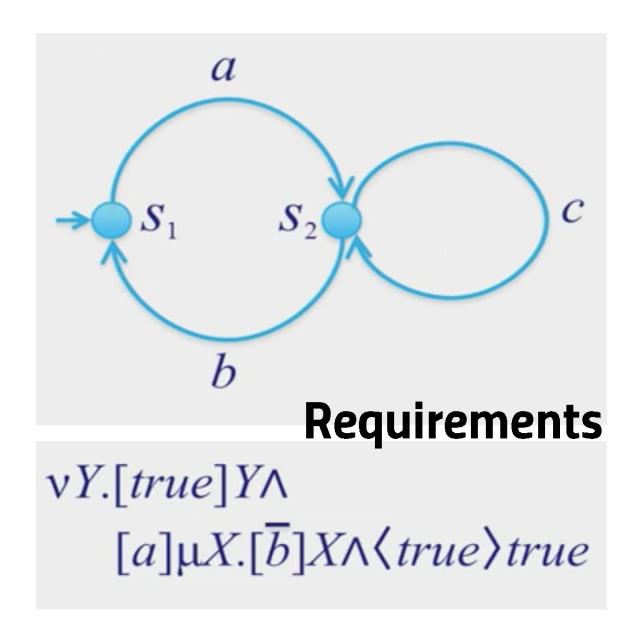
System Validation is the field that studies the fundamentals of system communication and information processing. It allows automated analysis based on behavioural models of a system to see if a system works correctly. We want to guarantee that the systems does exactly what it is supposed to do. The techniques put forward in system validation allow to prove the absence of errors. It allows to design embedded system behaviour that is structurally sound and as a side effect enforces you to make the behaviour simple and insightful. This means that the systems are not only behaving correctly, but are also much easier to maintain and adapt.

Oct 26th 2026
2 Weeks
Machine Learning Basics (Coursera) Coursera
Sungkyunkwan University - SKKU

Machine Learning Basics (Coursera)

In this course, you will: understand the basic concepts of machine learning; understand a typical memory-based method, the K nearest neighbor method; understand linear regression; understand model analysis. Please make sure that you’re comfortable programming in Python and have a basic knowledge of mathematics including matrix multiplications, and conditional probability.

Oct 26th 2026
4 Weeks
Database Management Essentials (Coursera) Coursera
University of Colorado System

Database Management Essentials (Coursera)

Database Management Essentials provides the foundation you need for a career in database development, data warehousing, or business intelligence, as well as for the entire Data Warehousing for Business Intelligence specialization. In this course, you will create relational databases, write SQL statements to extract information to satisfy business reporting requests, create entity relationship diagrams (ERDs) to design databases, and analyze table designs for excessive redundancy.

Oct 5th 2026
5-12 Weeks
Practical Python for AI Coding 2 (Coursera) Coursera
Korea Advanced Institute of Science and Technology - KAIST

Practical Python for AI Coding 2 (Coursera)

This course is for a complete novice of Python coding, so no prior knowledge or experience in software coding is required. This course selects, introduces and explains Python syntaxes, functions and libraries that were frequently used in AI coding. In addition, this course introduces vital syntaxes, and functions often used in AI coding and explains the complementary relationship among NumPy, Pandas and TensorFlow, so this course is helpful for even seasoned python users.

Oct 26th 2026
5-12 Weeks
Oracle SQL Performance Tuning (Coursera) Coursera
EDUCBA

Oracle SQL Performance Tuning (Coursera)

This course is designed to provide you with skills needed to improve query performance in Oracle databases. In real-world scenarios, slow report generation and query execution often result from the sheer volume of data. To address this issue, this course covers topics such as Query Compilation and Execution, Indexing, Materialized Views, Common Table Expressions etc. Emphasis is on practical learning with step-by-step demonstrations.

Oct 5th 2026
4 Weeks
Effective Programming in Scala (Coursera) Coursera
École Polytechnique Fédérale de Lausanne

Effective Programming in Scala (Coursera)

Scala is an expressive, versatile, and safe programming language. In this course, you will learn how to get the most out of Scala to solve common programming tasks such as modeling business domains, breaking down complex problems into simpler problems, manipulating data, or running parallel tasks. Along the journey, you will also learn the best practices for writing high-quality code that scales to large applications, how to handle errors, how to write tests, and how to leverage a productive development environment.

Oct 26th 2026
5-12 Weeks