The Nurse's Toolkit (Coursera)

The Nurse's Toolkit (Coursera)

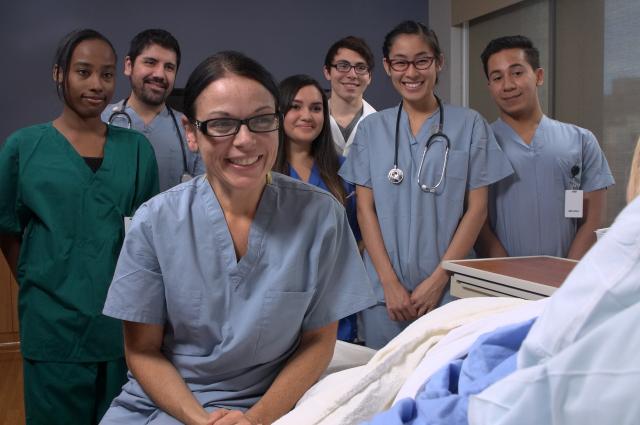
The Nurse’s Toolkit will introduce learners to various life-saving nursing skills and interventions. Learn critical life-saving concepts and skills related to airway management, trauma, immobilization and splinting, sepsis management, wound care, and obstetrical emergencies.

Class Deals by MOOC List - Click here and see Coursera's Active Discounts, Deals, and Promo Codes.

This course also integrates augmented reality into two modules: airways and immobilization, and splinting. The augmented reality will be powered through the learner’s mobile device via a web-based tool that will provide simulations and test learners’ knowledge of the material.

What you'll learn

  • Learn critical life-saving techniques for patient care
  • Use patient case studies for assessment, evaluation, and treatment
  • Use augmented reality to visualize and compare types of airway complications and fractures

Syllabus

Week 1 | The ABC's of Airway Management
In the first module of the Nurse's Toolkit, you will be introduced to your course instructors, review course objectives in the syllabus, introduce yourself to your fellow learners, and take the course pre-survey. You will then dive into your first lesson on airway management with your instructor, Deb Lee. Specifically, you will learn about airway anatomy, airway assessment, common airway complications, and recommended treatment options.

Week 2 | Bruised, Battered, and Broken: Your Guide to Trauma Treatment
In the second module, you will hear from Ray Blush on how traumatic injuries can be assessed and treated. Specifically, you will hear about the ABCDEF model of trauma: airway, breathing, circulation, disability, exposure, and full set of vitals.

Week 3 | Immobilization and Splinting
In the third module, you will hear again from Ray Blush on the topic of immobilization and splinting. You will learn about key concepts like bone anatomy and formation, fractures, and key considerations during the immobilization and splinting process.

Week 4 | The Severe Infection Connection: Sepsis and Fluid Resuscitation
In the fourth module, Melissa Bathish will give you an overview of sepsis including: risk factors, signs and symptoms, assessment, interventions, and re-assessment.

Week 5 | Wounds and Burns: A Hot Topic
In the fifth module, Deb Lee returns to give you a deep dive into wounds and burns. This includes characterizing, assessing, and treating wounds.

Week 6 | Pushing it to the Limit: Obstetrical Emergencies
In the final module of the Nurse's Toolkit, you will hear from Jeri Antilla on the topic of obstetrical emergencies. You will learn about a variety of topics in this section: post partum hemorrhaging (PPH), hypertensive disorders, and important mental health considerations.


Go to Class
MOOC List is learner-supported. When you buy through links on our site, we may earn an affiliate commission.

Related Courses

Business Models for Innovative Care for Older People (Coursera) Coursera
University of Copenhagen,Copenhagen Business School

Business Models for Innovative Care for Older People (Coursera)

This course will introduce you to healthcare innovation within the field of healthy living and active aging. By following two specific cases on diabetes and rehabilitation, this interdisciplinary course will provide you with key theories, tools and concepts for analyzing and developing viable innovative solutions for aging populations. The lectures will cover demographic, biological, economic, social and cultural aspects of active aging and healthy living, along with lectures on current innovation theories and methods.

Jun 22nd 2026
5-12 Weeks
Healthcare Data Models (Coursera) Coursera
University of California, Davis

Healthcare Data Models (Coursera)

Career prospects are bright for those qualified to work in healthcare data analytics. Perhaps you work in data analytics, but are considering a move into healthcare where your work can improve people’s quality of life. If so, this course gives you a glimpse into why this work matters, what you’d be doing in this role, and what takes place on the Path to Value where data is gathered from patients at the point of care, moves into data warehouses to be prepared for analysis, then moves along the data pipeline to be transformed into valuable insights that can save lives, reduce costs, to improve healthcare and make it more accessible and affordable.

Jun 22nd 2026
4 Weeks
Psychosocial and Spiritual Aspects of Palliative Care (Coursera) Coursera
University of Colorado System

Psychosocial and Spiritual Aspects of Palliative Care (Coursera)

In this course, you’ll learn how serious and life-threatening illnesses often affect emotional and spiritual well-being. Illnesses can increase stress as patients and families learn to live with a “new normal” that may often focus on illness. You’ll learn how to tell when normal sadness (or grief) becomes something more serious and needs to be addressed.

Jun 22nd 2026
5-12 Weeks
Prepare for the EMT Certification Test (Coursera) Coursera
University of Colorado System

Prepare for the EMT Certification Test (Coursera)

Welcome to your final course in Become and EMT! Prepare for the National Registry exam. The title for this course is a little bit misleading. We do hope that at the completion of this course that you feel more prepared to take the skills portion as well as the written portion of the national registry exam. More than anything else, however, our greatest hope is that we have given you the knowledge and tools to provide high quality patient care once you are certified as an EMT or once you achieve whatever level of patient care provider you aspire to. I think many of you have experienced in school or other training the difference between knowing the information needed to pass a test and being able to apply that information to a real life problem. We want you to be able to apply your knowledge!

Jun 22nd 2026
4 Weeks
Health for All Through Primary Health Care (Coursera) Coursera
Johns Hopkins University

Health for All Through Primary Health Care (Coursera)

This course explores why primary health care is central for achieving Health for All. It provides examples of how primary health care has been instrumental in approaching this goal in selected populations and how the principles of primary health care can guide future policies and actions. Two of the most inspiring, least understood, and most often derided terms in global health discourse are “Health for All” and “Primary Health Care.”

Jun 28th 2026
5-12 Weeks
Preventing Chronic Pain: A Human Systems Approach (Coursera) Coursera
University of Minnesota

Preventing Chronic Pain: A Human Systems Approach (Coursera)

Chronic pain is at epidemic levels and has become the highest-cost condition in health care. This course uses both creative and experiential learning to better understand chronic pain conditions and how they can be prevented through self-management in our cognitive, behavioral, physical, emotional, spiritual, social, and environmental realms.

Jun 22nd 2026
5-12 Weeks
Future Healthcare Payment Models (Coursera) Coursera
Northeastern University

Future Healthcare Payment Models (Coursera)

This course will review the drivers of healthcare cost and solutions that have been proposed to address cost, quality and value of health care. Many point blame for high costs on payment models that pay healthcare providers for every service they provide to patients, essentially paying more for volume and service intensity. This is called a Fee for Service (FFS) payment model. Some solutions, arguably the more sustainable solutions, are the combined strategies of new payment models, care management, insurance plan designs, consumer engagement tools, and technology.

Jun 24th 2026
4 Weeks
Engaging in Enterprise Growth and Innovation (Coursera) Coursera
Northeastern University

Engaging in Enterprise Growth and Innovation (Coursera)

You will explore the challenges and processes for harnessing technological innovation for new-business development, with special focus on digital healthcare transformation. You will gain an understanding of enterprise growth and innovation topics through readings, cases, and exercises, including learning how firms from different industries gain competitive advantage through distinctive products and services. The vast expertise of faculty combined with topic perspectives from the Mayo Clinic make this an engaging and unique course.

Jun 24th 2026
4 Weeks
What is Palliative Care? (Coursera) Coursera
University of Colorado System

What is Palliative Care? (Coursera)

Palliative care provides invaluable help for patients living with serious or life-limiting illness and their family caregivers. Palliative care should be part of healthcare services to improve quality of life, the ability to tolerate and benefit from treatment and improve survival. In this course, you will learn about the nature of suffering and how this concept can help you understand the experience of people living with serious illness.

Jun 22nd 2026
5-12 Weeks
Taking Safety and Quality Improvement Work to the Next Level (Patient Safety VII) (Coursera) Coursera
Johns Hopkins University

Taking Safety and Quality Improvement Work to the Next Level (Patient Safety VII) (Coursera)

In this culminating course in the Patient Safety and Quality Improvement Specialization, you will apply the skills you have acquired across the previous six courses to address a realistic patient safety issue confronting Mercy Grace, a 500-bed urban hospital that is part of a larger hospital system. Based on the scenario provided, you will assess the situation and work through the problem using a variety of tools and strategies.

Jun 22nd 2026
5-12 Weeks
Easing Physical Symptoms: It's Not Just Hospice Anymore (Coursera) Coursera
University of Colorado System

Easing Physical Symptoms: It's Not Just Hospice Anymore (Coursera)

Palliative care provides important support for people living with serious or life-limiting illnesses and their family caregivers. In this course, you will learn to use symptom assessment tools to better understand which symptoms are present and which are most distressing. In subsequent weeks you will learn about some of the most common and distressing symptoms such as anorexia (loss of appetite), dyspnea (shortness of breath), fatigue (weakness), delirium(confusion) and constipation and nausea/vomiting.

Jun 22nd 2026
5-12 Weeks