You pick up your iPhone while waiting in line at a coffee shop. You google a not-so-famous actor, get linked to a Wikipedia entry listing his recent movies and popular YouTube clips of several of them. You check out user reviews on Amazon and pick one, download that movie on BitTorrent or stream that in Netflix. But suddenly the WiFi logo on your phone is gone and you're on 3G. Video quality starts to degrade, but you don't know if it's the server getting crowded or the Internet is congested somewhere. In any case, it costs you $10 per Gigabyte, and you decide to stop watching the movie, and instead multitask between sending tweets and calling your friend on Skype, while songs stream from iCloud to your phone.
Class Deals by MOOC List - Click here and see Coursera's Active Discounts, Deals, and Promo Codes.
You're happy with the call quality, but get a little irritated when you see there're no new followers on Twitter. You may wonder how they all kind of work, and why sometimes they don't. Take a look at the list of 20 questions below. Each question is selected not just for its relevance to our daily lives, but also for the core concepts in the field of networking illustrated by its answers. This course is about formulating and answering these 20 questions.
Sallabus
WEEK 1
Introduction
An introduction to what we will explore in this course: 20 practical questions and their answers, about your networked life.
What Makes CDMA Work for My Smartphone?
We study cellular network technology, the air interface between end-user devices and base stations, and an important algorithm which has been developed to manage interference between our devices as they share this medium: Distributed Power Control.
WEEK 2
How Does Google Sell Ad Spaces?
How does Google sells the ads that appear on its search results page through auctions? We learn about different types of auction mechanisms, including those for single and multiple items. QUESTION 3: We explore PageRank, the famous algorithm that underlies how Google orders its list of search results whenever we type in a query.
How Does Google Rank Webpages?
In this lecture, we will explore PageRank, the famous algorithm that underlies how Google orders its list of search results whenever we type in a query.
WEEK 3
How Does Netflix Recommend Movies?
As a user of Netflix, you may have had movies recommended for you to watch. Behind the scenes, Netflix is leveraging powerful machine learning to determine which will be recommended to you specifically. In this lecture, we will study some of the fundamental algorithms that have been used for this purpose.
When Can I Trust an Average Rating on Amazon?
The decision of whether or not to make an online purchase is often driven by feedback that has been left by past customers, commonly in the form of star ratings. In this lecture, we will study Amazon's review system. In doing so, we will explore some of the methods for, and challenges behind, rating aggregation.
WEEK 4
Why Does Wikipedia Even Work?
In this lecture, we focus on the concepts of crowdsourcing and consensus formation, which are two of the mechanisms allowing Wikipedia to be both a scalable and (reasonably) accurate encyclopedia. In particular, we will look at different voting systems, which are ways of determining consensus from a collection of individual preferences.
How Do I Viralize a Youtube Video?
In this lecture, we will study models that have been developed for the popularity of products over time, motivated by the phenomenon of videos going "viral" on YouTube. Overall, the theme will be the dependence of opinions, as opposed to the wisdom of crowds discussed in the previous two lectures.
WEEK 5
How Do I Influence People on Facebook?
In this lecture, we continue with the theme of information spread in networks, turning to the effect of graph topology. In particular, we will discuss influence models for social networks like Facebook, and how to measure importance.
Can I Really Reach Anyone in 6 Steps?
Six degrees of separation, or the small world phenomenon, has become one of the most widely told stories in popular science. In this lecture, we will study different models to explain both how short paths can exist in realistic networks, and how they can be discovered by people in the networks.
WEEK 6
Does the Internet Have an Achilles' Heel?
At one time, there were rumors that the Internet has an Achilles' Heel, or a few center points which if attacked would completely disconnect the Internet. In this lecture, we debunk this myth, by showing that the fact the Internet is a "scale-free" network does imply it comes from a network model which would have such center points.
Why Do Mobile Carriers Charge Me $10/GB?
In recent years, mobile carriers have introduced a usage-based component to their data plans, where you are charged proportionally to the amount of data you consume. In this lecture, we will look at the reasons behind the switch to usage-based pricing, in terms of fundamental economic principles.
WEEK 7
How Do I Save on Each GB?
In the last lecture, we studied flat-rate and usage-based pricing schemes for mobile carriers. What these both fail to model is the time varying aspect of demand: consumption varies throughout the day, leading to peaks and troughs in usage. In this lecture, we will look at methods of Smart Data Pricing for taking this into account.
How Does Traffic Go Through the Internet?
It is hard to overestimate the impact that the Internet has had on society. In this lecture, we will overview the layered architecture on which the Internet was designed, and will dive into the process of determining how packets of information are transported, known as routing.
WEEK 8
Why Doesn't the Internet Collapse Under Congestion?
When the demand for capacity on the Internet exceeds the available supply on the network links, we have congestion. In this lecture, we will discuss the principles of distributed congestion control, and will detail protocols that have been designed to regulate demand for the Internet.
How can Skype and BitTorrent be free?
The amount of content on the Internet continues to grow at a rapid pace. One of the ways that content distribution at such massive scale is made possible is through peer to peer (P2P) protocols. In this lecture, we will study P2P applications like Skype and BitTorrent. In doing so, we will see how peers in a network can share the workload of distributing content throughout a network.
WEEK 9
What's Inside the Cloud?
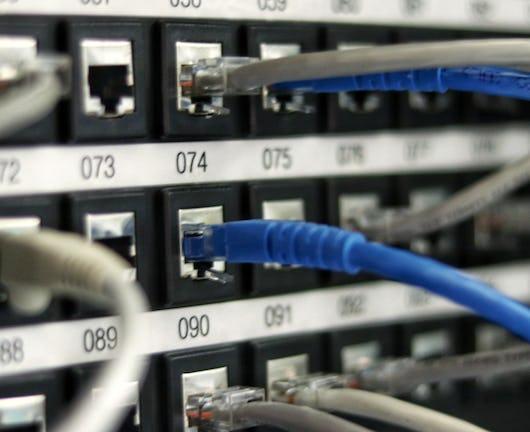
The Cloud is another rapidly growing Internet service, allowing users to rent storage and computation resources inside the network. In this lecture, we will see how the large data centers operated by Cloud providers can be constructed from a multitude of small switches.
Which Way to Watch Video on the Internet?
We have seen that the Internet provides a "best effort" service. In this lecture, we will look at how it supports video distribution, which often imposes stringent demands on throughput and delay.
WEEK 10
Why is WiFi Faster at Home Than at Hotspot?
WiFi hotspots have become an essential feature of our wireless lifestyle. In this lecture, we will study WiFi, and focus specifically on common link layer protocols that are used to manage interference. In doing so, we will see why WiFi does not scale well beyond several devices sharing one access point.
Why Am I Only Getting 3% of the Cellular Speed?
Advertised network speeds are typically only those that can be obtained at the physical layer under ideal channel conditions. In this lecture, we will study various factors that impact the actual speeds we obtain at the application layer under realistic channel conditions.
WEEK 11
Is It Fair that My Neighbor’s iPad Downloads Faster?
In this final lecture of the course, we will study a subject that we touched upon many times previously and forms an essential part of both social choice theory and technology network design: quantifying fairness of resource allocation.
Course Summary
Here, we will summarize the important points of what we have learned in this course.
WEEK 12
Guest Lectures
This contains various guest lectures from renowned members of academia and industry who are experts across the topics covered in this course.