Monitoring Atmospheric Composition (FutureLearn)

Monitoring Atmospheric Composition (FutureLearn)

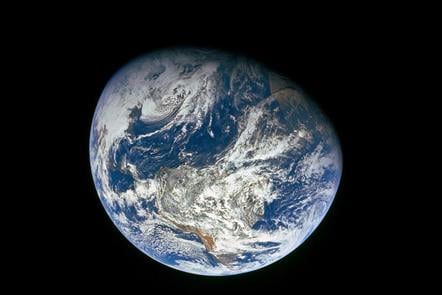
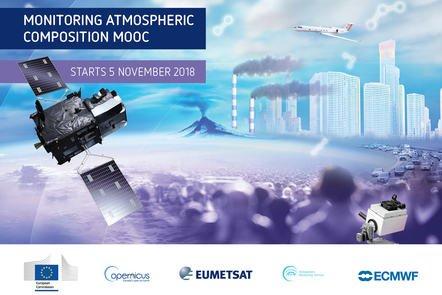
The composition of our atmosphere is vital for life. Find out how we keep track of it, and what we’re doing to protect it. Explore the technologies we use to observe, measure and forecast the atmosphere. The composition of our planet’s atmosphere is a delicate balance - even the slightest changes could be catastrophic. Join EUMETSAT and the Copernicus Atmosphere Monitoring Service/ECMWF to discover the space, air and ground-based technologies we use to monitor and forecast the atmosphere.

Class Deals by MOOC List - Click here and see FutureLearn's Active Discounts, Deals, and Promo Codes.

You’ll explore the critical threats affecting the atmosphere and its composition - and how these affect human health, climate change and the ecosystem.
You’ll also see how this all informs policy and international agreements, plus the extensive work needed to predict change and maintain air quality.

What topics will you cover?

  • Explore how we observe and measure the atmosphere with satellites, ground-based and other forms of in-situ measurements
  • Understand the importance of satellite observations and other forms of measurements for atmospheric monitoring
  • Investigate how atmospheric data is used in policy and decision-making, in a range of arenas, in conjunction with models
  • Recognise the importance of the data for monitoring long-range transportation of pollutants in the atmosphere


What will you achieve?
By the end of the course, you'll be able to...

  • Explore how we observe and measure the atmosphere with satellites, ground-based and other forms of in-situ measurements
  • Understand the importance of satellite observations and other forms of measurements for atmospheric monitoring
  • Investigate how atmospheric data is used in policy and decision-making, in a range of arenas, in conjunction with models
  • Recognise the importance of the data for monitoring long-range transportation of pollutants in the atmosphere
Go to Class
MOOC List is learner-supported. When you buy through links on our site, we may earn an affiliate commission.

Related Courses

Dataplex by Google Cloud (Coursera) Coursera
Board Infinity

Dataplex by Google Cloud (Coursera)

Welcome to "Dataplex By Google Cloud " a comprehensive course designed to provide a thorough understanding of Google Cloud Dataplex, a platform for managing, monitoring, and analyzing data across various data systems in Google Cloud. Spanning two modules, the course begins with the fundamentals of Dataplex, including its setup, configuration, and basic functionalities.

Aug 17th 2026
2 Weeks
DevOps on Alibaba Cloud (Coursera) Coursera
Alibaba Cloud Academy

DevOps on Alibaba Cloud (Coursera)

The ACP DevOps Engineer Course is designed for developers and operations experts who will be deploying applications on Alibaba Cloud using DevOps tools and best practices. The course covers Alibaba Cloud's Kubernetes Container Service (ACK), the ARMS Prometheus monitoring service, Log Service, ActionTrail, Container Registry, and more. It’s recommended for developers, Operators & Maintainers.

Jul 27th 2026
5-12 Weeks
Air pollution: causes and impacts (edX) EdX
Institut Mines-Telecom,IMTx

Air pollution: causes and impacts (edX)

This MOOC focuses on issues related to air quality. Learn the basics of air pollution and its environmental, health, social and economical effects to better understand and address this problem. Air pollution is a major and global concern, arising for the most part from human activities. Air pollutants can be emitted by a variety of sources or formed directly in the atmosphere. They alter the air we breathe and have clear negative effects on our health.

Self Paced
Self-Paced
Discovering Science: Atmospheric Chemistry (FutureLearn) FutureLearn
University of Leeds

Discovering Science: Atmospheric Chemistry (FutureLearn)

What can we learn about Earth, and other planets in and beyond our solar system, by studying their atmospheres? Learn about the role that radiation and greenhouse gases play in our understanding of atmospheric chemistry. As levels of CO2 in the atmosphere increase, you will discover the solutions scientists are exploring to reduce levels. And discover how missions to other planets and moons in our solar system are revealing extraordinarily diverse atmospheres.

Self Paced
2 Weeks
Synthetic Aperture Radar: Ecosystems (edX) EdX
University of Alaska Fairbanks,AlaskaX

Synthetic Aperture Radar: Ecosystems (edX)

This course will introduce the contributions of Synthetic Aperture Radar (SAR) remote sensing to the monitoring of Earth’s ecosystems. Learn how the weather-independence of SAR combined with its ability to penetrate into vegetation canopies make SAR an excellent information source to characterize vegetation structure, measure above-ground biomass, and analyze the change of vegetation long term and throughout the seasons.

Self Paced
Self-Paced