Mobile Development and JavaScript (Coursera)

Offered by Meta,
Mobile Development and JavaScript (Coursera)

This course is the first in a series that will allow you to expand your skills as an Android developer into the world of cross-platform mobile development. This will allow you to use your foundations as an Android developer to build cross-platform mobile applications. The first step in this expansion is learning to program in JavaScript. This will prepare you to learn to use the React library for mobile development.

Class Deals by MOOC List - Click here and see Coursera's Active Discounts, Deals, and Promo Codes.

JavaScript is the programming language that powers the modern web. In this course, you will learn the basic concepts of web development with JavaScript. You will work with functions, objects, arrays, variables, data types, the HTML DOM, and much more. You will learn how to use JavaScript and discover interactive possibilities with modern JavaScript technologies. Finally, you will learn about the practice of testing code and how to write a unit test using Jest.

This course can be applied to multiple Specializations or Professional Certificates programs. Completing this course will count towards your learning in any of the following programs:
• Meta Android Developer Professional Certificate
• Meta iOS Developer Professional Certificate
By the end of this course you will be able to:
• Explain the basic concepts of web development with Javavscript.
• Practice using functions, objects, arrays, variables, data types, the HTML DOM, and much more.
• Use JavaScript within the React framework
• Practice testing code and how to write a unit test using Jest
This course can be applied to multiple Specializations or Professional Certificates programs. Completing this course will count towards your learning in any of the following programs:

What You Will Learn

  • Create simple JavaScript code
  • Create and manipulate objects and arrays
  • Write unit testing using Jest

Syllabus

WEEK 1
Introduction to Javascript
In this module, you are introduced to JavaScript. You'll learn why JavaScript is so integral to software development. And you'll get an overview of how to write JavaScript code inside the browser. Furthermore, you will learn about the most common operators as well as conditional statements and loops.

WEEK 2
The building blocks of a program
Here you'll learn how to use objects, arrays and functions. In addition, you will learn about the most common built-in methods, and the difference between undefined, null and empty strings. And you'll explore both error handling and defensive programming.

WEEK 3
Programming paradigms
This module is about functional programming and the object oriented programming paradigm. You will learn what scope is in JavaScript. You'll explore the differences between var, let and const. And you'll learn how to use classes and inheritance in object oriented programming. Additionally, you'll explore how to use write JavaScript using modern features like spread and rest. You will build code that can manipulate the DOM and handle events. And you will use JSON in JavaScript.

WEEK 4
Testing and compatibility
Here you will learn about Node.js and npm. And you will explore how to install npm packages and how to work with package.json. Furthermore, you will learn about testing in JavaScript and you'll code a simple unit test in Jest.

WEEK 5
Final Project
In the final module, you'll learn about the graded assessment. After you complete the individual units in this module, you'll synthesize the skills you gained from the course to create code for the "Little lemon receipt maker".
You'll also have to opportunity to reflect on the course content and the learning path that lies ahead.
Go to Class
MOOC List is learner-supported. When you buy through links on our site, we may earn an affiliate commission.

Related Courses

Using Databases with Python (Coursera) Coursera
University of Michigan

Using Databases with Python (Coursera)

This course will introduce students to the basics of the Structured Query Language (SQL) as well as basic database design for storing data as part of a multi-step data gathering, analysis, and processing effort. The course will use SQLite3 as its database. We will also build web crawlers and multi-step data gathering and visualization processes. We will use the D3.js library to do basic data visualization.

Oct 19th 2026
5-12 Weeks
Applied Calculus with Python (Coursera) Coursera
Johns Hopkins University

Applied Calculus with Python (Coursera)

This course is designed for the Python programmer who wants to develop the foundations of Calculus to help solve challenging problems as well as the student of mathematics looking to learn the theory and numerical techniques of applied calculus implemented in Python. By the end of this course, you will have learned how to apply essential calculus concepts to develop robust Python applications that solve a variety of real-world challenges.

Oct 26th 2026
5-12 Weeks
Learn TypeScript (Coursera) Coursera
Scrimba

Learn TypeScript (Coursera)

Are you a proficient developer in HTML, CSS, and JavaScript, looking to elevate your technical skillset? Have you observed an increasing demand for TypeScript in the professional job market and are keen to explore its significance? Are you in search of a programming language that offers ease in readability and debugging? If the answer to any of these questions is affirmative, then you have arrived at the optimal course to advance your career.

Oct 26th 2026
4 Weeks
Learn Styled Components in React (Coursera) Coursera
Scrimba

Learn Styled Components in React (Coursera)

If you are wondering how to enhance your CSS for styling React component systems, styled components are the way to go. Styled components are helpful for many reasons. They reduce class name bugs, they make your components more readable, and they allow you to navigate your CSS more easily. They also allow for dynamic styling and automatic vendor prefixing.

Oct 26th 2026
1 Week
¡A Programar! Una introducción a la programación (Coursera) Coursera
University of Edinburgh,Universidad ORT Uruguay

¡A Programar! Una introducción a la programación (Coursera)

¿Alguna vez pensaste en crear tus propios juegos de computadora, pero no tenías idea cómo hacerlo o por dónde comenzar? Este curso te enseñará a programar utilizando Scratch, un lenguaje de programación visual muy fácil de usar, y más importante aún, aprenderás los principios fundamentales de la computación para que comiences a pensar como ingeniero/a de software.

Oct 19th 2026
5-12 Weeks
Data Analytics for Lean Six Sigma (Coursera) Coursera
University of Amsterdam

Data Analytics for Lean Six Sigma (Coursera)

Welcome to this course on Data Analytics for Lean Six Sigma. In this course you will learn data analytics techniques that are typically useful within Lean Six Sigma improvement projects. At the end of this course you are able to analyse and interpret data gathered within such a project. You will be able to use Minitab to analyse the data. I will also briefly explain what Lean Six Sigma is.

Oct 26th 2026
5-12 Weeks
Programming with Scratch (Coursera) Coursera
The Hong Kong University of Science and Technology - HKUST

Programming with Scratch (Coursera)

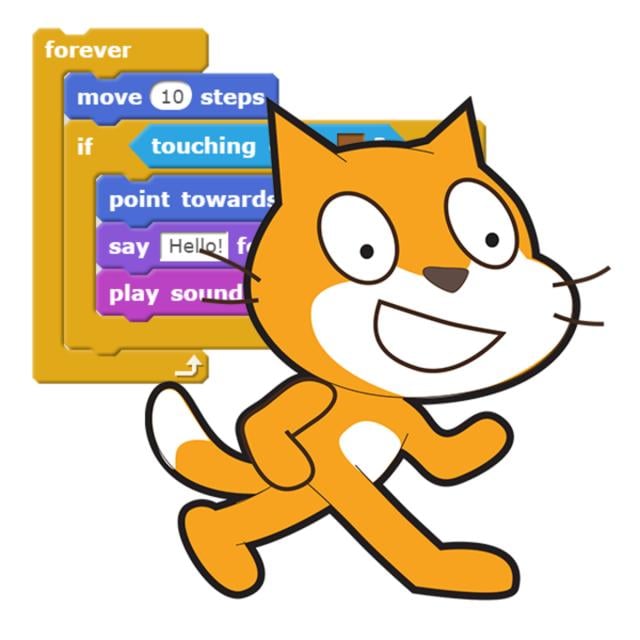
Learning coding is not only about understanding the programming language being used, but also developing important computational thinking skills, which are useful for problem solving across many disciplinary areas. In this course, students will learn basic programming skills by creating interactive storybooks, animations, and games with Scratch, which is a block-based visual programming language for anyone new to coding.

Oct 26th 2026
5-12 Weeks
The Unix Workbench (Coursera) Coursera
Johns Hopkins University

The Unix Workbench (Coursera)

Unix forms a foundation that is often very helpful for accomplishing other goals you might have for you and your computer, whether that goal is running a business, writing a book, curing disease, or creating the next great app. The means to these goals are sometimes carried out by writing software. Software can’t be mined out of the ground, nor can software seeds be planted in spring to harvest by autumn. Software isn’t produced in factories on an assembly line. Software is a hand-made, often bespoke good. If a software developer is an artisan, then Unix is their workbench.

Oct 26th 2026
4 Weeks