EdX

Mobile Computing with App Inventor - CS Principles (edX)

Mobile Computing with App Inventor - CS Principles (edX)

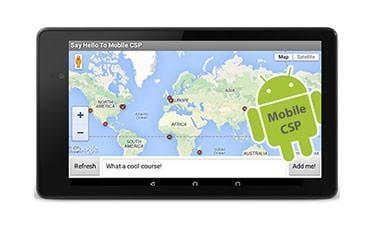
This course introduces basic principles of computer science by designing and building mobile apps in App Inventor for Android. Learn to use the open development tool, App Inventor, to program on Android devices. You will learn how to design and build mobile apps -- apps that are aware of their location, send and receive text messages, and give advice and directions. The only limit on the types of apps you will learn to build is your own imagination!

Class Deals by MOOC List - Click here and see EdX's Active Discounts, Deals, and Promo Codes.

However, computer science is not just about coding and building apps. We will also learn some of the fundamental principles of computer science. We'll learn about the potential and the limitations of computing and coding. We'll learn how the Internet works and about the positive and negative aspects of computing in today's society, and much more!

For these broader computing concepts we will work within an emerging curricular framework -- the Computer Science Principles (CSP). The CSP framework is being developed by leading computer science educators from around the country under the auspices of the College Board and with funding support of the National Science Foundation.
In addition to programming and CSP the course is project-based and emphasizes writing, communication, and creativity. Multiple-choice questions, in the style that students can expect to encounter on the AP exam, will also be a key component of this course.

What you'll learn:

  • How to design and create Android mobile apps using App Inventor
  • How computer science principles apply to algorithms, programming, the Internet and society
  • How to think creatively, analytically and abstractly about computational problems
Go to Class
MOOC List is learner-supported. When you buy through links on our site, we may earn an affiliate commission.

Related Courses

CS50's Introduction to Computer Science (edX) EdX
HarvardX,Harvard University

CS50's Introduction to Computer Science (edX)

An introduction to the intellectual enterprises of computer science and the art of programming. This is CS50, Harvard University's introduction to the intellectual enterprises of computer science and the art of programming for majors and non-majors alike, with or without prior programming experience. An entry-level course taught by David J. Malan, CS50 teaches students how to think algorithmically and solve problems efficiently.

Self Paced
Self-Paced
How to Code: Simple Data (edX) EdX
The University of British Columbia,UBCx

How to Code: Simple Data (edX)

Learn systematic program design - how to write programs that tell a clear story about what they do, are well-tested, and easy to improve. This programming course takes a unique approach, as it focuses on learning a systematic programming method rather than a programming language. This practical approach will help you channel your creativity so that you can program well in any language.

Self Paced
Self-Paced
Introduction to Object-Oriented Programming with Java II: Object-Oriented Programming and Algorithms (edX) EdX
Georgia Institute of Technology,GTx

Introduction to Object-Oriented Programming with Java II: Object-Oriented Programming and Algorithms (edX)

Learn the basics of object-oriented programming and algorithms. Students will build on the skills learned from “Introduction to Object-Oriented Programming with Java I: Foundations and Syntax Basics” and learn the basics of writing classes that serve as blueprints of concepts or objects that are represented in a programming problem. Students will leverage the concepts of inheritance, interfaces, and polymorphism to program reusability and flexibility in classes. Finally, students will gain experience walking through and analyzing algorithms that are applied on data (including objects) in many object-oriented programs.

Self Paced
Self-Paced
How to Code: Complex Data (edX) EdX
The University of British Columbia,UBCx

How to Code: Complex Data (edX)

Learn how to design more complex programs, using new data structures, abstraction, and generative recursion. As your program requirements get more complex, you will find that simple additions to the design method make it easy to write well-structured and well-tested code that is easy to maintain. By learning how to capture common data and control structures using abstraction, your programs will get shorter and better tested.

Self Paced
Self-Paced
IoT System Design: Software and Hardware Integration (edX) EdX
Waseda University,WasedaX

IoT System Design: Software and Hardware Integration (edX)

Start developing your own Internet of Things (IoT) system with this exploration of the interaction between software and hardware. This course is designed to teach you how systems are developed using IoT technology. Many engineers and developers tend to focus on a single discipline - either software or hardware. However, in today’s connected age it's critical to have a comprehensive understanding of both disciplines and how they are intertwined.

Self Paced
Self-Paced
Computing in Python I: Fundamentals and Procedural Programming (edX) EdX
Georgia Institute of Technology,GTx

Computing in Python I: Fundamentals and Procedural Programming (edX)

Learn the fundamentals of computing in Python, including variables, operators, and writing and debugging your own programs. This course starts from the beginning, covering the basics of how a computer interprets lines of code; how to write programs, evaluate their output, and revise the code itself; how to work with variables and their changing values; and how to use mathematical, boolean, and relational operators.

Self Paced
Self-Paced
Introducción a la programación en C: Instrucciones de control y ficheros de texto (edX) EdX
Universidad Autonoma de Madrid

Introducción a la programación en C: Instrucciones de control y ficheros de texto (edX)

En este curso aprenderás sobre condicionales, bucles y ficheros de texto en el lenguaje de programación C, uno de los más utilizados. Este curso en línea te permitirá continuar aprendiendo sobre conceptos para desarrollar habilidades de programación en el lenguaje C. Ahora los programas comienzan a cobrar vida y a volverse más interesantes.

Self Paced
Self-Paced
Introduction to Computer Science and Programming (edX) EdX
Tokyo Institute of Technology,TokyoTechX

Introduction to Computer Science and Programming (edX)

The term “Computation” refers to the action performed by a computer. A computation can be a basic operation and it can also be a sophisticated computer simultation requiring a large amount of data and substantial resources. This course aims at introducing learners with no prior knowledge to basics and key concepts of computer science. By following the lectures and exercises of this course you will have an understanding of algorithms and you will get a real experience of programming using the language Ruby.

Self Paced
Self-Paced