FUN

Migrations Internationales : Comment les mobilités transforment les sociétés ? (FUN)

Offered by Université de Liège,
Migrations Internationales : Comment les mobilités transforment les sociétés ? (FUN)

Pourquoi les migrants cherchent-ils à rejoindre l’Europe ? Comment voyagent-ils jusqu’ici ? Quelles sont leurs motivations ? Comment s’intègrent-ils dans les pays de résidence ? Rentreront-ils un jour dans leur pays d’origine ? Dans ce MOOC, nous vous proposons de discuter de ces questions ensemble et vous donner les outils pour développer une réflexion critique et autonome autour de ce phénomène controversé qu’est la migration.

Plus précisément, ce MOOC vous propose de suivre en 7 étapes le parcours des migrants de la société d’origine jusqu’à la société d’installation. Ces parcours migratoires, nous le verrons, peuvent varier sensiblement d’un migrant à l’autre. On peut migrer avec ou sans autorisation légale de le faire. On peut trouver de meilleures opportunités économiques dans le pays de résidence ou au contraire se trouver dans une situation précaire. Migrer enfin, peut conduire à installation permanente ou, à l’inverse, à des déplacements multiples voire à un retour vers la société d’origine.

Pour vous fournir les clés utiles à une meilleure compréhension des migrations, nous réaliserons ensemble une grande diversité d’activités. Il y aura des capsules vidéos et des chats avec vos trois professeurs, des interviews d’experts pour approfondir certaines questions plus pointues comme la question des camps ou de la diversité religieuse. Il y aura aussi des témoignages de migrants, de brefs textes à lire pour déconstruire certains mythes et enfin des quizz pour vous aider à retenir les notions et concepts centraux sur les migrations. Nous vous proposerons également une série de travaux d'écriture qui seront corrigés via un système de correction par les pairs.

Plan du cours

Module 0 : Introduction
Module 1 : Définir les migrations internationales
Module 2 : Les tendances des migrations internationales. D'où part-on et pourquoi?
Module 3 : Itinéraire et voyage. Comment migre-t-on?
Module 4 : Transit et étapes. Quelle diversité dans les parcours migratoires?
Module 5 : Arrivée et installation
Module 6 : Intégration
Module 7 : Retour et transnationalisme
Go to Class
MOOC List is learner-supported. When you buy through links on our site, we may earn an affiliate commission.

Related Courses

Game Theory II: Advanced Applications (Coursera) Coursera
Stanford University,The University of British Columbia

Game Theory II: Advanced Applications (Coursera)

Popularized by movies such as "A Beautiful Mind", game theory is the mathematical modeling of strategic interaction among rational (and irrational) agents. Over four weeks of lectures, this advanced course considers how to design interactions between agents in order to achieve good social outcomes. Three main topics are covered: social choice theory (i.e., collective decision making and voting systems), mechanism design, and auctions.

May 18th 2026
5-12 Weeks
Global Energy and Climate Policy (Coursera) Coursera
University of London,SOAS University of London

Global Energy and Climate Policy (Coursera)

The Global Energy and Climate Policy course offers an introduction to the theoretical and practical understanding of how energy and climate change policies are designed, shaped, advocated and implemented. As energy markets go truly global, domestic energy policies are becoming more and more entangled with wider issues of international governance. Concurrently, the urgent need to mitigate and adapt to climate change and transition to a low-carbon future is adding a further layer of complexity.

Jun 1st 2026
5-12 Weeks
International migrations :a global issue (FUN) FUN
Sciences Po

International migrations :a global issue (FUN)

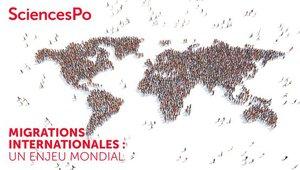
The world is moving, but not all opinions and governments are willing to accept this poorly understood reality. The issue affects both states and the planet, in a process of globalization and of regionalization of migrations, and raises new questions for international relations, now including the South. This course aims at improving knowledge of the subject, addressing the key issues raised by international migration, and assessing the trends of tomorrow.

No sessions available
5-12 Weeks
Innovation et Société (FUN) FUN
Université-Pierre-Mendès-France - UPMF

Innovation et Société (FUN)

Venez découvrir l’innovation à travers le prisme des sciences humaines et sociales, un tour d’horizon en 5 semaines où vous verrez les principes sous-jacents de l’innovation à travers différentes disciplines. Ce cours aborde les problématiques et les enjeux socio-économiques liés à l’innovation tels qu’ils sont vus en management, en sociologie, en économie et enfin en philosophie.

No sessions available
5-12 Weeks
EU policy and implementation: making Europe work! (Coursera) Coursera
Leiden University

EU policy and implementation: making Europe work! (Coursera)

People have become more critical of EU policy and often seem to prefer local policy solutions in response to globalisation problems. How do you experience EU policy? Does it help? And if not, how can we change this? In this course, we learn how the European Union prepares and decides on policy, and how policy is transferred to member states and implemented by various authorities, including regional and local governments. We discuss the challenges of the European multi-level governance structure. We also focus on the main causes of policy failure or success. On this journey, we focus on actual policy and present the views of various experts: how easy is it to establish yourself in another EU-country?

May 25th 2026
5-12 Weeks
"Making" Progress Teach-Out (Coursera) Coursera
Emory University

"Making" Progress Teach-Out (Coursera)

What is “progress”? How do we decide when we’re moving forward and not taking steps backward? And how do we explore the idea of progress around public sites of memory? This Teach-Out is an invitation to think about what progress means, and how you can look for it wherever you are—in your city, community, or neighborhood—and reflect upon your own ideas about the place you live in.

Jun 1st 2026
2 Weeks
Introduction to the Orbital Perspective (Coursera) Coursera
University of Florida,University of Arizona,Drexel University

Introduction to the Orbital Perspective (Coursera)

The goals of this course are to develop the student’s critical thinking skills, global awareness, and ability to work as an integral part of a team in an increasingly complex global job market. The course provides a foundation in such skills as team building, collaboration, and elevated empathy using real-world scenarios from some of world’s most effective collaborative projects including the Earthrise-2068 Project.

May 25th 2026
5-12 Weeks
Copyright for Educators & Librarians (Coursera) Coursera
Duke University,Emory University,University of North Carolina at Chapel Hill

Copyright for Educators & Librarians (Coursera)

Fear and uncertainty about copyright law often plagues educators and sometimes prevents creative teaching. This course is a professional development opportunity designed to provide a basic introduction to US copyright law and to empower teachers and librarians at all grade levels. Course participants will discover that the law is designed to help educators and librarians.

May 25th 2026
5-12 Weeks
Foundations of Teaching for Learning: Introduction to Student Assessment (Coursera) Coursera
Commonwealth Education Trust

Foundations of Teaching for Learning: Introduction to Student Assessment (Coursera)

The Foundations of Teaching for Learning programme is for anyone who is teaching, or who would like to teach, in any subject and any context - be it at school, at home or in the workplace. With dynamic lessons taught by established and respected professionals from across the Commonwealth, this eight course programme will see you develop and strengthen your skills in teaching, professionalism, assessment, and more. As you carry on through the programme, you will find yourself strengthening not only your skills, but your connection with colleagues across the globe. A professional development opportunity not to be missed.

Jun 1st 2026
5-12 Weeks
Business Opportunities and Risks in a Globalized Economy (Coursera) Coursera
IE Business School

Business Opportunities and Risks in a Globalized Economy (Coursera)

This is the last of the three courses part of the Globalization, Economic Growth and Stability Specialization.¨Business Opportunities and Risks in a Globalized World¨ is the the 3rd and final course of the ¨Globalization, Economic Growth and Stability¨ Specialization taught by IE Business School's Professor Gayle Allard. This course is designed to help an investor, businessperson or economist approach macroeconomic, institutional and international data and derive information from the indicators that point to the types of opportunities and risks that they present.

May 25th 2026
5-12 Weeks